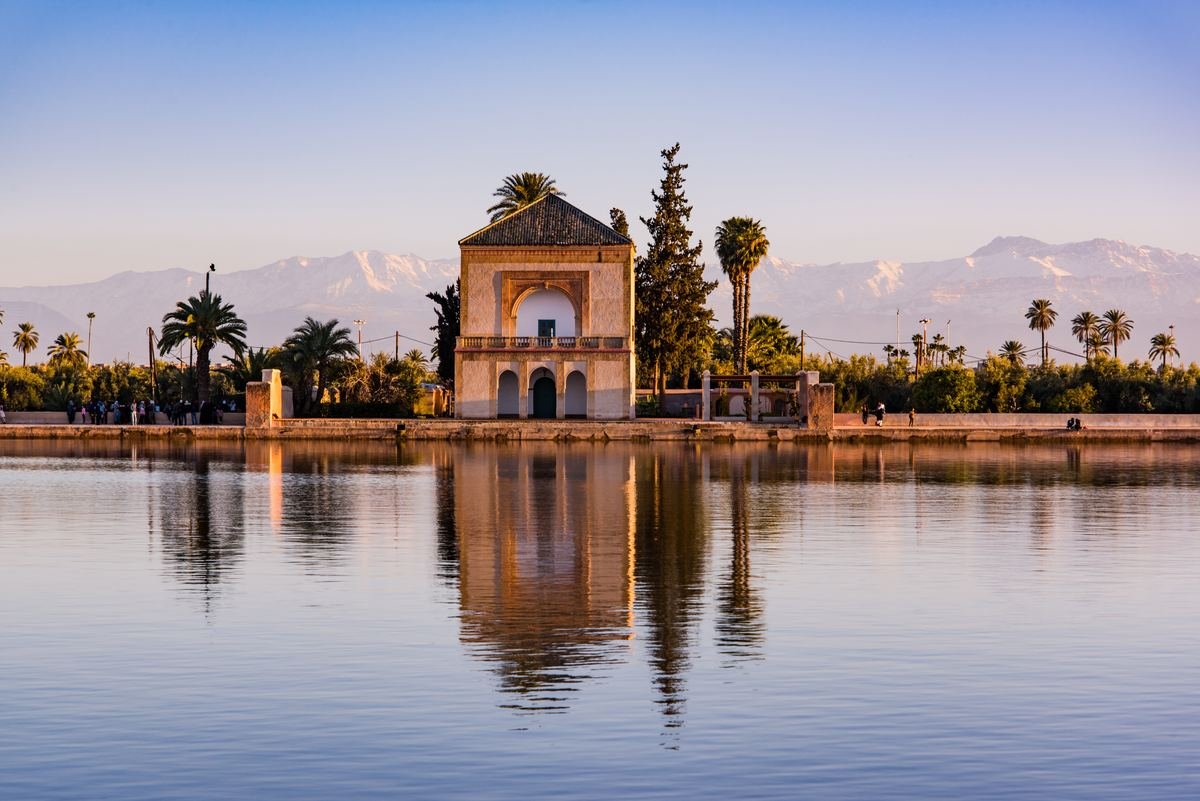
People and visitors
| Figure |
Value |
Source |
| Population (2024 census, legal population) |
36.8 million |
High Commission for Planning (HCP), 2024 census |
| International arrivals, 2025 |
19.8 million (a record) |
Ministry of Tourism, January 2026 |
| International arrivals, 2024 |
about 17.4 million |
Ministry of Tourism |
| Tourism receipts, Jan–Nov 2025 |
124 billion dirhams |
Ministry figures reported by Ecofin Agency |
Heritage
| Figure |
Value |
| UNESCO World Heritage Sites |
9 — the medinas of Fez (1981), Marrakech (1985), Tetouan (1997) and Essaouira (2001); the Ksar of Aït Benhaddou (1987); the historic city of Meknes (1996); Volubilis (1997); the Portuguese city of Mazagan / El Jadida (2004); and Rabat (2012) |
| Selected intangible heritage on UNESCO lists |
The cultural space of Jemaa el-Fna square, Gnawa, the knowledge and practices around argan, couscous (shared with Algeria, Mauritania and Tunisia) |
| Founding of Al-Qarawiyyin, Fez |
859 |
| Founding of the current Essaouira |
1760s, under Sultan Mohammed ben Abdallah |
Source: UNESCO World Heritage Centre and Intangible Cultural Heritage lists.
Landscapes
| Figure |
Value |
| Highest peak |
Jebel Toubkal, 4,167 m — the highest in North Africa |
| Highest road pass on the Marrakech–Ouarzazate route |
Tizi n'Tichka, about 2,260 m |
| Height of the Erg Chebbi dunes |
up to about 150 m |
| Height of the Ouzoud waterfalls |
about 110 m |
| Seas |
Atlantic Ocean and Mediterranean Sea |
Distances and travel times
| Route |
Distance |
Typical time |
| Marrakech – Merzouga |
about 560 km |
9–10 h by road |
| Marrakech – Essaouira |
about 190 km |
about 3 h by bus |
| Tangier – Casablanca |
— |
about 2 h 10 by Al Boraq high-speed train |
| Casablanca – Marrakech |
— |
about 2.5–3 h by train |
| Fez – Chefchaouen |
— |
about 4–5 h by bus |
| Tangier – Tarifa (Spain) |
— |
about 1 h by fast ferry |
See our transport guide for details.
Practical facts
| Topic |
Fact |
| Currency |
Moroccan dirham (MAD), a closed currency |
| Official languages |
Arabic and Amazigh (Tamazight); French widely used |
| Time zone |
GMT+1 for most of the year; clocks usually move back to GMT during Ramadan |
| Electricity |
220 V, European two-pin plugs (types C and E) |
| Driving |
On the right |
| Emergency numbers |
Police 19 · Gendarmerie 177 · Ambulance/fire 15 |
| Visa |
Visa-free for up to 90 days for many nationalities — check your situation |
| High-speed rail |
Al Boraq, opened 2018, up to 320 km/h; extension to Marrakech targeted before 2030 |
| 2030 World Cup |
Co-hosted with Spain and Portugal — what it changes |
Sources
- High Commission for Planning (HCP) — General Census of Population and Housing 2024.
- Ministry of Tourism, Handicrafts and Social and Solidarity Economy — annual arrivals.
- UNESCO World Heritage Centre (whc.unesco.org) and Intangible Cultural Heritage (ich.unesco.org).
- ONCF — Al Boraq high-speed service.
Spotted a figure that has changed? Let us know.
This guide was last reviewed in October 2026. Entry rules, opening hours, transport timetables and prices change; check official sources shortly before you travel. Spotted something out of date? Tell us.