How a Moroccan day of eating works
Breakfast is bread-based: msemen, baghrir, olive oil, honey, amlou (almond, argan oil and honey spread), olives and mint tea. In Fez and the north, bissara (fava-bean soup) is a common working breakfast.
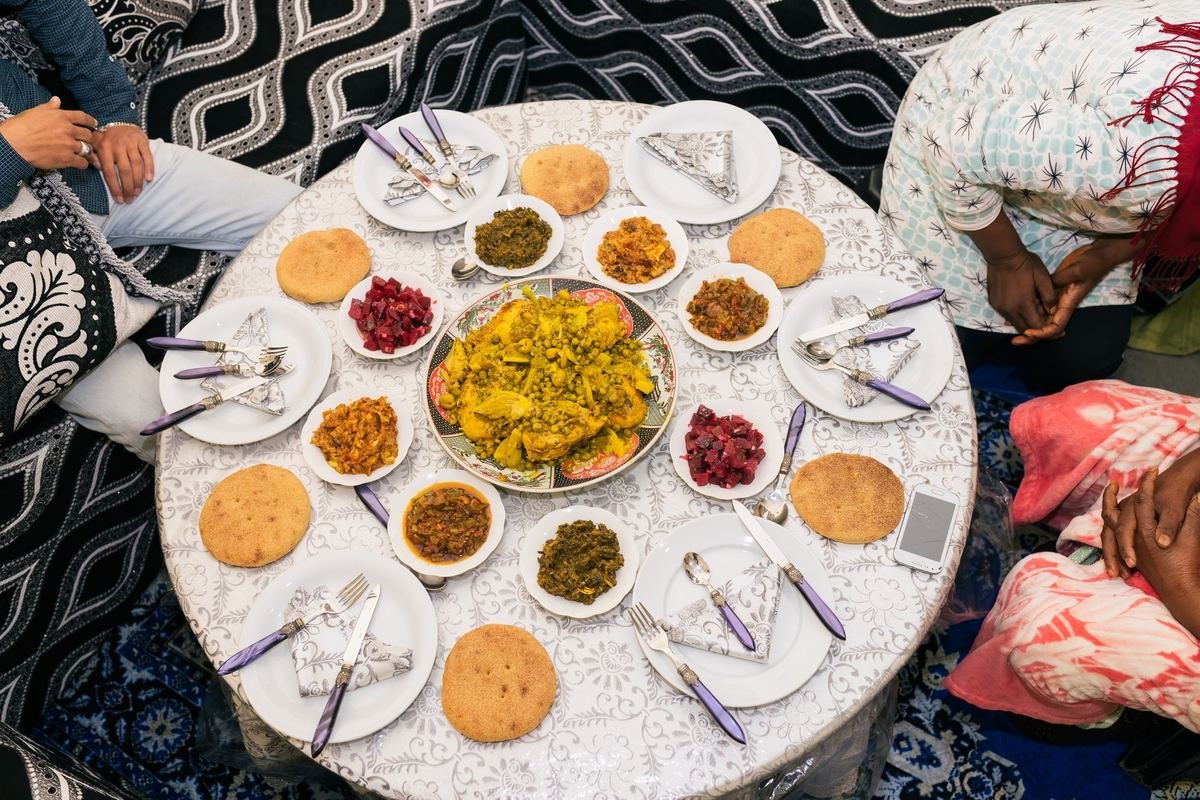
Lunch, from about 13:00 to 15:00, is the main meal, built around one shared dish: a tagine, or on Fridays couscous after the midday prayer. Late afternoon brings tea with pastries. Dinner is later and lighter, from about 20:00, though visitor restaurants serve full menus all evening. During Ramadan the rhythm changes completely: the fast is broken at sunset with dates, milk, harira and chebakia.
Bread: the real utensil
Bread (khobz) appears at almost every meal. The round everyday loaf is often baked in the neighbourhood wood-fired oven (ferran); other breads include harcha (semolina griddle cake) and batbout (soft pocket bread). Bread is treated with respect: a piece dropped on the ground is picked up and set aside, never thrown away.
Street food worth trying
- Snail soup in a spiced broth, sold from carts in Jemaa el-Fna in Marrakech and in most medinas, approx. 5–10 MAD a bowl.
- Sfenj, ring doughnuts fried in the morning and sold threaded on a palm frond.
- Maakouda, potato fritters, often stuffed into bread with harissa.
- Grilled sardines or fried fish at the port stalls of Essaouira.
- Msemen and harcha from griddle stalls, approx. 2–5 MAD a piece.
Choose busy stalls with fast turnover where food is cooked in front of you. See our safety guide for general advice on water, salads and stomach upsets.
The nine dish guides
| Dish | What it is | When and where |
|---|---|---|
| Tagine | Slow-cooked stew named after its conical clay pot | Everywhere, lunch and dinner |
| Couscous | Steamed semolina with vegetables and meat | Fridays and family gatherings |
| Pastilla | Sweet-savoury pie of paper-thin warqa pastry | Celebrations, Fez |
| Harira | Tomato, lentil and chickpea soup | Ramadan iftar, winter evenings |
| Mint tea | Green tea with fresh mint and sugar | All day, a sign of welcome |
| Msemen | Square, layered, griddled flatbread | Breakfast and afternoon tea |
| Baghrir | "Thousand-hole" semolina pancake | Breakfast, served with butter and honey |
| Chebakia | Fried sesame and honey flower pastry | Ramadan |
| Tangia | Meat slow-cooked in a clay urn | Marrakech speciality |
Regional specialities
| Region | Look out for |
|---|---|
| Marrakech | Tangia, mechoui (slow-roasted lamb), snail soup |
| Fez | Pastilla, bissara, khlii (preserved spiced meat) |
| Essaouira and the Atlantic coast | Grilled fish, fish tagine, seafood pastilla |
| Tangier and the north | Calentica (chickpea-flour bake), Spanish-influenced snacks |
| Chefchaouen and the Rif | Fresh goat's cheese, bissara |
| Atlas Mountains | Amazigh tagines, barley couscous, amlou, honey |
| Merzouga and the south | Medfouna ("Berber pizza") in Rissani, dates |
Table etiquette
- Wash your hands before eating; a host may bring a basin and kettle (tass) to the table.
- Eat with your right hand. The left is traditionally reserved for hygiene, even if you are left-handed.
- Use bread as your utensil. Tear a piece, pinch up sauce and meat with it, and eat from the section of the shared dish directly in front of you. Do not reach across.
- Let the host serve the meat, which sits in the centre and is shared out at the end.
- Expect to be urged to eat more. Pace yourself and say shbe't ("I'm full") with a hand on your heart. Our language guide has more phrases.
Vegetarian, vegan and allergies
Reliable vegetarian choices are vegetable tagine and couscous, zaalouk (aubergine salad), taktouka (peppers and tomato), bissara and lentils. Harira and many couscous broths use meat stock, and vegetable dishes may contain smen (preserved butter), so vegans should ask. Say ma kanakulsh l-lham ("I don't eat meat") and warn riads in advance.
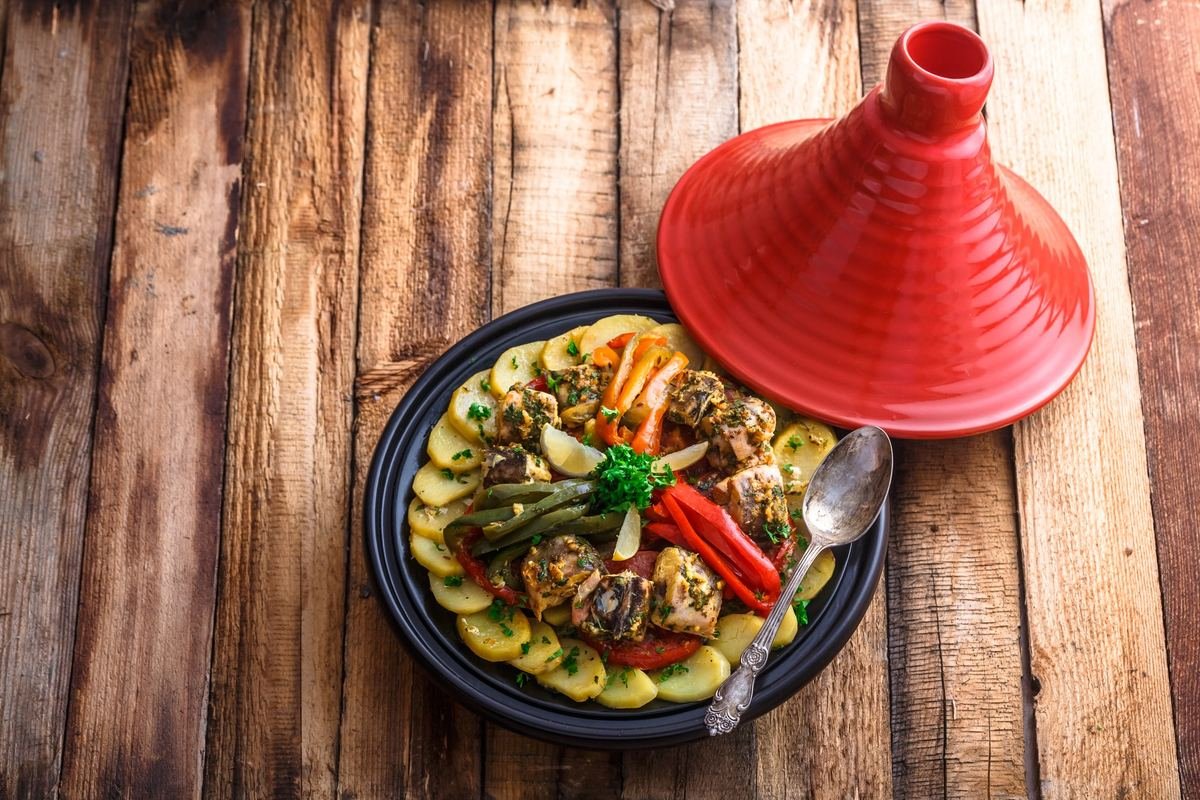
Nuts are in pastilla, amlou and most pastries; sesame in chebakia; gluten in bread, couscous and pastries. Carry an allergy card in Arabic and French.
Halal and alcohol
Almost all meat is halal and pork is very rare. Alcohol is legal but discreet: served in licensed restaurants, hotel bars and some riads, and sold in large supermarkets and licensed shops. Many medina restaurants are dry, supermarket sales often stop during Ramadan, and drinking in the street is frowned upon. Morocco makes its own wine, notably around Meknes.
Typical meal prices in 2026
Prices are approximate ranges as of autumn 2026 (indicative estimates); they vary with city, neighbourhood and how tourist-facing the place is.
| Item | Local café or stall | Tourist-oriented restaurant |
|---|---|---|
| Mint tea | approx. 5–10 MAD | approx. 15–30 MAD |
| Harira or bissara | approx. 5–15 MAD | approx. 25–45 MAD |
| Msemen or harcha | approx. 2–5 MAD | approx. 10–20 MAD |
| Chicken or kefta tagine | approx. 35–60 MAD | approx. 70–120 MAD |
| Couscous | approx. 40–70 MAD | approx. 80–140 MAD |
| Pastilla (portion) | approx. 50–80 MAD | approx. 90–150 MAD |
| Set dinner in a riad | — | approx. 200–450 MAD |
Tipping is around 10% in sit-down restaurants; round up in cafés. Our money and payments guide explains when cards are accepted. To cook these dishes yourself, see the Marrakech tagine cooking class.
Frequently asked questions
What is the national dish of Morocco?
Couscous is usually named the national dish and is eaten by families every Friday, but tagine is what visitors eat most often. Both are covered in our dish guides.
Is Moroccan food spicy?
Generally not hot. It relies on warm spices such as cumin, ginger, cinnamon, saffron and paprika. Harissa or chilli is usually served on the side.
Is it safe to eat street food in Morocco?
Usually, if you choose busy stalls where food is cooked fresh in front of you. Be more cautious with raw salads and tap water in the first days.
Is Morocco good for vegetarians?
Yes, with care. Vegetable tagines, couscous and salads are everywhere, but ask whether soups and broths are made with meat stock.
Related: Tagine · Couscous · Mint tea · Marrakech cooking class
This guide was last reviewed in November 2026. Entry rules, opening hours, transport timetables and prices change; check official sources shortly before you travel. Spotted something out of date? Tell us.