What tangia is
The word tangia (also spelt tanjia) refers both to the pot and to what is cooked in it. The vessel is a tall, narrow, unglazed terracotta urn with two small handles, shaped like a Roman amphora. Into it go chunks of meat on the bone, a preserved lemon, a whole head of garlic, cumin, saffron, a little smen (aged butter) or olive oil, and a splash of water. The neck is closed with a sheet of parchment or brown paper, tied with string and pierced once or twice so that steam can escape.
The urn is then cooked for many hours in low, steady heat until the meat falls from the bone and the juices reduce to a rich, lemony, buttery sauce. There are no vegetables, no prunes and no fancy garnish: the dish is about meat, fat, citrus and time.
Tangia is known as the "bachelor's dish", tangia marrakchia. Traditionally it was made by men, especially the artisans and traders of the medina souks, who would pool money, buy meat from the butcher, fill a pot in the morning and send it off to the hammam. By the afternoon or the next day it was ready to share, often as a Friday or weekend meal outdoors in the gardens and olive groves around the city. It needed no kitchen and no watching, which explains both the nickname and its popularity among workers.
Cooking in the ashes: the farnatchi
The secret of tangia is the farnatchi (or fernatchi), the furnace room beneath or behind a neighbourhood hammam. A furnace keeper, mul farnatchi, feeds the fire that heats the bathhouse water all day, using wood shavings, olive pits and other waste fuel. The urns are pushed deep into the glowing ashes at the edge of the fire, not into the flames, where they cook slowly for six to eight hours, sometimes overnight.
Residents bring their pots in the morning and collect them in the late afternoon. The furnace keeper usually charges a small fee, often around 10–20 MAD a pot, and recognises each one by its owner's string, a scrap of fabric or a number. The same fires once baked neighbourhood bread too, and in some quarters the communal bakery (ferran) also cooks tangias.
This is why tangia is so tied to Marrakech, whose medina has many working hammams, each with a farnatchi. Some riads and restaurants now use ordinary ovens and families use pressure cookers; the result is good, but lacks the smoky depth of a hammam tangia.
Tangia versus tagine
The two are often confused, and both are named after their pots.
| Tangia | Tagine | |
|---|---|---|
| Pot | Tall, narrow terracotta urn | Shallow round dish with a conical lid |
| Heat | Buried in ashes for 6–8 hours, unattended | Simmered on charcoal or a stove for 1–3 hours |
| Ingredients | Meat, preserved lemon, garlic, cumin, saffron, smen | Meat, fish or vegetables with many combinations (prunes, olives, vegetables) |
| Vegetables | None | Often plentiful |
| Region | Marrakech speciality | Eaten all over Morocco |
| Who cooks | Traditionally men | Traditionally the household cook, usually women |
| Served | Emptied onto a plate, eaten with bread | Served in the dish it was cooked in |
A tangia is closer to a confit than a stew: the meat cooks in its own fat and juices rather than in a sauce.
The meat
The traditional choices are lamb (shoulder, shank or neck) and beef shin, or a mix. Cuts with plenty of collagen and bone work best, because they melt into the sauce over the long cooking. Some versions add oxtail or a calf's foot to make it even richer. Seasoning varies from butcher to butcher; some add ras el hanout, a little ginger or black pepper, but cumin, garlic and preserved lemon are constant.
Where to eat tangia in Marrakech
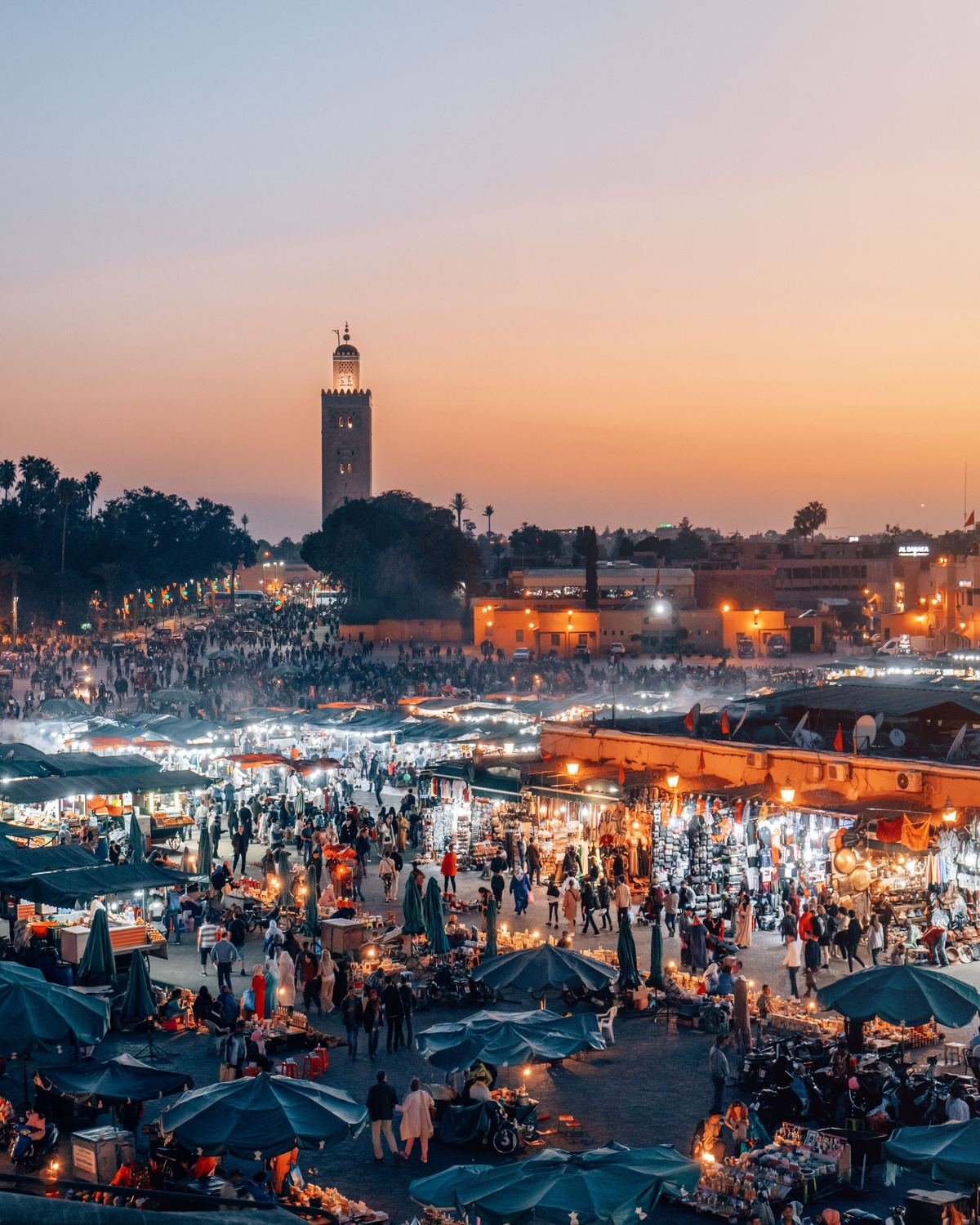
Around Jemaa el-Fna. The most reliable place is the short lane off the north-east corner of the square, near the olive and pickle stalls, known locally as Souk Ablueh and to visitors as "Mechoui Alley". Its small shops specialise in mechoui (pit-roasted lamb sold by weight) and also sell tangia, scooped from the urn onto a plate with bread, cumin and salt. Go at lunchtime, roughly 11:30–14:30, when the morning batch is freshest; the best shops can sell out by mid-afternoon. In the evening, several of the numbered food stalls in the square itself also list tangia, though quality is more variable and prices higher.
The Mellah and the butchers. For the full experience, order a tangia made for you. Butchers in the Mellah market (the covered market of the old Jewish quarter, near Place des Ferblantiers) and in neighbourhood markets such as those near Bab Doukkala will sell you the meat, season and pack the urn and send it to a nearby farnatchi. Order in the morning, agree a price and a collection time, and pick it up in the late afternoon. Ask your riad to help: many hosts know a butcher and a furnace keeper and will arrange the whole thing, then serve it on the terrace.
Riads and restaurants. Many medina restaurants and riads in Marrakech put tangia on their set menus. Ask whether it was cooked in a farnatchi or an oven; a good host will be honest. Riad tangias usually need ordering a day ahead.
Outside Marrakech, tangia is uncommon. You may see it in a few restaurants in Casablanca or on day trips to the Atlas Mountains, but it is not the same dish without the Marrakech furnace culture.
What it costs
Prices are typical ranges as of autumn 2026 (indicative estimates), and meat prices in Morocco have risen sharply since 2023.
| Option | Typical price |
|---|---|
| Plate of tangia with bread, Mechoui Alley or market stall | approx. 70–120 MAD |
| Half a kilo of tangia meat by weight, enough for two | approx. 90–150 MAD |
| Tangia ordered from a butcher, per kilo of meat, including seasoning | approx. 150–200 MAD |
| Farnatchi cooking fee | approx. 10–20 MAD a pot |
| Tangia on a riad or restaurant set menu | approx. 150–300 MAD a person |
A one-kilo tangia comfortably feeds two to three people. Larger pots of around three kilos for a family meal cost upwards of 500 MAD in 2025. Pay cash in small notes; see money and payments.
How to order and eat it
- Ask by weight. In Mechoui Alley, say how much you want: "nuss kilo" (half a kilo) is a good amount for two. The seller weighs the meat in front of you.
- Choose lamb or beef, or ask for a mix (mkhalat).
- Ask for the sauce (l-marqa) to be poured over, and for bread to mop it up.
- Season with the little dishes of cumin and salt on the counter.
- Eat with your right hand and bread, then finish with a glass of mint tea.
Check the price per kilo before the meat is weighed, and confirm the total before you sit down. Prices posted in Arabic numerals or on a board are a good sign. See our safety guide for general advice on avoiding overcharging.
Recognising a good tangia
- Texture: the meat should fall apart with a fork or fingers and look glossy, not dry or stringy.
- Colour: a deep golden-brown with flecks of saffron; pale grey meat means it was boiled rather than slow-roasted.
- Sauce: concentrated and fragrant with lemon and garlic, not watery.
- The urn: in good places you see the blackened pots arriving from the farnatchi and being emptied in front of you.
Frequently asked questions
What is tangia in Marrakech?
A slow-cooked dish of lamb or beef with preserved lemon, garlic, cumin and saffron, sealed in a clay urn and cooked for six to eight hours in the ashes of a hammam furnace.
What is the difference between tangia and tagine?
Tangia is cooked in a tall urn buried in ashes, contains only meat and seasonings and is a Marrakech speciality. Tagine is cooked in a shallow dish with a conical lid over charcoal or a stove, often with vegetables or fruit, and is eaten everywhere.
Where is the best tangia near Jemaa el-Fna?
The lane off the north-east corner of the square, known as Mechoui Alley, where small shops sell mechoui and tangia at lunchtime. Arrive between 11:30 and 14:30 before the best shops sell out.
How much does tangia cost in Marrakech?
A plate with bread costs roughly 70–120 MAD at a stall; half a kilo for two about 90–150 MAD. A tangia made to order by a butcher costs around 150–200 MAD per kilo of meat, plus a small cooking fee.
Can I order my own tangia in Marrakech?
Yes. Ask a butcher in the Mellah market or a neighbourhood market to prepare one in the morning and send it to a farnatchi, or ask your riad host to arrange it. Collect it in the late afternoon.
Related: Tagine · Hammam guide · Marrakech guide · Moroccan food guide
This guide was last reviewed in November 2026. Entry rules, opening hours, transport timetables and prices change; check official sources shortly before you travel. Spotted something out of date? Tell us.