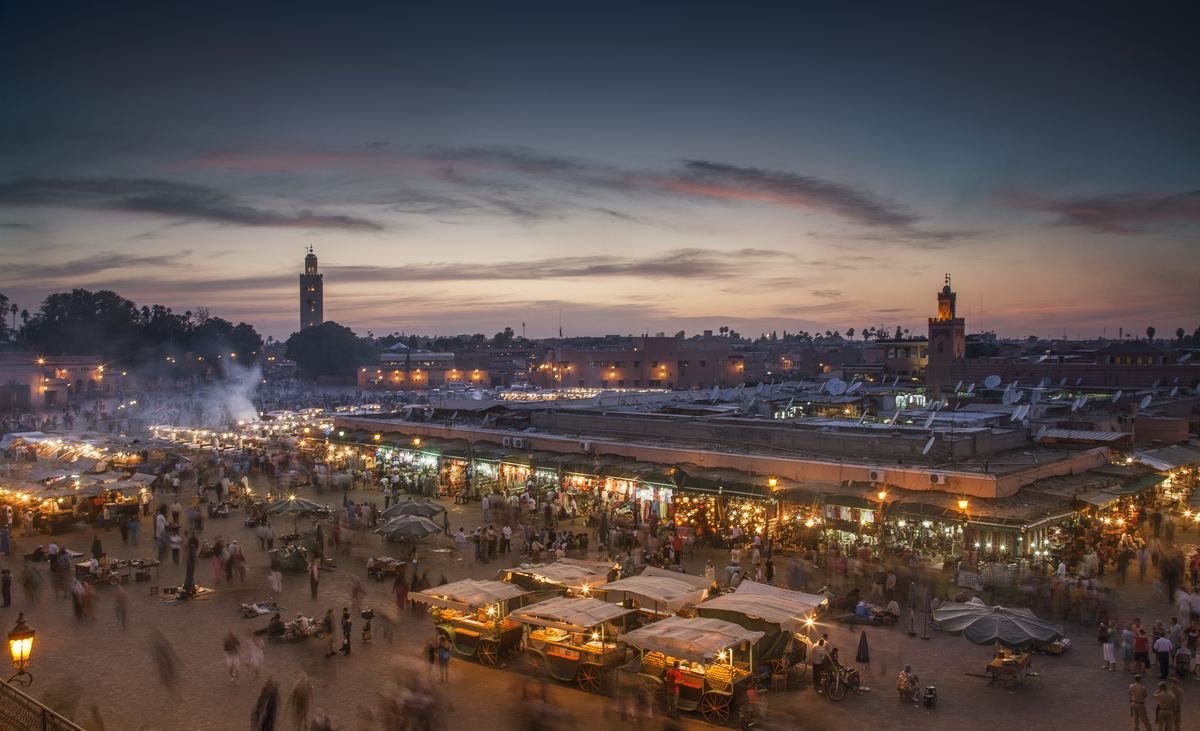
Marrakech at a glance
Marrakech sits on the Haouz plain at the foot of the High Atlas, about 450 metres above sea level. The city has two very different halves. The medina — the walled old city, a UNESCO World Heritage Site since 1985 — is a dense maze of souks, mosques, palaces and riads. Outside the walls, Gueliz and Hivernage are the modern districts built from the 1910s onward, with wide avenues, cafés, galleries, larger hotels and most of the city's restaurants that serve alcohol.
| Airport | Marrakech-Menara (RAK), about 6 km (4 mi) from the medina |
| Train | Marrakech station in Gueliz, direct trains to Casablanca, Rabat, Tangier (with change) and Fez |
| Ideal stay | 3 nights for the city, 4–5 with one or two day trips |
| Hottest months | June to September, often above 38 °C / 100 °F in the afternoon |
| Best for | First-time visitors, architecture, food, shopping, a base for the Atlas and the desert |
How the medina works
Almost everything a visitor wants to see sits within a 20-minute walk of Jemaa el-Fna, the large open square at the heart of the old city. Think of the square as your compass:
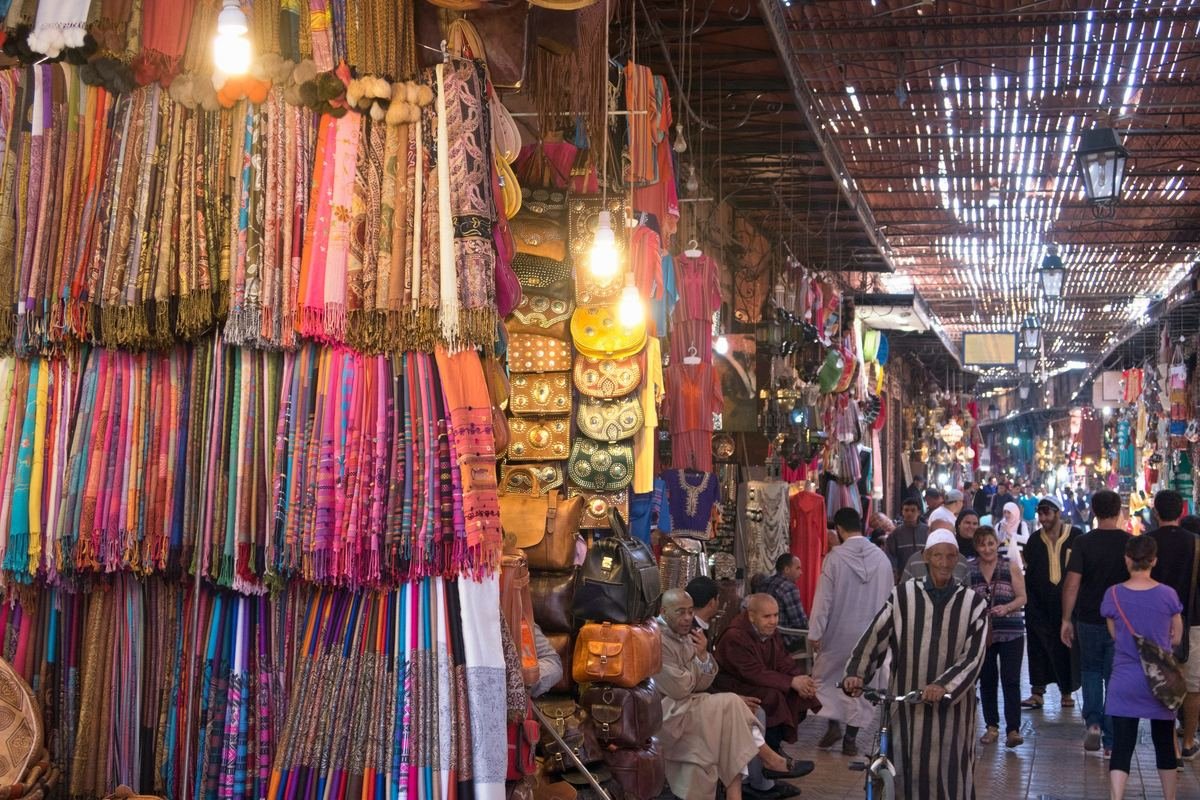
- North of the square are the souks — the covered market streets selling leather, lamps, carpets, spices and textiles — and further north the Ben Youssef Madrasa and the Marrakech Museum.
- West of the square rises the Koutoubia Mosque, the city's landmark minaret, visible from almost everywhere and the easiest point to reorient yourself.
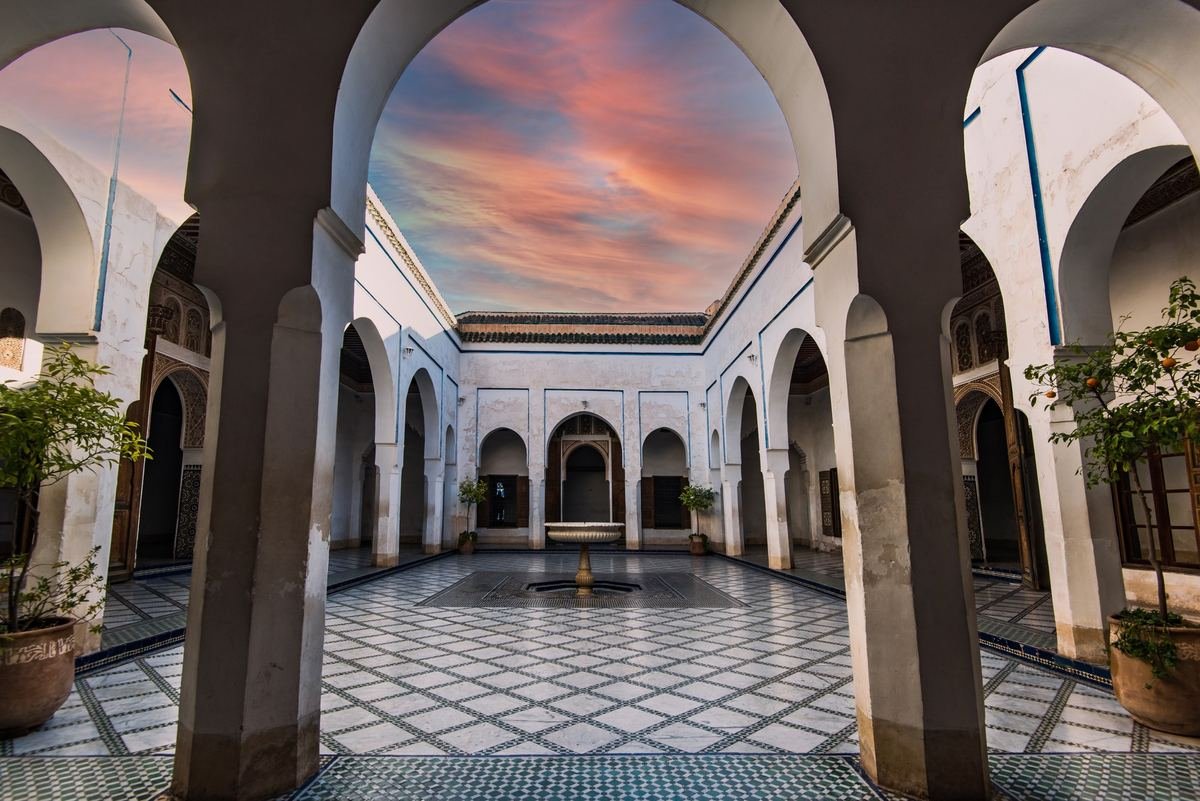
- South of the square you reach the Kasbah quarter (Saadian Tombs, Bab Agnaou), the Bahia Palace, El Badi Palace and the Mellah, the historic Jewish quarter.
Phone maps work reasonably well in the medina's main lanes but lose accuracy in the narrow derbs (dead-end alleys). Download an offline map before you go and save your riad's location as a pin. When you get lost — everyone does — ask a shopkeeper rather than a young man offering to guide you; shopkeepers point, guides expect payment.
The sights worth your time
Jemaa el-Fna. Visit twice: once in the late morning when it is mostly orange-juice stalls and calm, and again after sunset when food stalls, musicians and storytellers fill the square. UNESCO listed the square's oral traditions as a Masterpiece of the Oral and Intangible Heritage of Humanity in 2001. Expect to be asked for a tip if you photograph performers or animal handlers; a better choice is not to photograph the chained monkeys at all.
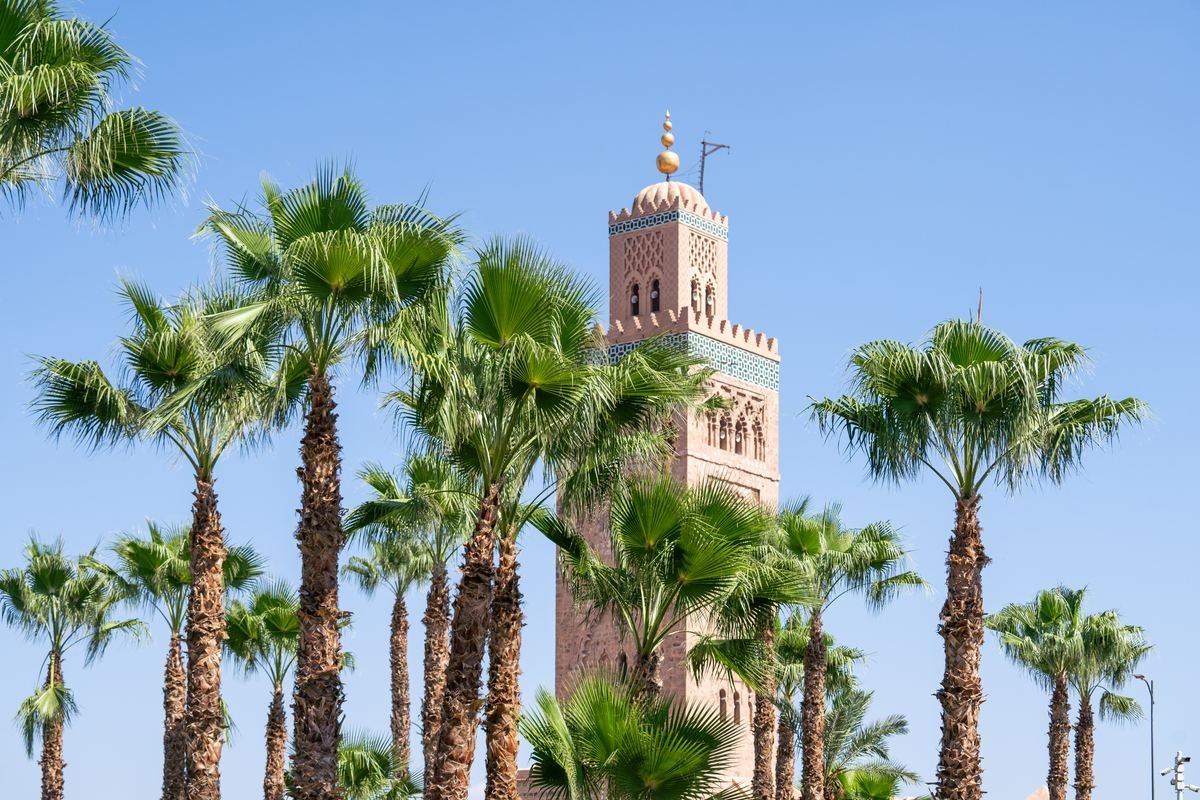
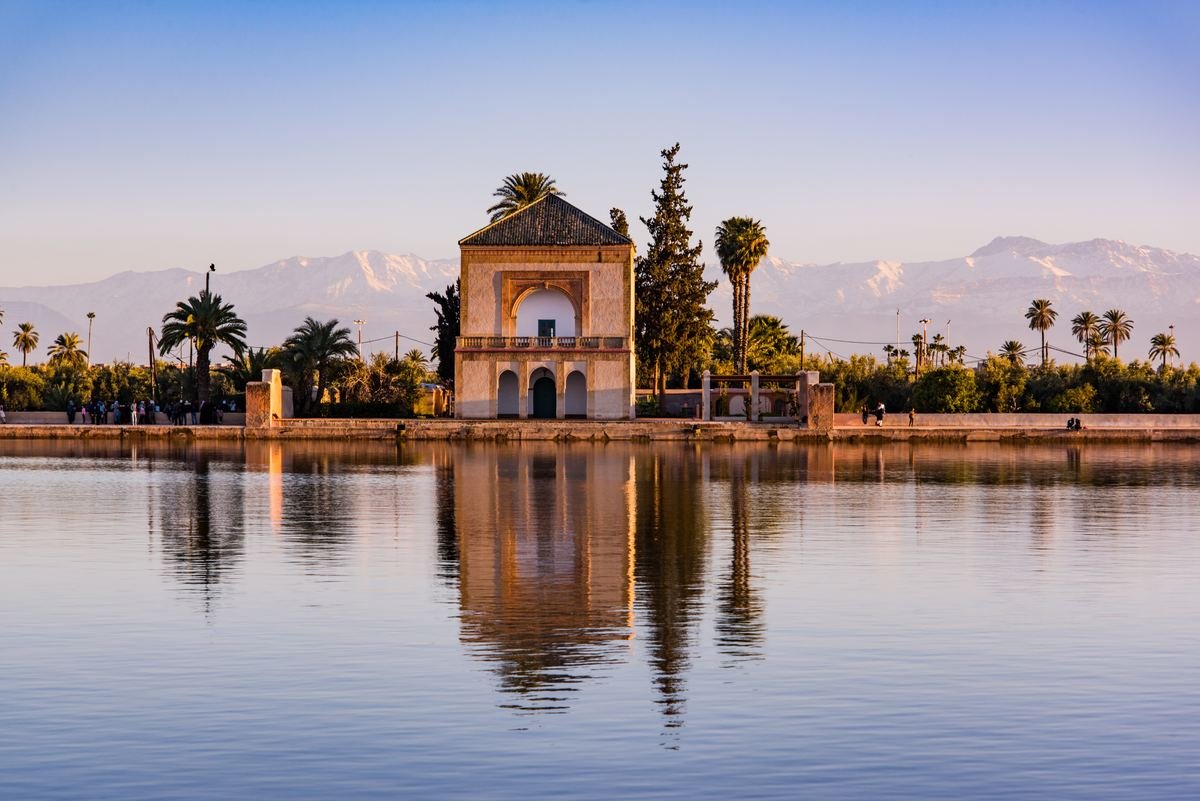
Koutoubia Mosque. Built under the Almohads in the 12th century, its minaret (about 77 metres) became the model for the Giralda in Seville and the Hassan Tower in Rabat. Non-Muslims cannot enter the mosque, but the surrounding gardens are pleasant at sunset.
Ben Youssef Madrasa. A former Quranic school and one of the finest pieces of Saadian-era decoration in Morocco: carved cedar, stucco and zellige tilework around a central courtyard with a pool. It reopened in 2022 after a long restoration. Go at opening time to see the courtyard without crowds.
Bahia Palace. A 19th-century palace of courtyards, painted ceilings and gardens built for the grand vizier. It gets very busy from 10:00; arrive early or in the last hour before closing.
Saadian Tombs. The burial chambers of the Saadian dynasty, rediscovered in 1917. The main hall is small and the queue to look into it can be long — go first thing.
El Badi Palace. A vast 16th-century ruin with sunken gardens and storks nesting on the walls. It is the place to understand the scale of Saadian ambition, and it is rarely crowded.
Jardin Majorelle and the Yves Saint Laurent Museum. The cobalt-blue garden created by painter Jacques Majorelle and later owned by Yves Saint Laurent and Pierre Bergé, plus the adjacent museum (opened 2017). Tickets are sold online for timed slots and often sell out in high season — book before you travel.
Le Jardin Secret. A restored riad garden in the heart of the medina, with a tower you can climb for a view over the rooftops. A quieter alternative when the bigger sights are crowded.
Where to stay
Riad in the medina — the classic choice. A riad is a traditional house built around an inner courtyard; most guesthouses have between 4 and 12 rooms, a roof terrace and breakfast included. Choose one within a 10-minute walk of Jemaa el-Fna or Bab Doukkala if it is your first visit: you will be able to walk everywhere, and taxis can drop you at a nearby gate. Ask the riad to meet you at the taxi drop-off on arrival — finding a riad at night with luggage is the most common first-day stress.
Kasbah quarter — slightly calmer, close to the Saadian Tombs and El Badi, with good access by car.
Gueliz / Hivernage — modern hotels with pools, easier car access, more restaurants with wine lists, and a 20-minute walk or short taxi ride to the medina. A good choice for families with small children or travellers who prefer wide streets.
Palmeraie and Agafay — resort hotels and desert camps outside the city. Wonderful for rest, inconvenient for sightseeing because every trip into town needs a car.
Getting around
- Walking is the only practical way to explore the medina. Wear closed shoes; the lanes are shared with scooters, carts and donkeys.
- Petits taxis (beige cars, maximum three passengers) are the cheapest way to cross town. Ask the driver to use the meter or agree the price before you get in.
- From the airport, there is a public airport bus to the medina and Gueliz and a taxi rank with posted fares; many riads also arrange a private transfer, which is the simplest option on a late arrival.
- Calèches (horse carriages) wait near the Koutoubia. Agree on the price and route beforehand.
- Car rental is useful for the Atlas and the desert, not for the city itself.
Food: what and where to eat
Start with the dishes Marrakech is known for. Tangia is the city's signature: beef or lamb slow-cooked for hours in a tall clay urn, traditionally in the embers of a hammam furnace. You will find it in the small grills around the Mellah and along the lanes east of Jemaa el-Fna. Tagines and couscous (traditionally on Friday) are everywhere. At the evening stalls of Jemaa el-Fna, look for stalls busy with Moroccan families, check that prices are written on the menu, and refuse plates you did not order — they will appear on the bill.
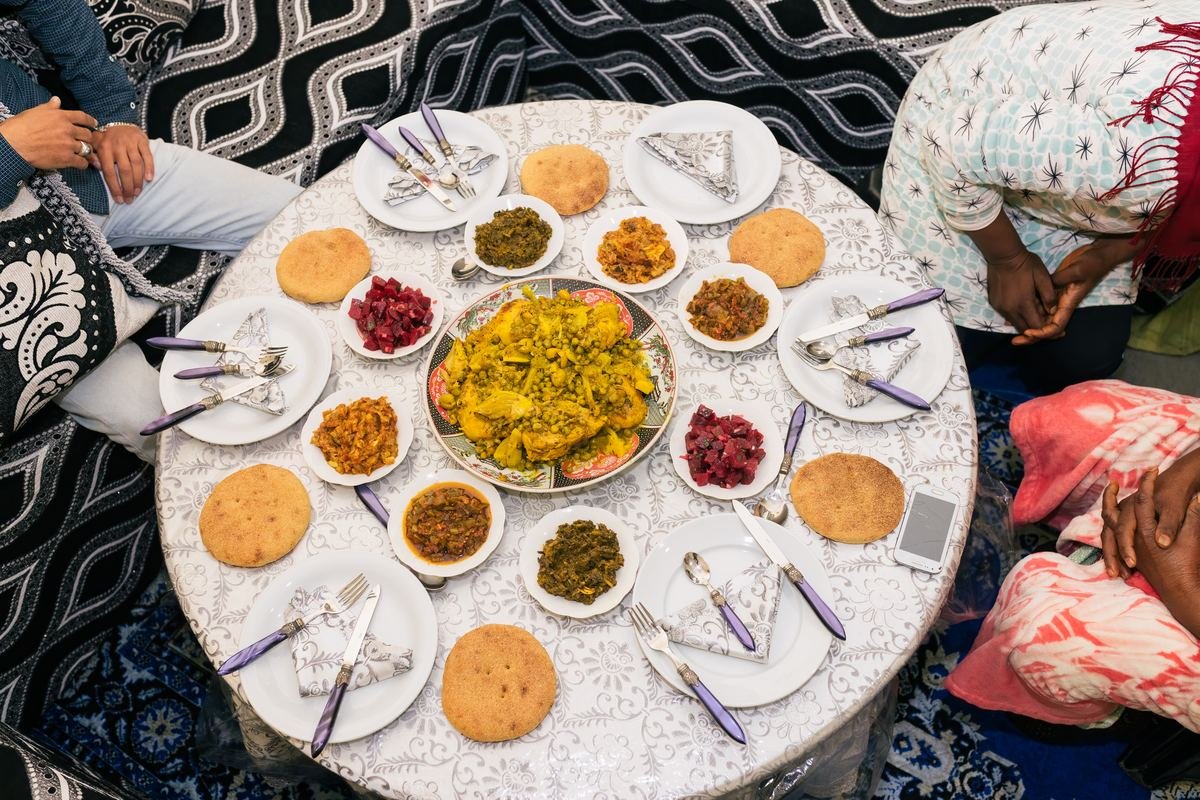
For a calmer meal, the rooftop restaurants around the Rahba Kedima (spice square) look over the medina at sunset. In Gueliz, you will find modern Moroccan cooking, international food and bars.
A cooking class is one of the best-value experiences in the city: most include a market visit, and you leave able to reproduce a tagine at home.
Shopping and bargaining
The souks are divided by trade: dyers' souk, metalworkers, leather, carpets, babouches (slippers). Prices are rarely fixed. A fair approach:
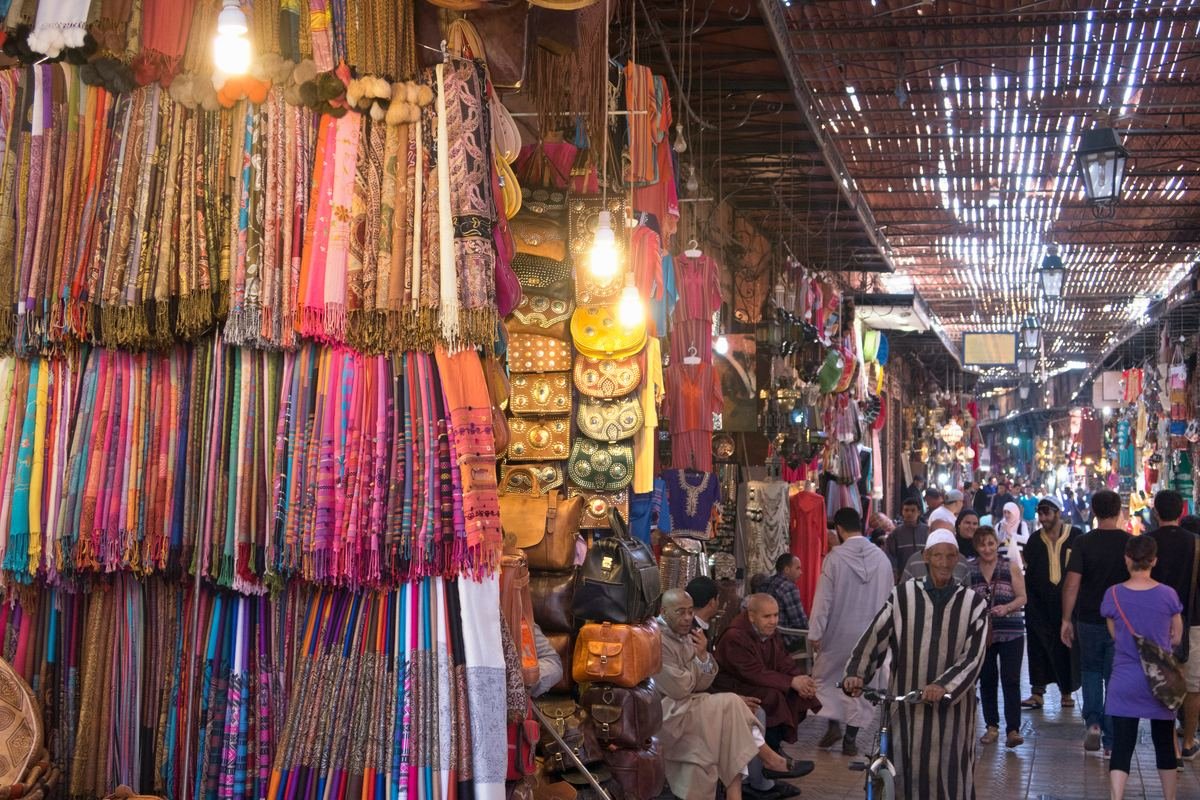
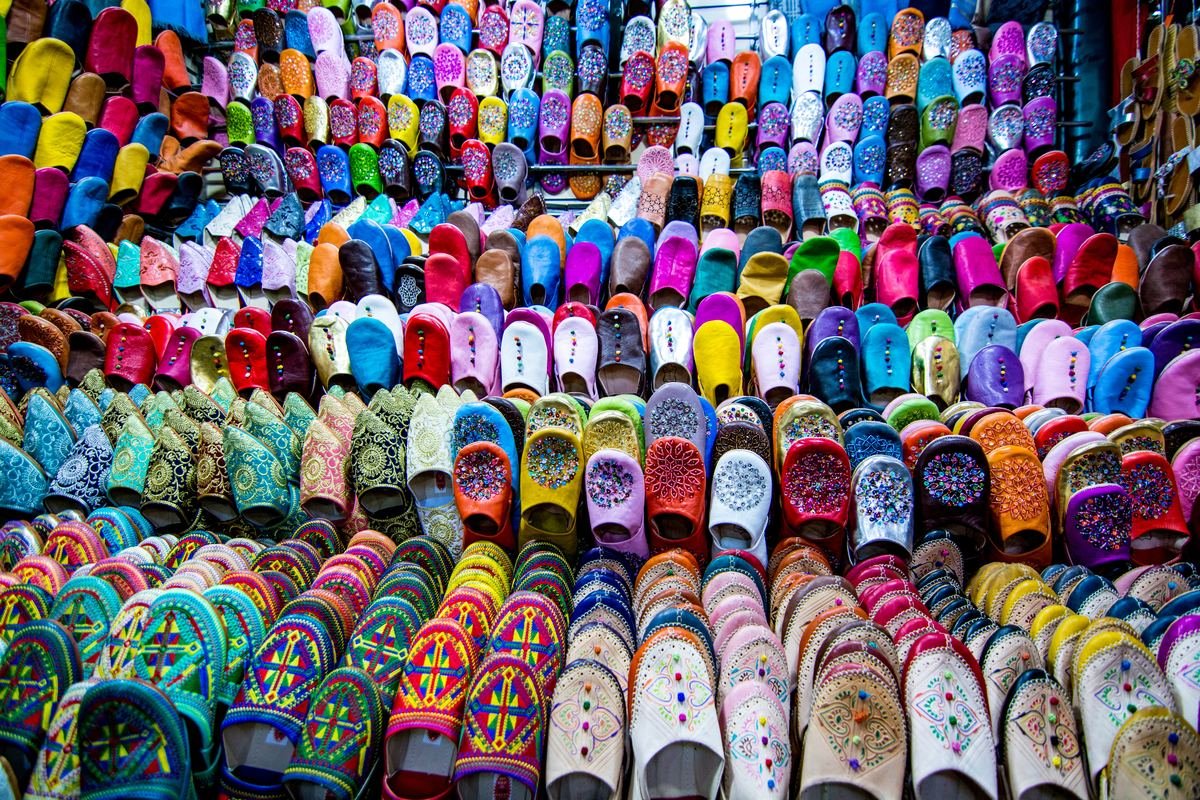
- Look in several shops before buying anything significant.
- Ask the price, then offer what you would genuinely pay — usually well below the first price.
- Stay friendly and be ready to walk away; it is not rude.
- Only start bargaining if you are interested — once a price is agreed, the deal is expected to go through.
For fixed prices and a sense of quality, visit the Ensemble Artisanal on Avenue Mohammed V before going into the souks.
Common scams and how to avoid them
- "The square is closed / the tannery is this way." A stranger tells you your route is closed and offers to lead you elsewhere — usually to a shop or the leather tanneries, followed by a demand for money. Politely decline and keep walking.
- Henna artists who grab your hand and start drawing before agreeing on a price. Keep your hands to yourself and say "la, shukran" (no, thank you).
- Unmetered taxis at the edge of the square at night. Walk one block away and hail a passing taxi instead.
None of this is dangerous; it is mostly persistence. A calm "no, thank you" and continuing to walk is enough in almost every case.
Day trips from Marrakech
| Day trip | Distance / time | Why go |
|---|---|---|
| Agafay Desert | About 40 km (25 mi), 45 minutes | Stony desert with camps, camel rides and sunset dinners — the closest "desert" feel to the city |
| Ourika Valley | About 1 hour | Berber villages, riverside cafés and short walks to the Setti Fatma waterfalls |
| Imlil and the Toubkal National Park | About 1.5 hours | Walnut terraces, mule tracks and the trailhead for Mount Toubkal (4,167 m) |
| Ouzoud Waterfalls | About 2.5–3 hours each way | Morocco's highest waterfalls (around 110 m), olive groves and Barbary macaques |
| Essaouira | About 2.5–3 hours each way | Atlantic port and medina; better as an overnight stay than a day trip |
| Aït Benhaddou | About 3.5–4 hours each way via the Tizi n'Tichka pass | UNESCO-listed fortified village; long for a single day — ideally part of a desert circuit |
The Sahara dunes at Merzouga are roughly 9–10 hours' drive away. Trips advertised as "Sahara in one day" from Marrakech do not exist; the shortest realistic option is a three-day circuit (see our desert road trip itinerary).
When to go
Spring (March–May) and autumn (late September–November) are the most comfortable months, with warm days and cool evenings. Winter (December–February) is sunny but nights drop close to freezing; choose a riad with heating. Summer (June–September) is very hot in the afternoon — plan sightseeing before 11:00 and after 17:00, and pick accommodation with a pool. During Ramadan, the city remains open, but some restaurants close at lunchtime and the atmosphere after sunset is especially lively.
Suggested 3-day plan
Day 1 — the medina core. Ben Youssef Madrasa at opening, the souks, lunch on a rooftop, Le Jardin Secret, sunset at the Koutoubia gardens and dinner at Jemaa el-Fna.
Day 2 — palaces and the south medina. Saadian Tombs early, El Badi Palace, the Mellah and its spice market, Bahia Palace in the late afternoon, then a hammam.
Day 3 — the modern city or the mountains. Either Jardin Majorelle (booked slot), the YSL Museum and Gueliz galleries, or a full day in the Ourika Valley or Imlil.
Practical checklist
- Book Jardin Majorelle tickets online in advance.
- Carry small notes and coins for tips, taxis and small purchases; many shops in the souks accept only cash.
- Dress modestly in the medina — shoulders and knees covered is a comfortable rule for everyone.
- Bring a scarf or light layer: evenings are cool even in spring.
- Confirm current opening hours locally; many monuments close for part of Friday midday prayers or adjust hours during Ramadan.
Continue planning with our 7-day Morocco itinerary, the transport guide and our guide to money and payments.
Frequently asked questions
How many days do you need in Marrakech?
Three nights are enough to see the medina, the palaces and the gardens without rushing. Plan four or five nights if you want to add a day trip to the Atlas Mountains, the Ourika valley or the Agafay desert.
Where is the best area to stay in Marrakech?
For a first visit, a riad inside the medina within a 10-minute walk of Jemaa el-Fna or Bab Doukkala lets you walk everywhere. Families and travellers who prefer wide streets and pools often choose Gueliz or Hivernage, a short taxi ride away.
Can you visit the Sahara on a day trip from Marrakech?
No. The Erg Chebbi dunes at Merzouga are about 9–10 hours' drive away, so the shortest realistic option is a three-day circuit. For a desert atmosphere in one evening, the stony Agafay desert is about 45 minutes from the city.
When is the best time to visit Marrakech?
March to May and late September to November are the most comfortable. Summer afternoons regularly exceed 38 °C / 100 °F, and winter nights can drop close to freezing.
This guide was last reviewed in October 2026. Entry rules, opening hours, transport timetables and prices change; check official sources shortly before you travel. Spotted something out of date? Tell us.