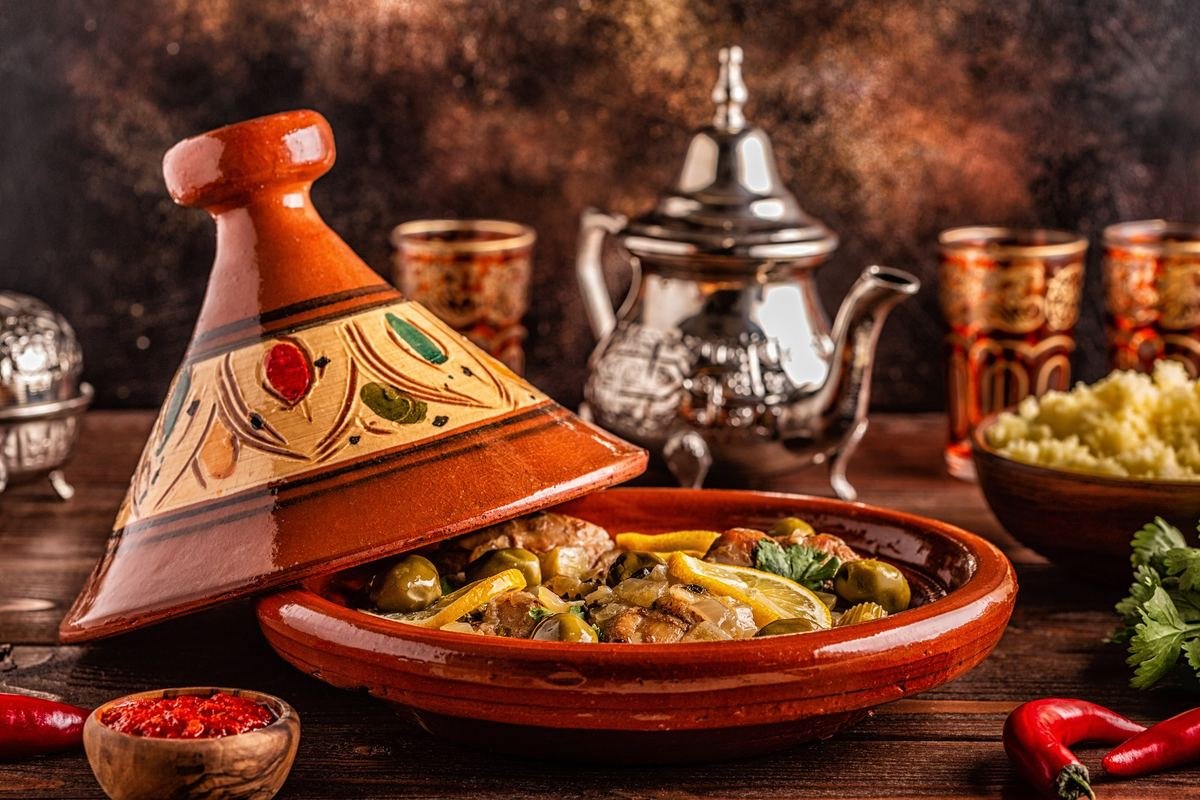
The pot and the dish
The tagine pot is a round, shallow base with a cone-shaped lid. Steam rises from the stew, condenses on the cooler upper part of the cone and drips back down, so the food cooks slowly in very little water and stays moist. Traditionally it sits over a small charcoal brazier (kanoun or mjmar) for two to four hours; at home most Moroccans now use gas, sometimes with a pressure cooker for speed and the clay pot for serving.
The dish is not one recipe but a method: meat, fish or vegetables layered with onions, oil, spices and often fruit, cooked gently until the sauce reduces to a thick, glossy coating. The common spice base is ginger, black pepper, turmeric, saffron or paprika, cumin and cinnamon, with fresh coriander and parsley. Tagine is eaten with bread, scooped from the side of the pot facing you, never with rice.
The main types to order
| Tagine | What is in it | Notes |
|---|---|---|
| Chicken with preserved lemon and olives | Chicken, onions, ginger, saffron, salt-preserved lemon, green or violet olives | The classic; sauce should be golden and tangy |
| Kefta with eggs | Spiced minced beef or lamb meatballs in tomato sauce, eggs cracked on top at the end | Quick, cheap and filling; a good lunch |
| Lamb (or beef) with prunes | Slow-cooked meat, prunes, cinnamon, honey, fried almonds and sesame | Sweet-savoury and festive; takes longest to cook |
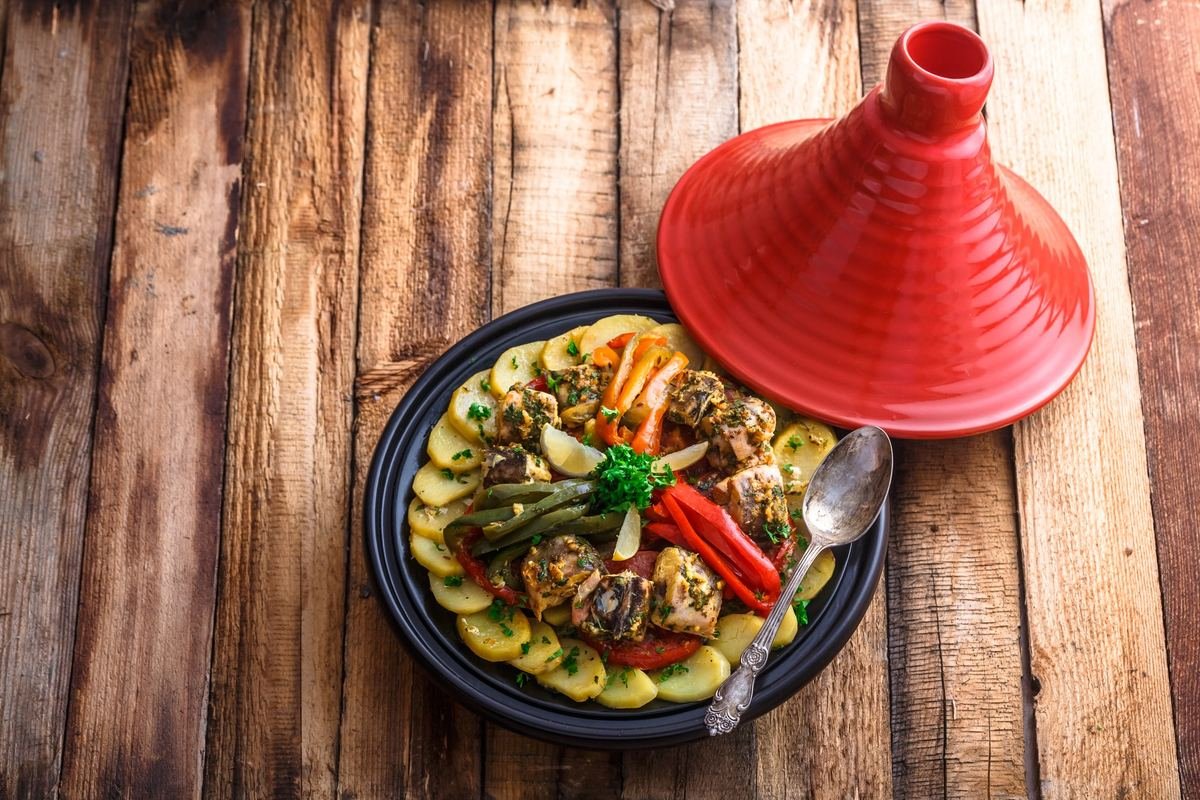
| Vegetable | Carrots, potatoes, courgettes, peppers, peas, tomatoes in a fan shape | Ask if it is cooked in meat stock if you are vegetarian |
| Fish | White fish or sardine balls with chermoula, tomatoes, peppers and potato | Best on the coast, especially in Essaouira |
Chicken with preserved lemon and olives (djaj mqualli in its saffron-yellow style) is the dish most visitors remember. The lemons are preserved in salt for weeks, which gives a mellow, slightly bitter citrus flavour quite unlike fresh lemon.
Kefta with eggs arrives bubbling, the eggs just set in a tomato and cumin sauce. It is the tagine most often cooked to order in small local places because it takes only 20–30 minutes.
Lamb with prunes (mrouzia is a related, richer version made with raisins and honey around Eid al-Adha) is the celebration tagine. Good versions use shoulder or neck that falls off the bone.
Vegetable tagine is everywhere on tourist menus. In family cooking, vegetables are more often a supporting layer around meat.
Fish tagine is a coastal dish. In Essaouira, look for it around the port and the medina's fish-market lanes, where the fish was landed the same morning. Inland, it is less reliable.
You will also meet seasonal variations: lamb with artichokes and peas in spring, beef with quince in autumn, chicken with caramelised onions and raisins, and in the Atlas Mountains simple Amazigh tagines of mutton and vegetables cooked over charcoal by the roadside.
How to tell a good tagine
A properly made tagine takes time, and the clues are visible:
- It takes time to arrive. A meat tagine cooked to order needs 45 minutes or more. If it appears in five minutes, it has been reheated. That is not always bad, but it explains a dry or watery result.
- Look for the stack. Rows of identical tagines sitting on gas rings outside a restaurant, lids closed for hours, usually mean reheated food aimed at passers-by.
- The sauce clings. A good tagine has a reduced, oily sauce that coats the meat; it should not be a soup with vegetables floating in it.
- The meat yields. Lamb and beef should come away from the bone with bread alone.
- Charcoal is a good sign. Small places cooking on clay braziers, often in the Atlas Mountains or in medina snack bars, usually produce the best texture.
- Order ahead in a riad. Many riads will prepare a tagine for dinner if you ask in the morning, which is often the best tagine of a trip.
Typical prices in 2026
Approximate ranges as of autumn 2026 (indicative estimates).
| Where | Kefta or vegetable | Chicken | Lamb or beef with prunes |
|---|---|---|---|
| Local snack bar or roadside | approx. 30–50 MAD | approx. 35–60 MAD | approx. 50–80 MAD |
| Tourist restaurant in a medina | approx. 60–90 MAD | approx. 70–110 MAD | approx. 90–150 MAD |
| Riad dinner (set menu) | — | included, approx. 200–400 MAD for the meal | — |
Prices are per person or per small tagine. A tagine "for two" is common in family places. Check whether bread, salad and tea are included before ordering; see our money guide on paying in cash.
Buying a tagine pot
Cooking or decorative?
Most of the brightly painted tagines in the souks are decorative or serving pieces. They look wonderful but should not go on a flame, and some decorative glazes are not considered food-safe. A cooking tagine looks plainer: unglazed terracotta, or terracotta with a simple, even brown or dark glaze inside and out. Ask the seller directly whether it is "for cooking" (pour la cuisine in French); honest sellers will tell you.
Glazed or unglazed?
- Unglazed terracotta is the traditional cooking pot. It absorbs flavours, needs curing and is fragile, but it is cheap and authentic.
- Simply glazed cooking tagines are easier to clean and do not need as much curing. Avoid using heavily painted pieces for cooking.
Morocco's main pottery town is Safi on the Atlantic coast, and pots are sold in the medina souks of Fez and Marrakech. Read our souks guide on bargaining and our crafts guide for pottery in general.
What to pay
| Pot | Typical price |
|---|---|
| Small unglazed cooking tagine (1–2 people) | approx. 40–80 MAD |
| Family-size cooking tagine | approx. 80–200 MAD |
| Painted decorative serving tagine | approx. 60–400 MAD depending on size and finish |
| Miniature spice tagines | approx. 10–30 MAD |
Expect a first price two or three times higher in tourist areas. Check for hairline cracks by tapping the base: it should ring, not thud. Make sure the lid sits flat and evenly.
Curing and using it at home
- Soak an unglazed pot (base and lid) in water for 12–24 hours.
- Dry it, then rub the inside with olive oil.
- Bake it in a cold oven brought slowly up to about 150 °C (300 °F) for two hours, then let it cool inside the oven.
- Cook gently. Always use low heat and a heat diffuser on gas or electric hobs. Never put cold liquid into a hot pot or set a hot pot on a cold surface. Clay tagines do not work on induction without a diffuser plate designed for it.
- Wash with water and a little baking soda rather than detergent, and dry fully before storing.
Wrap the pot well for the flight: clothes around it in your hold luggage, or ask the shop to box it.
Learn to make one
The best way to understand tagine is to cook it. Our Marrakech tagine cooking class guide explains how classes work, from the market visit to spice blending, and what you should expect to pay.
Frequently asked questions
What is the most popular tagine in Morocco?
Chicken with preserved lemon and olives, and kefta with eggs, are the two you will see on almost every menu. Lamb with prunes is the classic for celebrations.
Is tagine eaten with rice or couscous?
Neither, traditionally. Tagine is eaten with bread, which is used to scoop up the sauce. Couscous is a separate dish.
Can I cook with a decorative tagine from the souk?
No. Painted decorative tagines are for serving or display. Buy a plain unglazed or simply glazed pot sold specifically for cooking.
How much should a tagine cost in Marrakech?
Around 35–60 MAD in a local café and 70–150 MAD in tourist restaurants in the medina, depending on the type (November 2026).
How do you cure a new tagine pot?
Soak it in water overnight, rub the inside with olive oil, then bake it slowly in the oven at about 150 °C for two hours and let it cool inside.
Related: Moroccan food guide · Couscous · Tangia · Marrakech cooking class
This guide was last reviewed in November 2026. Entry rules, opening hours, transport timetables and prices change; check official sources shortly before you travel. Spotted something out of date? Tell us.