What Moroccan couscous actually is
Couscous (seksu in Darija and Amazigh languages) is made from durum wheat semolina rolled by hand with a little water and salt into tiny granules, then dried. Barley, maize and even acorn versions exist in rural areas, especially in the Amazigh villages of the Atlas Mountains.
What makes it Moroccan is the method. The grain is steamed three times in the top part of a couscoussier (keskas), set over a pot of simmering broth, meat and vegetables. Between each steaming the cook tips the grain into a wide dish, rubs it with water, butter or oil and breaks up any lumps by hand. The result is light, separate and fluffy, quite unlike the instant couscous sold abroad, which is pre-steamed and simply soaked.
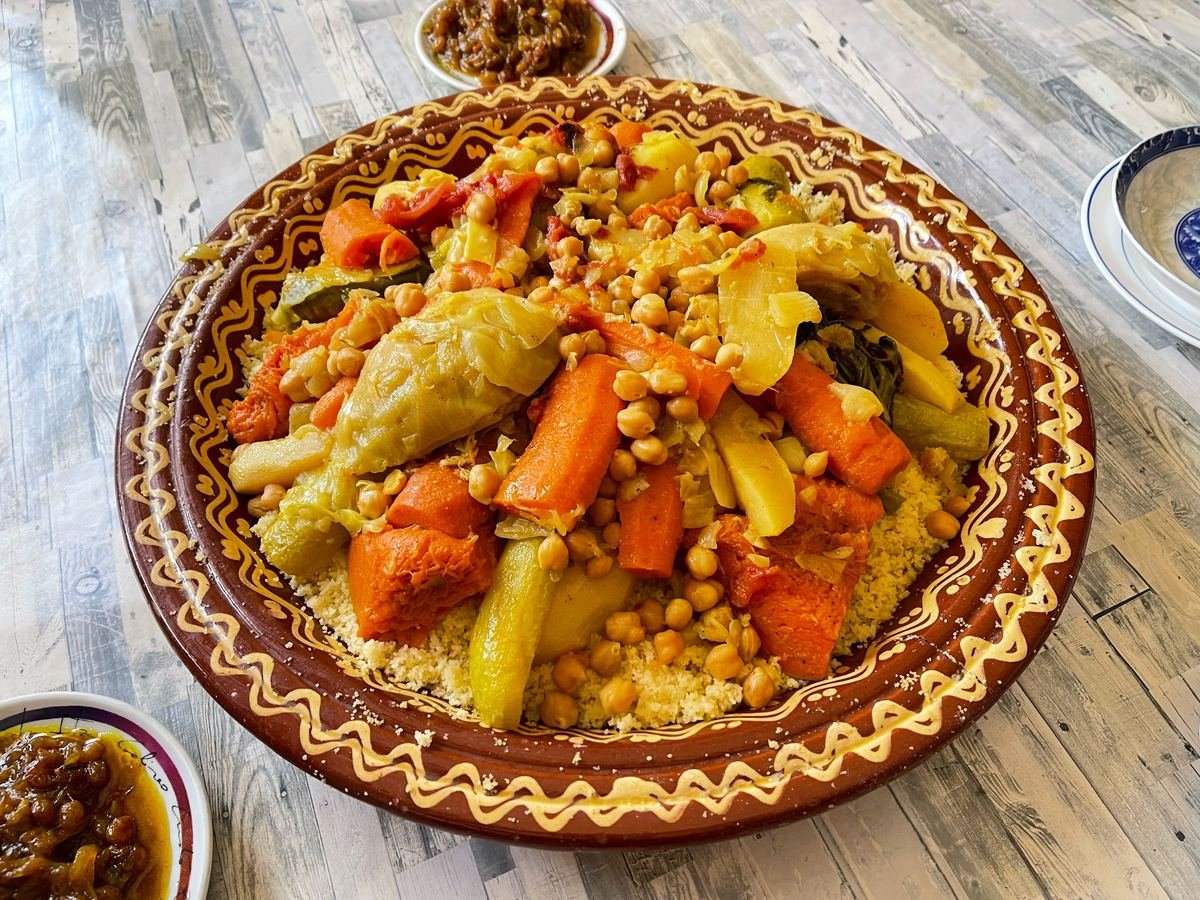
The finished couscous is piled into a dome on a large shallow dish (gasaa), meat buried in the centre, vegetables arranged over it and broth poured on, with extra broth served in a bowl.
The Friday tradition
Friday (nhar el-jemaa) is the day of congregational prayer, and couscous is the meal that follows it. Families cook it at home in the morning; the dish is eaten at lunch, often with extended family. Neighbours send a portion to the mosque or to those in need, and some local restaurants and snack bars cook couscous only on Fridays.
For a visitor, this has a practical consequence: Friday lunch is the best time to eat couscous in Morocco, and the worst day to expect a quick couscous on other days in small local places.
UNESCO recognition
In December 2020 UNESCO added "Knowledge, know-how and practices pertaining to the production and consumption of couscous" to the Representative List of the Intangible Cultural Heritage of Humanity. It was a joint nomination by Algeria, Mauritania, Morocco and Tunisia, a rare shared file in a region where couscous is often a matter of national pride. The listing covers the whole chain: growing the grain, rolling it, the tools (sieves, couscoussiers, earthenware dishes), the recipes, and the social rituals of eating it together. It does not mean couscous "belongs" to one country.
The main versions
| Couscous | What it is | When you will find it |
|---|---|---|
| Seven vegetables (sebaa khodra) | Lamb or beef with carrots, turnips, courgettes, pumpkin, cabbage, chickpeas, tomato and onion | The classic Friday couscous |
| Tfaya | Topped with onions and raisins caramelised with cinnamon and honey, often with chickpeas and almonds | Festive, sweet-savoury; often with lamb or chicken |
| Seffa | Sweet couscous or fine vermicelli steamed with butter, then topped with cinnamon, icing sugar and almonds | Celebrations; sometimes served with milk |
| Seffa medfouna | Seffa with spiced chicken "buried" (medfouna) inside | Weddings and family feasts |
| Fish couscous | Fish and vegetables in a tomato broth | Coastal towns, less common |
| Barley couscous (belboula or tamazight) | Coarser barley grain, often with vegetables and buttermilk | Rural Amazigh areas |
Seven vegetables is the reference. The number is more a tradition than a rule; seven is considered lucky, and the vegetables change with the season. Pumpkin and turnip give sweetness, cabbage gives body, and the broth is flavoured with ginger, pepper, turmeric and saffron.
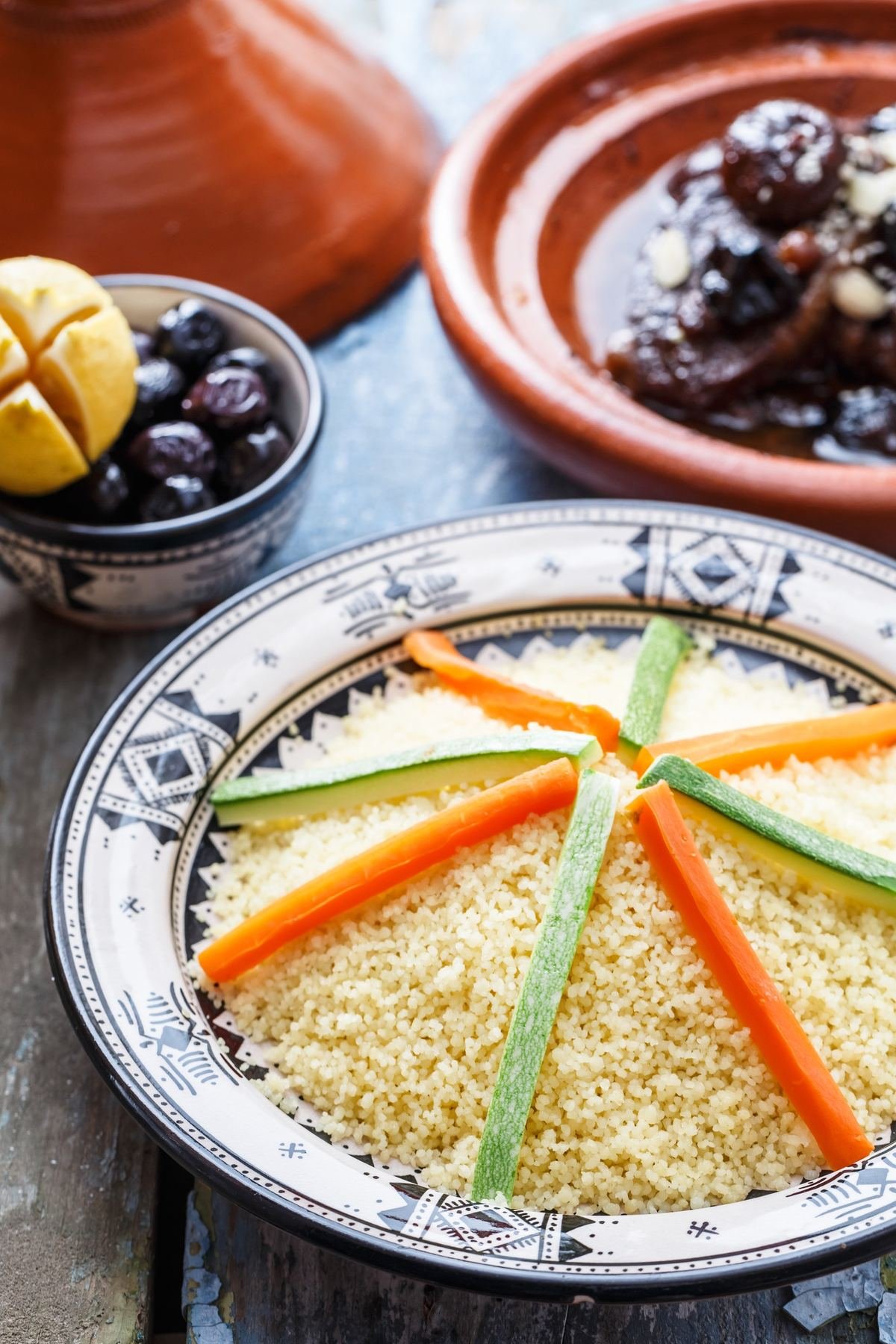
Tfaya is the one visitors remember. The topping is sweet and sticky, made from onions slowly cooked down with raisins, cinnamon, sugar or honey and sometimes orange flower water. It balances a rich lamb couscous.
Seffa surprises many: a sweet couscous served at the end of a feast, or as a dish on its own. In the version with buried chicken, sweet and savoury meet the way they do in pastilla.
Where a visitor can eat good couscous
- A Moroccan home. If you are invited for Friday lunch, accept. It is the best couscous you will eat.
- Your riad. Most riads in Marrakech and Fez can prepare couscous if you ask a day ahead. Because it takes hours, many only do it on Fridays or for groups.
- Local restaurants on Fridays. Popular family restaurants and snack bars in the medinas and in the newer districts of Rabat and Casablanca put out large pots at lunch on Friday. Arrive between 13:30 and 14:30; it often sells out.
- Cooking classes. Some classes include rolling and steaming couscous. See our Marrakech tagine cooking class guide.
- Tourist restaurants serve couscous every day. Quality varies; a couscous served quickly at 20:00 on a Tuesday has probably been steamed hours earlier.
How to spot a good one
- The grains are separate, fluffy and slightly buttery, never sticky, wet or lumpy.
- The broth tastes of meat and vegetables, not of stock cubes.
- The vegetables are soft but whole, arranged over the dome rather than mashed.
- Extra broth is offered separately so you can moisten the grain to your taste.
Typical prices in 2026
Approximate ranges as of autumn 2026 (indicative estimates).
| Where | Price per person |
|---|---|
| Local restaurant, Friday couscous | approx. 40–70 MAD |
| Tourist restaurant in a medina | approx. 80–140 MAD |
| Riad dinner with couscous (set menu) | approx. 200–400 MAD |
| Couscous for two or more ordered in advance | ask; often priced per dish |
Vegetarian couscous is widely offered, but the broth may still be made with meat; ask if it matters to you. Our food guide covers vegetarian eating more broadly.
How to eat couscous at a Moroccan table
The dish is shared, so a few customs help:
- Wash your hands before sitting down; a host may bring water to the table.
- Eat only from the section in front of you. Imagine the dome divided like a cake and work inwards from your edge.
- Spoon or hand. Spoons are always offered. Locals may roll grain into a small ball in the right hand by tossing it lightly with the fingers, then flick it into the mouth. It takes practice; using a spoon is perfectly polite.
- Use your right hand for eating and passing food.
- Wait for the meat. It sits in the centre and the host usually breaks it up and pushes pieces towards guests. Do not dig into the middle.
- Expect a little buttermilk (lben) in some homes, drunk with couscous.
- Say when you are full. Hosts will keep offering; shbe't ("I'm full") and baraka ("enough, thank you") are the polite way to stop. See our language guide.
During Ramadan, couscous is rarely eaten at iftar; it tends to appear at the later evening meal or on Fridays.
Frequently asked questions
Why is couscous eaten on Fridays in Morocco?
Friday is the day of the main weekly prayer, and couscous became the family meal shared after it. Many families also give part of the dish to neighbours or people in need.
Is couscous on the UNESCO heritage list?
Yes. In December 2020 UNESCO inscribed the knowledge, know-how and practices of couscous on its intangible heritage list, after a joint nomination by Algeria, Mauritania, Morocco and Tunisia.
What is couscous tfaya?
Couscous topped with onions and raisins caramelised with cinnamon and honey, usually served with lamb or chicken and chickpeas. It is sweet and savoury at the same time.
Can you get couscous every day in Morocco?
In tourist restaurants, yes. In many local restaurants it is cooked only on Friday, which is when it is freshest.
Do Moroccans eat couscous with their hands?
Some do, rolling it into a small ball with the right hand, but spoons are common and always acceptable for guests.
Related: Moroccan food guide · Tagine · Pastilla · Ramadan in Morocco
This guide was last reviewed in November 2026. Entry rules, opening hours, transport timetables and prices change; check official sources shortly before you travel. Spotted something out of date? Tell us.