Rabat at a glance
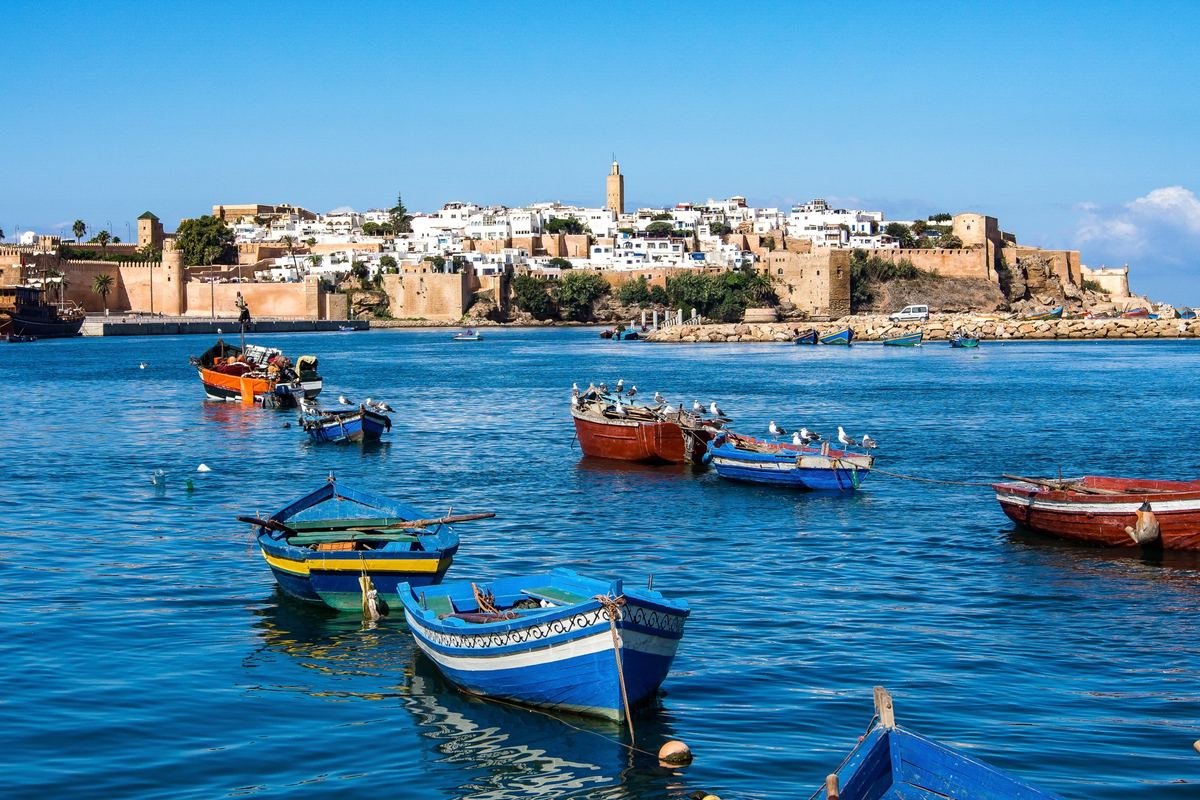
Rabat sits on the south bank of the Bou Regreg river where it meets the Atlantic, facing its twin city Salé. It became the capital under the French Protectorate in 1912 and has remained so since independence in 1956. In 2012 the city's historic and modern quarters were added together to UNESCO's World Heritage List as "Rabat, Modern Capital and Historic City: a Shared Heritage" — recognising both its medieval monuments and its early-20th-century urban planning.
| Airport | Rabat-Salé (RBA), about 10 km (6 mi) from the centre |
| Train stations | Rabat-Ville (central) and Rabat-Agdal; Al Boraq high-speed trains stop at Rabat-Agdal |
| From Casablanca | About 1 hour by train |
| Ideal stay | 1 full day, 2 with museums and Salé |
| Best for | Easy-going sightseeing, Islamic and Roman heritage, gardens, museums |
The main sights
Kasbah of the Udayas (Oudayas). A 12th-century fortress on the headland above the river mouth, with a monumental Almohad gate, white-and-blue lanes, and the Andalusian Gardens inside its walls. At the far end, a terrace overlooks the ocean, the river and Salé. The Café Maure, a terrace café in the gardens, is a classic stop for mint tea and almond pastries.
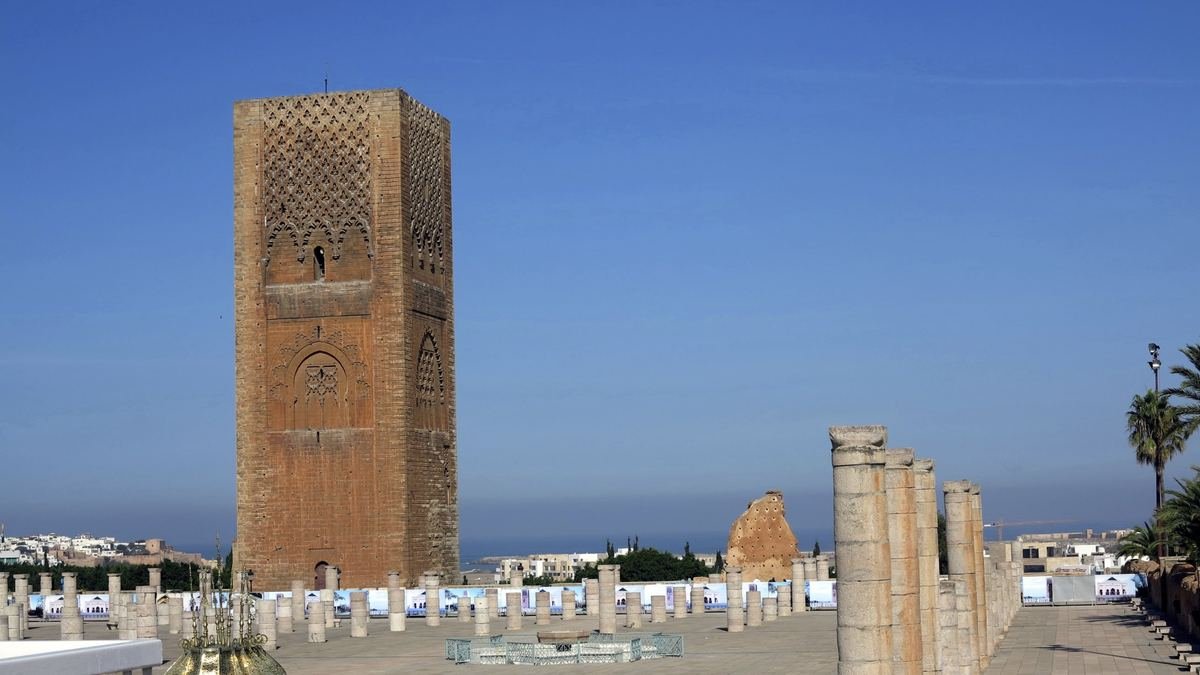
Hassan Tower and the Mausoleum of Mohammed V. In 1195 the Almohad sultan Yacoub al-Mansour began building what was intended to be one of the largest mosques in the world. Construction stopped at his death in 1199; the unfinished minaret, about 44 metres high, and rows of column stumps remain. Facing it is the Mausoleum of Mohammed V, where King Mohammed V and his sons King Hassan II and Prince Moulay Abdallah are buried, guarded by Royal Guards in ceremonial uniforms. Non-Muslim visitors may enter and look down into the tomb chamber. Dress respectfully.
Chellah. A walled necropolis built by the Marinids in the 14th century on top of the ruins of the Roman town of Sala Colonia. Inside you find Roman streets and foundations, a ruined mosque and madrasa with zellige fragments, walled gardens, and a large colony of white storks nesting on the minaret and walls. It has been restored and fitted with walkways in recent years; check current opening arrangements.
The medina. Rabat's 17th-century medina is compact, flat and low-pressure. Rue des Consuls is its best shopping street for carpets, leather and crafts; the main market street, Avenue Mohammed V to Souk es-Sebat, is where locals shop for everyday goods.
Mohammed VI Museum of Modern and Contemporary Art (MMVI). Opened in 2014, it presents Moroccan and international modern art in temporary exhibitions. A good choice on a hot afternoon.
Museum of History and Civilizations. The former Archaeology Museum, renovated and renamed in 2017, holds major finds from Volubilis and other Roman sites, including bronzes. Check current opening hours before visiting.
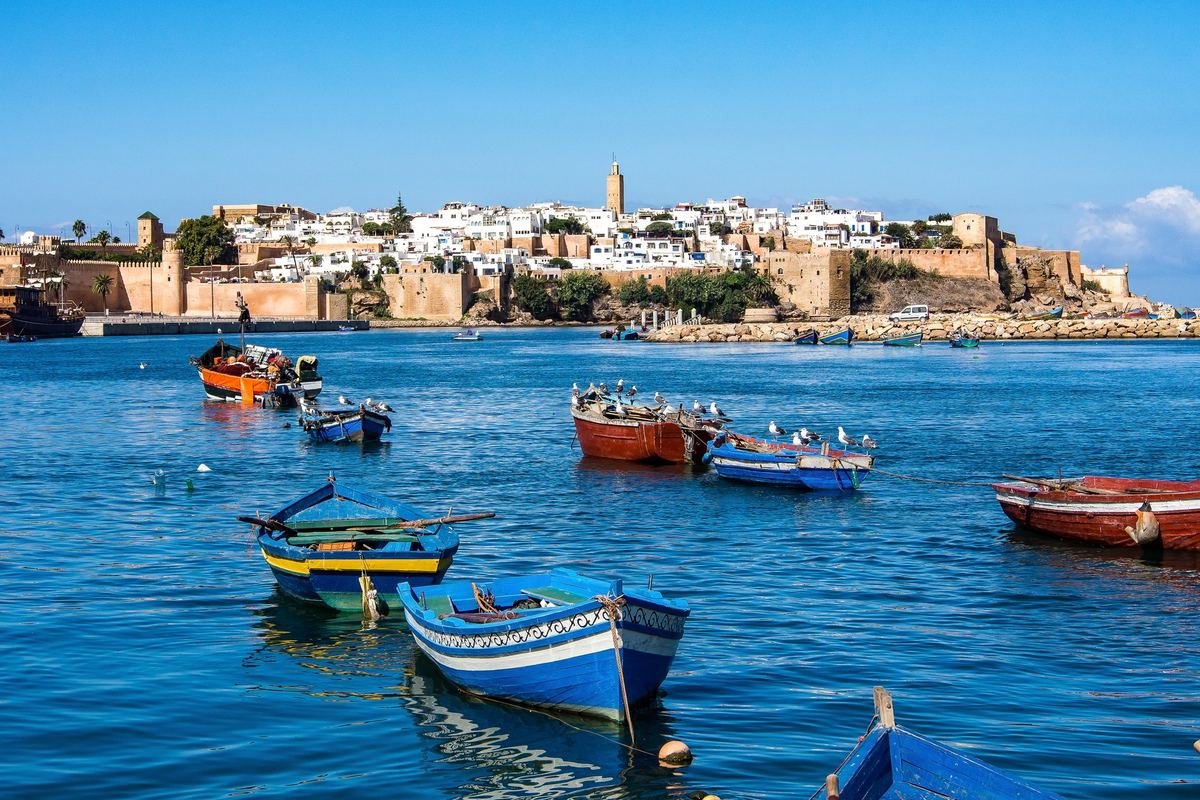
The Bou Regreg riverfront. A promenade runs along the river beneath the Kasbah; small rowing boats ferry passengers across to Salé for a few dirhams.
Salé across the river
Salé was historically a rival to Rabat and, in the 17th century, a base for the corsairs of the "Republic of Bou Regreg". Its medina is more traditional and far less visited. Highlights include the Merinid Madrasa (Abu al-Hassan Madrasa), with fine carved stucco and cedar, the Great Mosque and the potters' quarter of Oulja, on the edge of town, where you can buy ceramics at workshop prices. The tram crosses the Hassan II bridge to Salé in a few minutes.
Getting around
Rabat is one of the easiest Moroccan cities to navigate.
- Tram: two lines connect the centre, the main train stations, the medina, the Bou Regreg and Salé. Buy tickets at the stop machines.
- Petits taxis (blue): metered and inexpensive.
- Walking: the medina, the Kasbah, Hassan Tower and the city-centre avenues are within walking distance of each other.
Where to stay
- Medina riads put you within walking distance of the Kasbah and the river. Quieter than riads in Marrakech.
- City centre (Hassan district) hotels are convenient for the train station and restaurants.
- Agdal is a residential district with cafés and the high-speed train station — practical if you are arriving or leaving by Al Boraq.
- Souissi is greener and further out, with larger hotels.
Food
Rabat's restaurants are generally good value. Try fish at the small grills around the Bou Regreg port, pastries in the Kasbah, and the excellent street food stands inside the medina. The city also has a wide range of contemporary Moroccan and international restaurants in Agdal and the centre.
Beaches
The city beach below the Kasbah is popular with surfers and families, but currents are strong. For a calmer swim, many residents drive south along the coast to the beaches of Harhoura and Temara.
When to go
Rabat is mild throughout the year. Summers are rarely uncomfortable, and winters are mild but wet. It is a good place to recover from the heat of the interior in July and August.
One-day plan
Start at the Kasbah of the Udayas and the Andalusian Gardens, wander down through the medina and Rue des Consuls, take the tram to Hassan Tower and the Mausoleum, have lunch in the centre, visit Chellah in the late afternoon when the light is softer, and end with a sunset walk along the river. With a second day, add the MMVI museum and Salé.
Continue to Fez or Casablanca, or plan the route with our imperial cities itinerary.
Frequently asked questions
Is Rabat worth visiting?
Yes. Morocco's capital is calm, green and easy to explore by tram, with the Kasbah of the Udayas, the Hassan Tower, the Mausoleum of Mohammed V and Chellah within a short distance.
How far is Rabat from Casablanca?
About one hour by train.
How do you get from Rabat to Salé?
Take the tram across the Hassan II bridge, or one of the small rowing boats that cross the Bou Regreg river.
This guide was last reviewed in October 2026. Entry rules, opening hours, transport timetables and prices change; check official sources shortly before you travel. Spotted something out of date? Tell us.