Why Fez is different from Marrakech
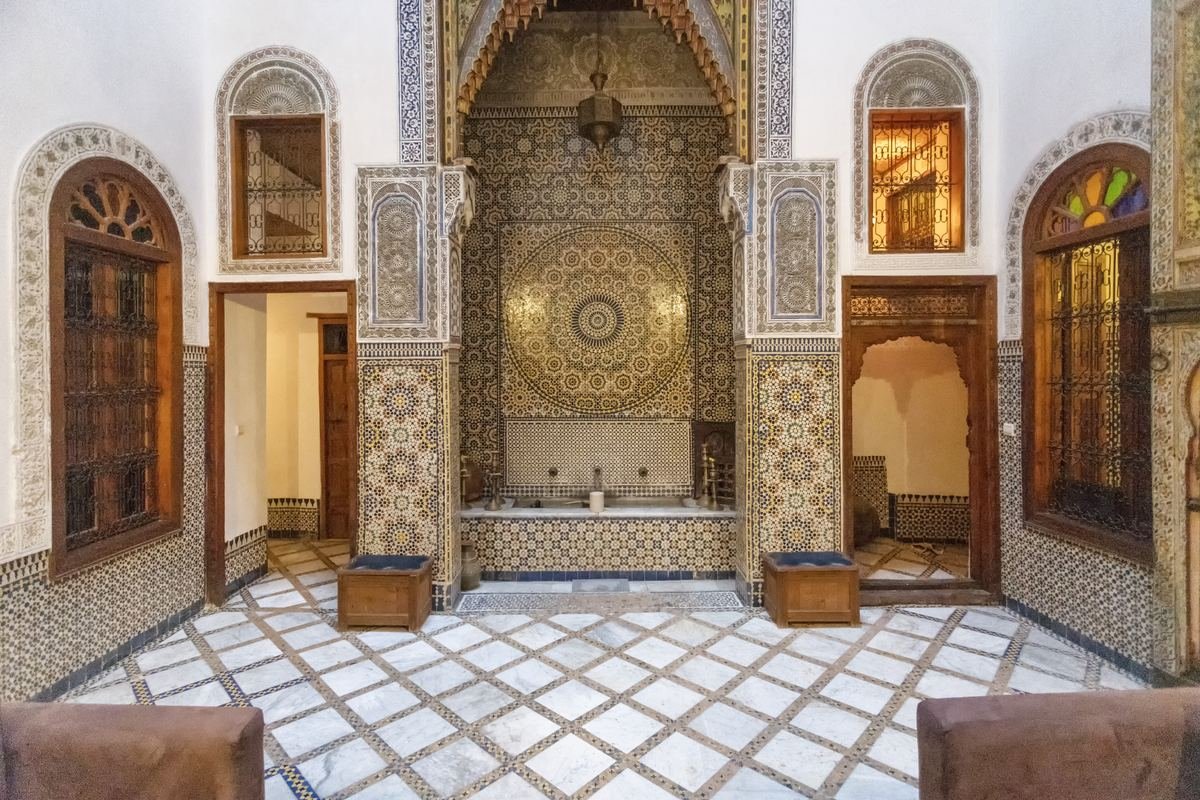
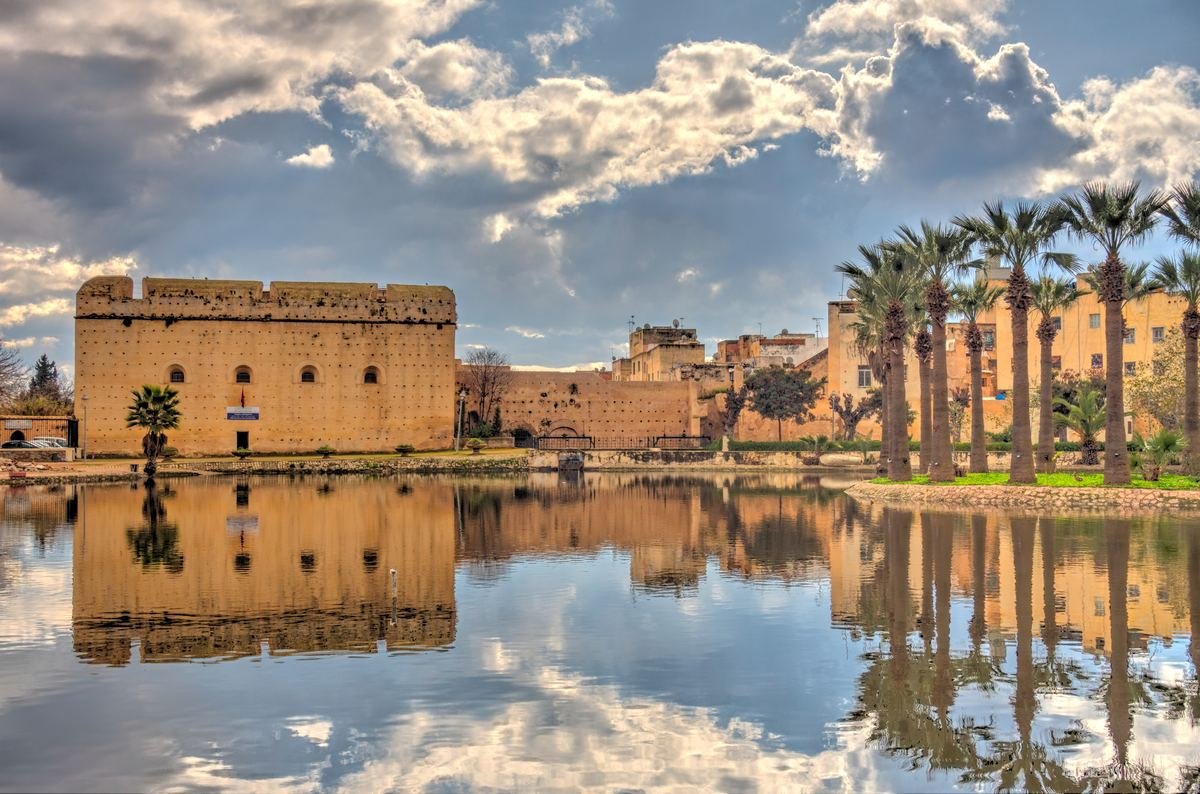
Marrakech is a city of open spaces and spectacle; Fez is a city of interiors. Its treasures — carved madrasas, fountains, caravanserais, workshops — are hidden behind doors along lanes that are often barely two metres wide. Fes el-Bali, founded in the 9th century under the Idrisid dynasty, was inscribed as a UNESCO World Heritage Site in 1981 and is widely described as the largest car-free urban area in the world. Goods still move by donkey, mule and handcart.
The city has three parts:
- Fes el-Bali — the original medina, where most sights are.
- Fes el-Jdid — "New Fez", founded by the Marinids in the 13th century, home to the Royal Palace (Dar el-Makhzen) and the Mellah, the historic Jewish quarter.
- Ville Nouvelle — the modern city built in the French Protectorate era, with the train station, larger hotels and supermarkets.
| Airport | Fès-Saïss (FEZ), about 15 km (9 mi) south of the city |
| Train | Fès station in the Ville Nouvelle; direct trains to Meknes, Rabat, Casablanca, Tangier and Marrakech |
| Ideal stay | 2 full days, 3 with a day trip to Meknes and Volubilis |
| Best for | Medieval architecture, crafts, history, food markets |
Finding your way in Fes el-Bali
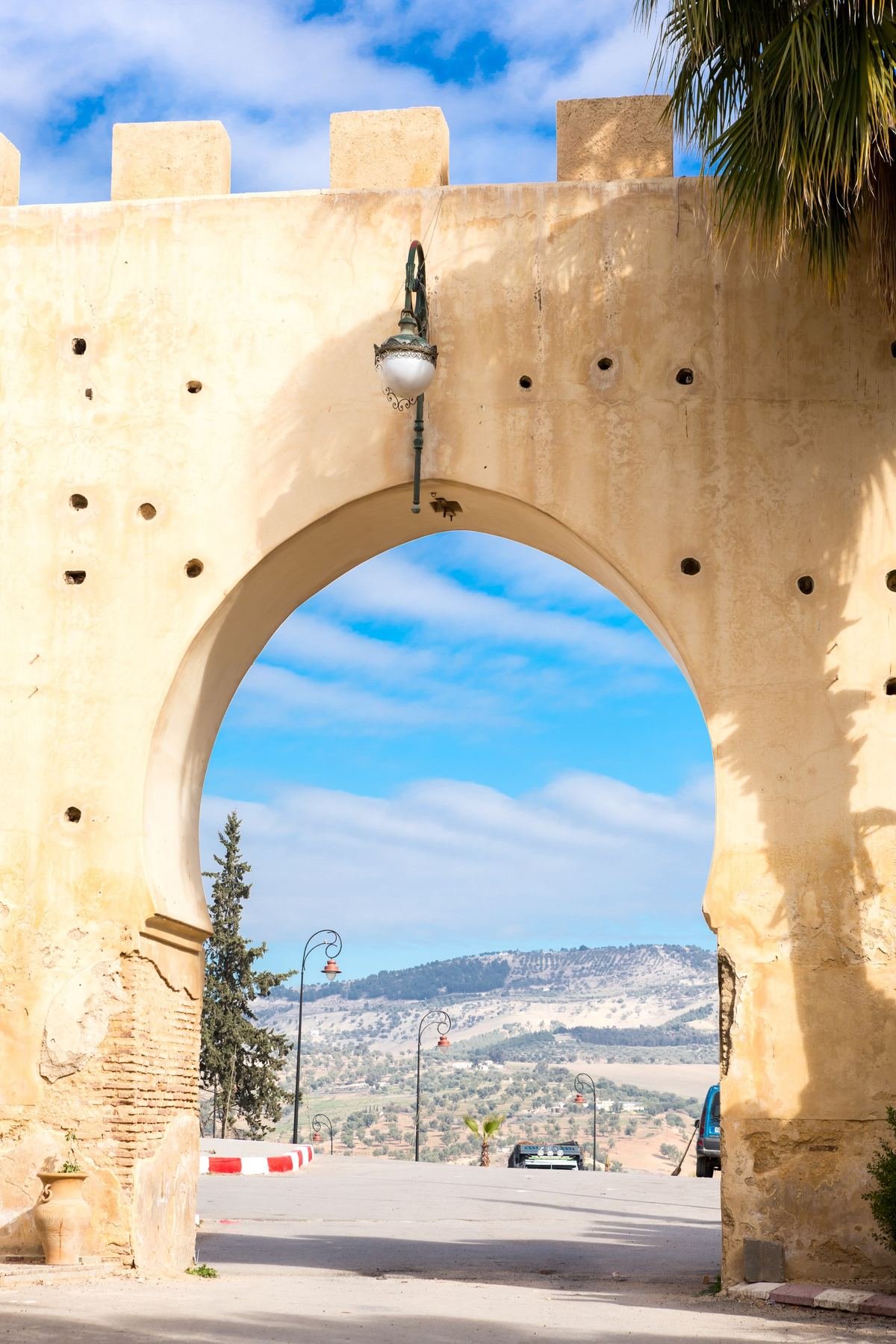
Two long, parallel streets cross the medina from the Bab Bou Jeloud gate (the blue-and-green gate built in 1913) down towards the Al-Qarawiyyin mosque: Talaa Kebira (the "big slope") and Talaa Seghira (the "small slope"). If you remember that downhill leads to the Qarawiyyin and the river, and uphill leads back to Bab Bou Jeloud, you can always recover your bearings.
Navigation apps are less reliable here than in any other Moroccan city. Practical tips:
- Download an offline map and save your riad, Bab Bou Jeloud and Bab Rcif as pins.
- Follow the small coloured signs (installed for visitors along several circuits) rather than shortcuts.
- When lost, head downhill to reach the central sights, or ask a shopkeeper for "Bab Bou Jeloud".
- Avoid accepting help from young men who approach you in the lanes — they will expect payment and often lead to shops.
Is a guide worth it in Fez?
For a first visit, yes — more so than anywhere else in Morocco. An official, licensed guide (they carry an ID badge issued by the tourism authorities) can show you a half-day route through the madrasas, fondouks and workshops that you would struggle to find alone, and explain what you are looking at. Ask your riad to book one, agree the duration and price in advance, and say clearly at the start if you do not want to visit shops. Spend your second day exploring on your own once you understand the layout.
The essential sights
Al-Qarawiyyin Mosque and University. Founded in 859 by Fatima al-Fihri, a woman from Kairouan, it is often cited as the oldest continuously operating educational institution in the world. Non-Muslims cannot enter, but you can glimpse the courtyard through the open doors. The restored Qarawiyyin library, one of the oldest libraries in the world, is generally not open to the public.
Bou Inania Madrasa. Built in the 1350s under the Marinid sultan Abu Inan Faris, it is one of the few religious buildings in Morocco that non-Muslims may visit. Look for the carved cedar, the stucco, and the water clock remains on the facade opposite.
Al-Attarine Madrasa. Smaller and even finer than Bou Inania, next to the spice and perfume souk it is named after. Its courtyard is a masterclass in zellige, carved plaster and cedar.
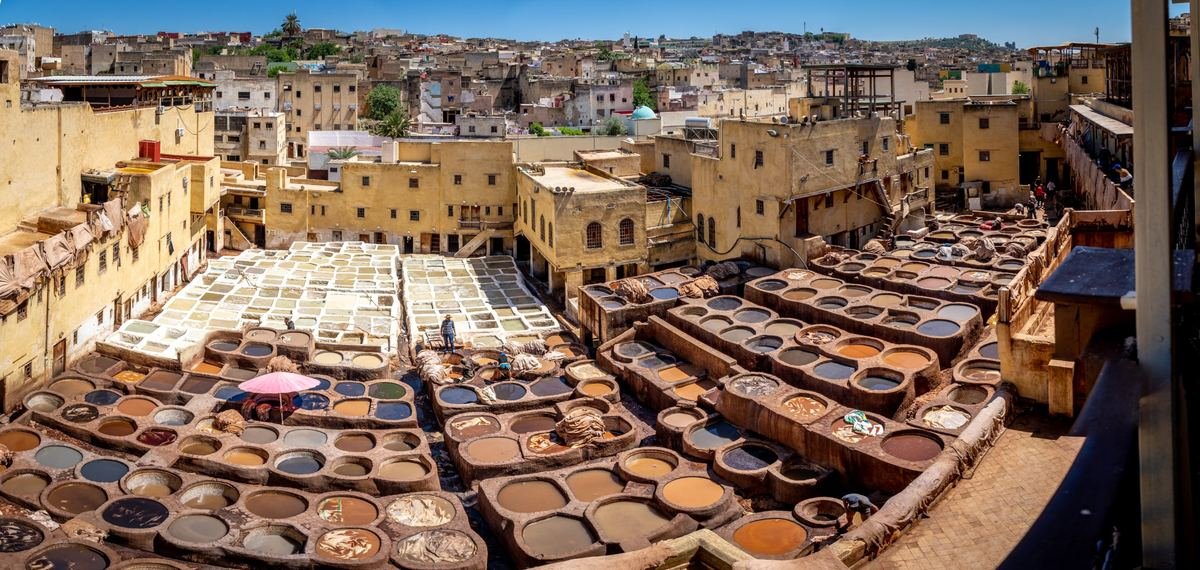
Chouara Tannery. The most famous of the city's tanneries, where hides are still soaked in stone vats of dye. You view it from the terraces of the leather shops that surround it; the shop expects you to look at its goods in exchange, but you are not obliged to buy. Go in the morning when the vats are most active, and accept the sprig of mint offered at the entrance — the smell is strong.
Nejjarine Fondouk (Museum of Wooden Arts). A beautifully restored caravanserai — an inn for travelling merchants — with a rooftop café. One of the best introductions to Moroccan woodwork.
Dar Batha (Al Batha Museum of Islamic Arts). A 19th-century palace museum, reopened in 2025 after restoration, with collections of ceramics, woodwork and Fez's famous blue pottery, set around an Andalusian garden.
Borj Nord and the Marinid Tombs. On the hill north of the medina. Go for sunset: you see the entire medina spread out below, and you hear the calls to prayer travel across the city.
Fes el-Jdid and the Mellah. The golden doors of the Royal Palace (photograph from the square; it is not open to visitors), the Mellah's distinctive balconied houses, the Ibn Danan synagogue and the Jewish cemetery.
Crafts to look for
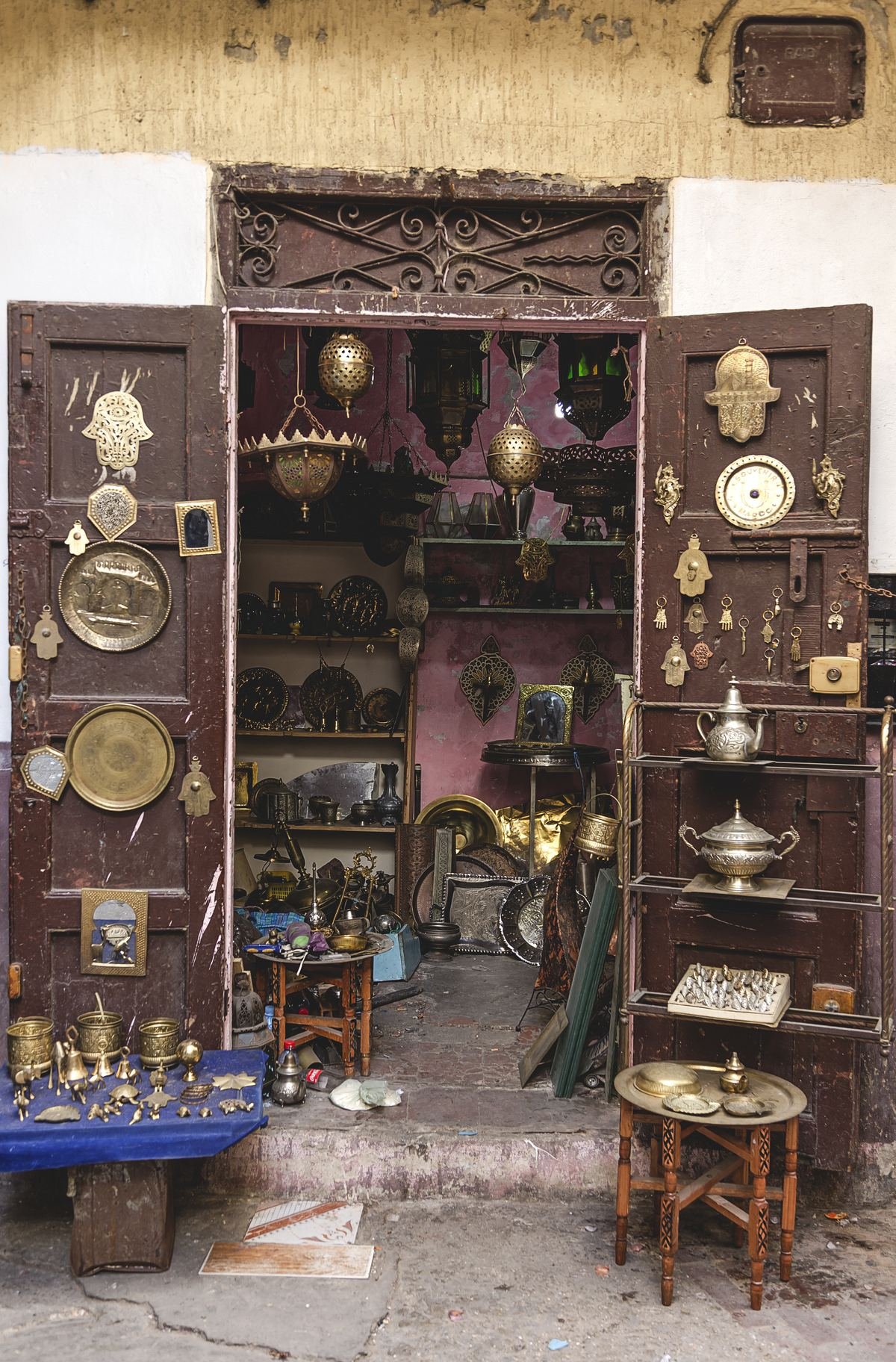
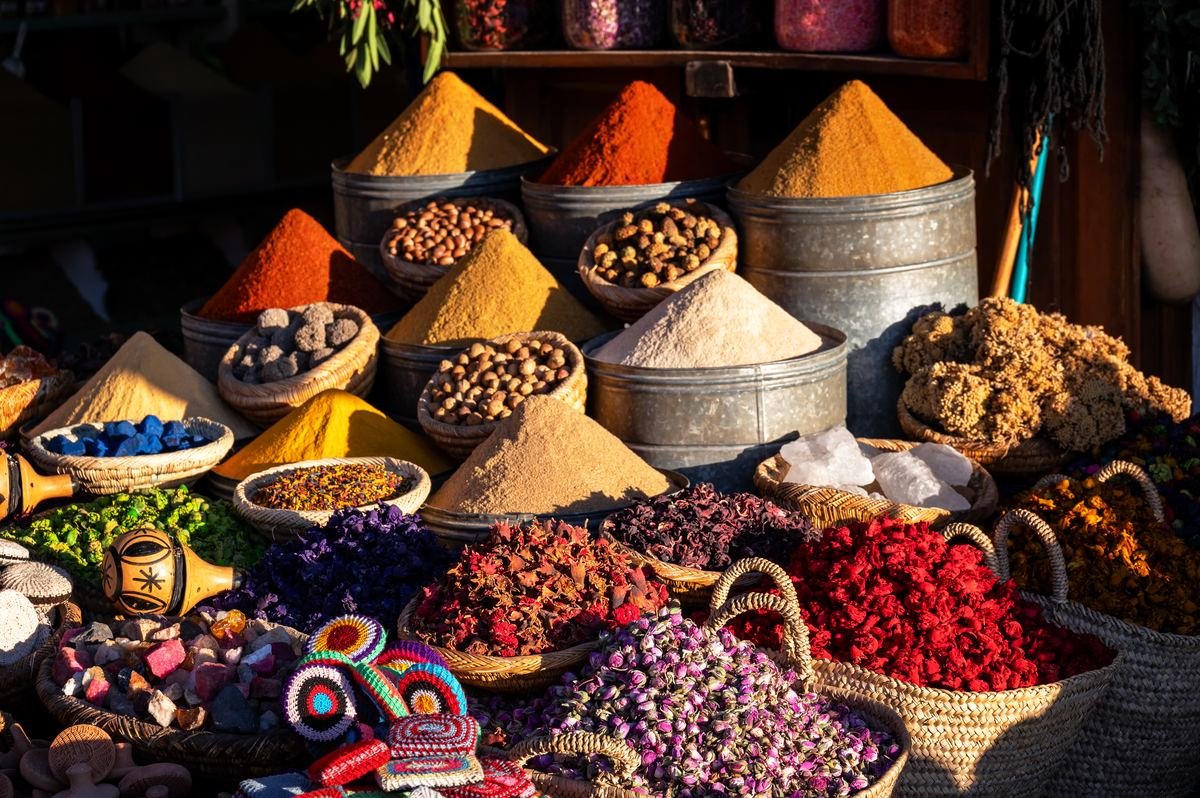
Fez is Morocco's capital of traditional craft. The most characteristic items are Fez blue pottery (cobalt glaze on white), zellige tilework, brass and copper from the Seffarine square (where you can hear the metalworkers hammering), leather goods and silk thread buttons. To see workshops rather than only shops, spend time around Seffarine square and the lanes near Bab Rcif.
Food in Fez
Fez cuisine is considered among the most refined in Morocco. Try:
- Pastilla — a sweet-savoury pie of thin warqa pastry, traditionally filled with pigeon (now often chicken), almonds, cinnamon and sugar.
- Bissara — a thick fava-bean soup with olive oil and cumin, sold in the morning from small stalls for very little.
- Khlii — preserved spiced meat, often eaten with eggs at breakfast.
- Makouda — fried potato fritters, a street snack.
For a food walk, the lanes off Talaa Kebira near Bab Bou Jeloud have the highest concentration of snack stalls. Many riads serve excellent home-style dinners if you order in the morning.
Where to stay
Riads in Fes el-Bali are the most atmospheric choice. Prefer one within a 5–10 minute walk of a gate accessible by car — Bab Bou Jeloud, Bab Guissa or Bab Rcif — so a taxi can get you close with luggage. Ask the riad to meet you at the gate on arrival.
Ville Nouvelle hotels are cheaper, have parking and are close to the train station, but you will need a taxi every time you visit the medina (around 10–15 minutes).
Getting there and around
- By train: Rabat to Fez takes around 2.5–3 hours, Casablanca around 3.5–4 hours, Marrakech around 7 hours. Fez–Meknes takes under an hour.
- By bus: CTM and Supratours connect Fez with Chefchaouen (about 4–5 hours), Merzouga (overnight bus) and most major cities.
- By air: Fès-Saïss airport has direct flights to several European cities.
- In town: walk in the medina; use red petits taxis (maximum three passengers) between the Ville Nouvelle and the gates.
Day trips
Meknes and Volubilis. The imperial city of Meknes (Bab Mansour, Moulay Ismail's mausoleum, the granaries) and the Roman ruins of Volubilis, a UNESCO site with remarkable floor mosaics, are best combined in one day with a driver. Add the hilltop holy town of Moulay Idriss Zerhoun, which overlooks Volubilis.
Ifrane and the Middle Atlas cedar forest. Ifrane, nicknamed "the Switzerland of Morocco" for its Alpine-style architecture, and the Azrou cedar forest, home to Barbary macaques, make a good half-day trip, especially in summer when Fez is hot.
When to go
Spring and autumn are ideal. Summer afternoons regularly exceed 35 °C / 95 °F, though the medina's narrow lanes stay shaded. Winters are cool and can be wet; nights approach freezing, so check that your riad has heating. The Fes Festival of World Sacred Music, usually held in late spring or early summer, is a major draw — book accommodation well in advance if your dates coincide.
Two-day plan
Day 1 — with a guide. Bab Bou Jeloud, Talaa Kebira, Bou Inania Madrasa, Nejjarine Fondouk, Al-Attarine Madrasa, the Qarawiyyin doors, Seffarine square, Chouara Tannery. Sunset at the Marinid Tombs.
Day 2 — on your own. Dar Batha in the morning, Fes el-Jdid, the Royal Palace gates and the Mellah, lunch in the Ville Nouvelle or back in the medina, an afternoon cooking class or hammam.
Plan the rest of your route with our imperial cities itinerary, the transport guide or our Chefchaouen guide, the most popular next stop from Fez.
Frequently asked questions
Do you need a guide in Fez?
For a first visit it is worth it: Fes el-Bali is a car-free maze where navigation apps are unreliable. Book a licensed guide through your riad for a half day, then explore on your own once you understand the layout.
How many days should you spend in Fez?
Two full days cover the medina and Fes el-Jdid; add a third for a day trip to Meknes, Volubilis and Moulay Idriss.
How do you get from Fez to Chefchaouen?
There is no train. CTM buses take about 4–5 hours; a private transfer is faster and more comfortable.
This guide was last reviewed in October 2026. Entry rules, opening hours, transport timetables and prices change; check official sources shortly before you travel. Spotted something out of date? Tell us.