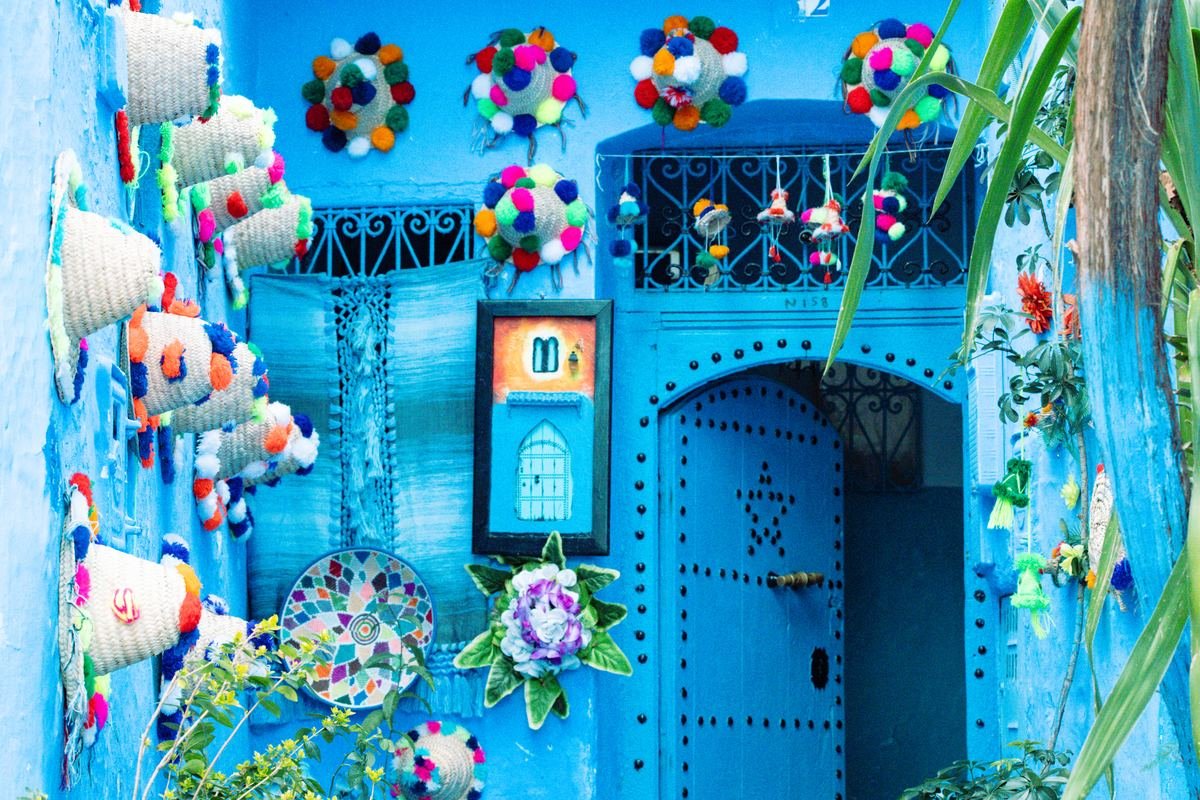
Chefchaouen in brief
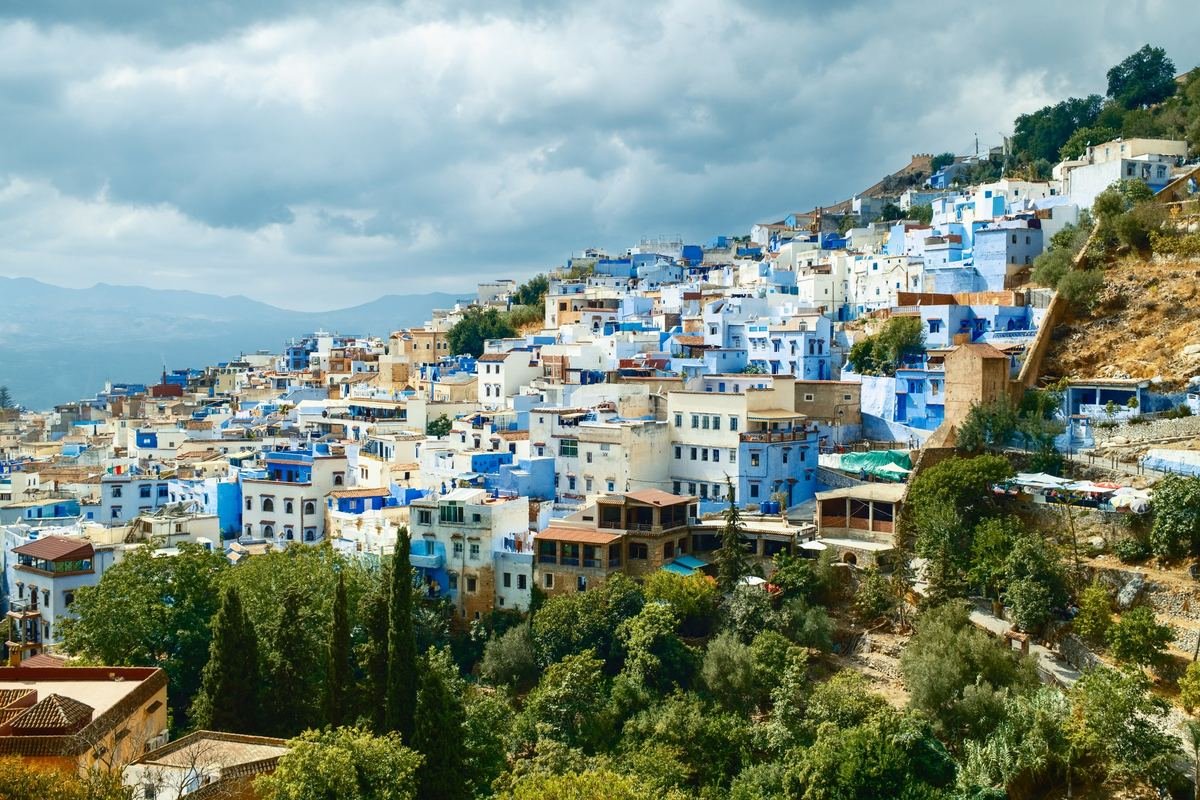
Chefchaouen (often shortened to "Chaouen") sits at about 600 metres in the Rif Mountains, beneath two peaks that locals say look like goat horns — one explanation for the name, from the Amazigh word for horns. It was founded in 1471 by Moulay Ali ben Rachid as a fortress against Portuguese incursions in northern Morocco, and later received Muslim and Jewish refugees from Andalusia, whose influence is visible in its tiled roofs and whitewashed walls.
| Nearest airports | Tangier Ibn Battouta (about 2.5 hours) and Fès-Saïss (about 4 hours) |
| Train | None — arrive by bus, grand taxi or private transfer |
| Ideal stay | 2 nights: one day in town, one day hiking |
| Altitude | About 600 m — cooler than Fez or Marrakech |
| Best for | Photography, slow travel, hiking, a quiet break between cities |
Why is Chefchaouen blue?
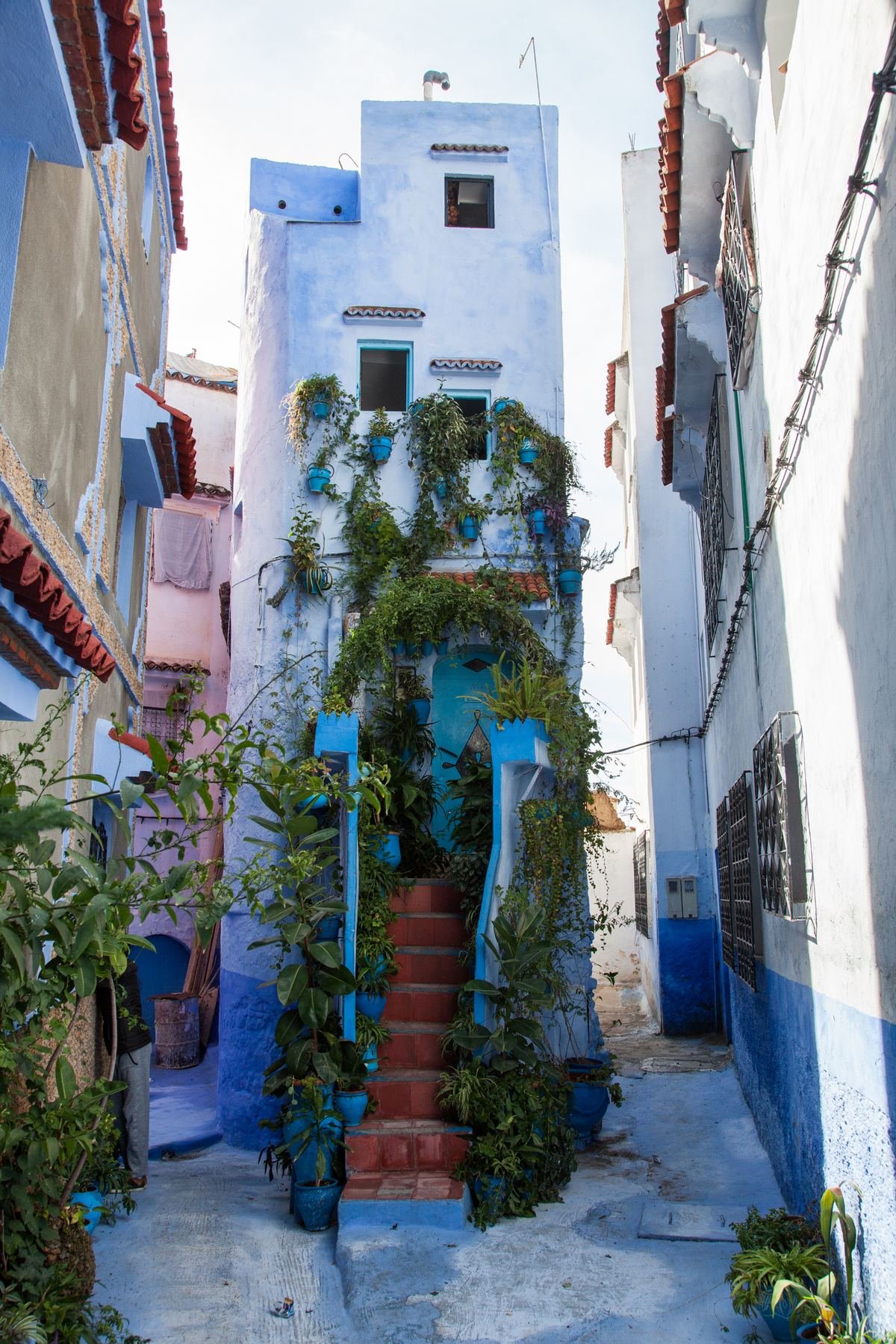
There is no single documented answer, and you will hear several. A common explanation links the blue to the Jewish community that settled in the town, for whom blue symbolised the sky and heaven. Others say it keeps mosquitoes away or keeps houses cool. What is certain is that residents repaint walls regularly with a lime-based wash, and the blue has become central to the town's identity and its economy since the late 20th century. Asking locals for their version is part of the fun.
What to see and do
Outa el Hammam square. The main square, shaded by trees and lined with cafés, is the social heart of the town. On one side stands the Grand Mosque with its unusual octagonal minaret.
The Kasbah. The ochre-walled fortress on the square has a garden, a small ethnographic museum and a tower worth climbing for the view over the rooftops.
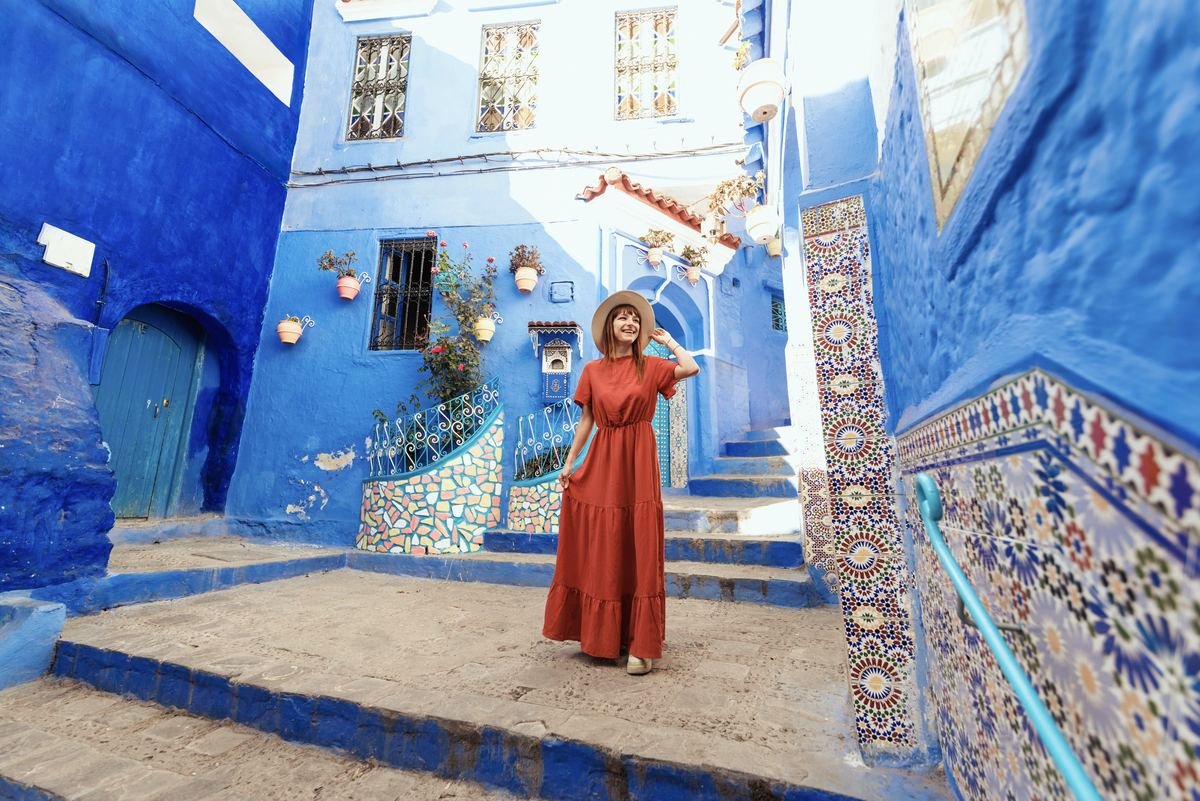
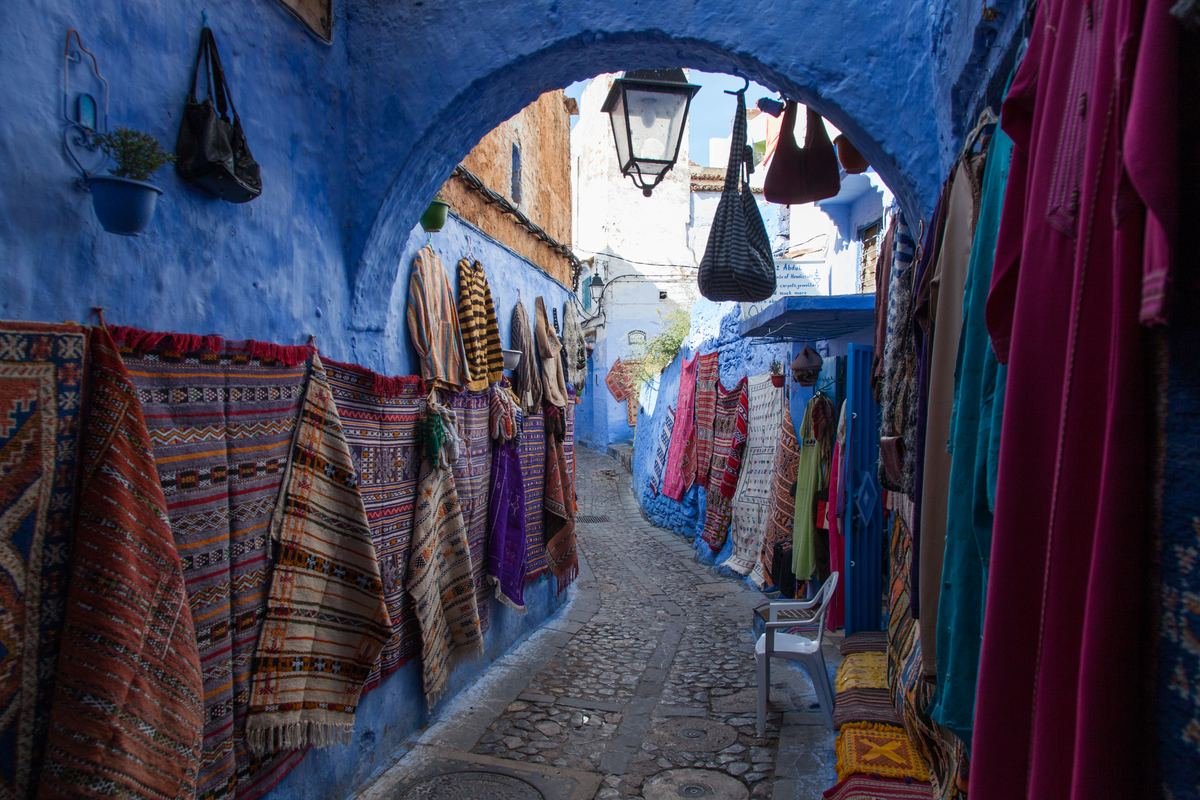
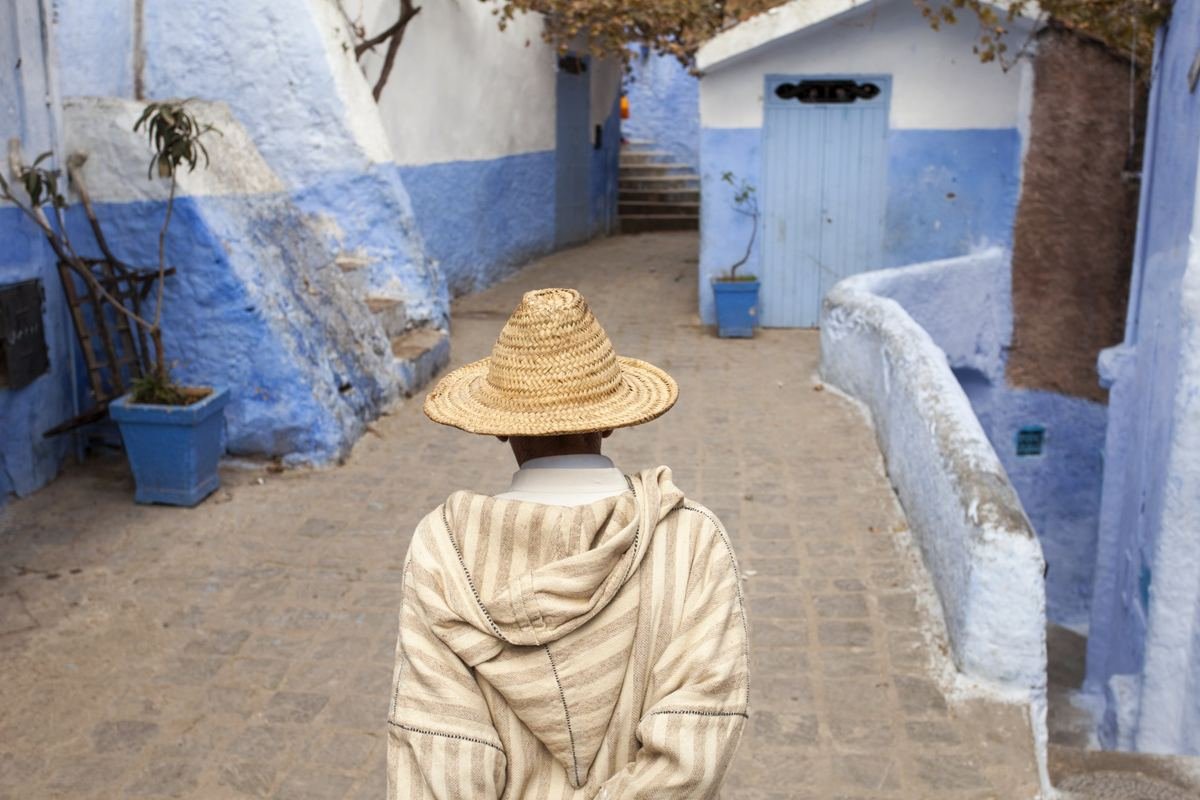
The blue lanes. The most photographed streets are in the upper medina, north-east of the square, around the Bab Souk and towards Ras el-Maa. Go early in the morning (before 9:00) for empty streets and soft light. Remember that these are people's homes: do not sit on doorsteps, keep noise down and ask before photographing residents.
Ras el-Maa. The spring at the eastern edge of the medina, where water flows down from the mountain; women still wash laundry in the stone basins. Small cafés overlook the stream.
The Spanish Mosque viewpoint. A 20–30 minute walk uphill from Ras el-Maa leads to a mosque built during the Spanish Protectorate era and never used. It is the sunset spot, with a full view of the blue town against the mountains. Bring water and a torch for the walk back.
Hikes around Chefchaouen
Chefchaouen is the main base for the Talassemtane National Park, an area of limestone peaks, fir forests and gorges.
Akchour waterfalls and God's Bridge (Pont de Dieu). The most popular day hike. Akchour is about 45 minutes by grand taxi from town. From the trailhead, two routes split: one follows the river up to the main waterfall (allow 2–3 hours return), the other climbs to God's Bridge, a natural rock arch above the river (about 1.5–2 hours return). Doing both takes a full day. Wear shoes with grip — there are river crossings — and start early in summer, when it gets busy at weekends with Moroccan families.
Jebel El Kelaa. The peak above the town (about 1,600 m) can be climbed in a long half-day from the medina. The path is steep and not always marked; go with a local guide unless you are experienced.
Village walks. Guesthouses can arrange guided walks to surrounding Rif villages and to the Kef Toghobeit area for experienced hikers.
Food
Northern cuisine differs slightly from the south. Look for goat cheese from the Rif (sold fresh and wrapped in palm leaves at the market), bissara soup at breakfast, and tagines cooked with local herbs. Restaurants around Outa el Hammam are convenient but uneven; small family places in the lanes above the square are often better value.
Where to stay
The best choice is a guesthouse or small riad inside the medina, ideally on the lower side near Bab el-Ain, the main gate, so you do not have to carry luggage up long stairways. Taxis cannot enter the medina; many guesthouses send someone to meet you at Bab el-Ain or at the bus station. Hotels in the newer town below are cheaper and have parking but lack atmosphere.
How to get there
There is no train station in Chefchaouen. Your options:
- CTM bus from Fez (about 4–5 hours), Tangier (about 3 hours), Tetouan (about 1.5 hours) or Casablanca (about 6–7 hours). Book a day or two ahead in high season. The bus station is a 15–20 minute walk downhill from the medina; take a taxi uphill.
- Grand taxi from Tetouan — shared taxis leave when full; you can pay for all six seats to leave immediately.
- Private transfer from Fez or Tangier — the most comfortable choice, especially if you are in a group.
- By car — roads are good but winding; allow extra time.
A common route is Fez → Chefchaouen → Tangier (or the reverse), which fits naturally into a northern Morocco trip.
When to go
April to June and September to October bring mild temperatures and green hills. July and August are pleasant compared with the interior but crowded with domestic tourists. Winter is cold and damp, and snow occasionally falls on the surrounding peaks; heating in guesthouses can be basic, so ask before booking.
Responsible visiting
Chefchaouen's popularity has grown much faster than its size. A few habits help: buy from local cooperatives rather than resellers, stay at least two nights so your visit benefits the town rather than just passing through on a day-trip bus, and keep the blue lanes calm early in the morning when residents are heading to work and school.
Practical tips
- The Rif region has a reputation for cannabis cultivation; you will likely be offered hashish. It is illegal for recreational use in Morocco — decline firmly.
- Cash is essential: there are a few ATMs near Outa el Hammam and in the new town, but they can run out on busy weekends.
- Bring a warm layer even in late spring; evenings in the mountains are cool.
Continue with our Fez guide, Tangier guide or the northern Morocco itinerary.
Frequently asked questions
Why is Chefchaouen blue?
There is no single documented answer. Explanations include the influence of the town's former Jewish community, keeping houses cool and repelling mosquitoes. Residents repaint the walls regularly with a lime-based wash.
How many nights should you stay in Chefchaouen?
Two nights: one day to explore the medina and the Spanish Mosque viewpoint, and one for a hike to the Akchour waterfalls or God's Bridge.
Is there a train to Chefchaouen?
No. Arrive by CTM bus from Fez (about 4–5 hours), Tangier (about 3 hours) or Tetouan (about 1.5 hours), by shared grand taxi or by private transfer.
This guide was last reviewed in October 2026. Entry rules, opening hours, transport timetables and prices change; check official sources shortly before you travel. Spotted something out of date? Tell us.