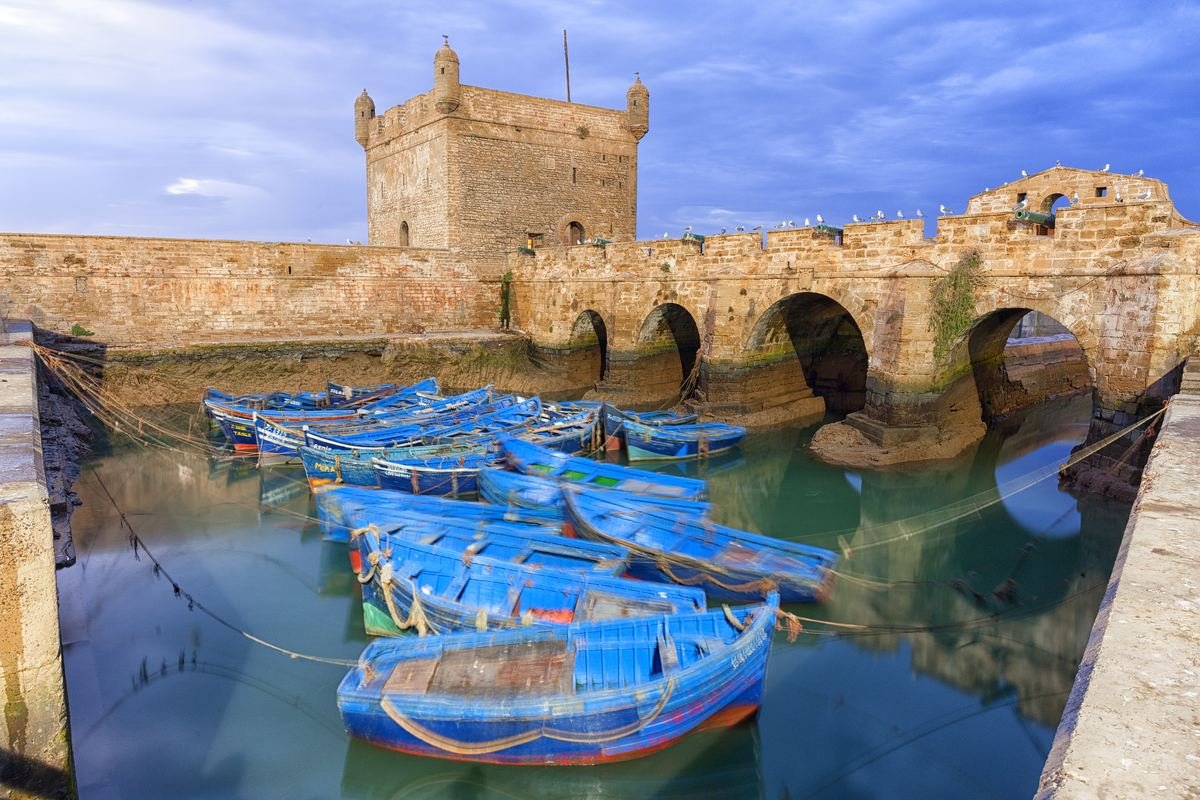
Essaouira in brief
The site has been a port since antiquity — the Phoenicians and later the Romans used the nearby islands to produce purple dye — and the Portuguese built a fortress here called Mogador in the 16th century. The town you see today was laid out from 1760 on the orders of Sultan Mohammed ben Abdallah, who hired the French engineer Théodore Cornut to design a fortified port open to European trade. The result is a rare grid-planned medina, combining European military architecture with Moroccan urban design. It was listed by UNESCO in 2001.
| From Marrakech | About 190 km (118 mi), 2.5–3 hours by bus or car |
| Airport | Essaouira-Mogador (ESU), small, with limited international flights |
| Ideal stay | 2–3 nights |
| Climate | Mild all year; strong trade winds (the alizé), especially from April to September |
| Best for | Slow travel, seafood, music, wind sports, a break between Marrakech and the coast |
What to see in the medina
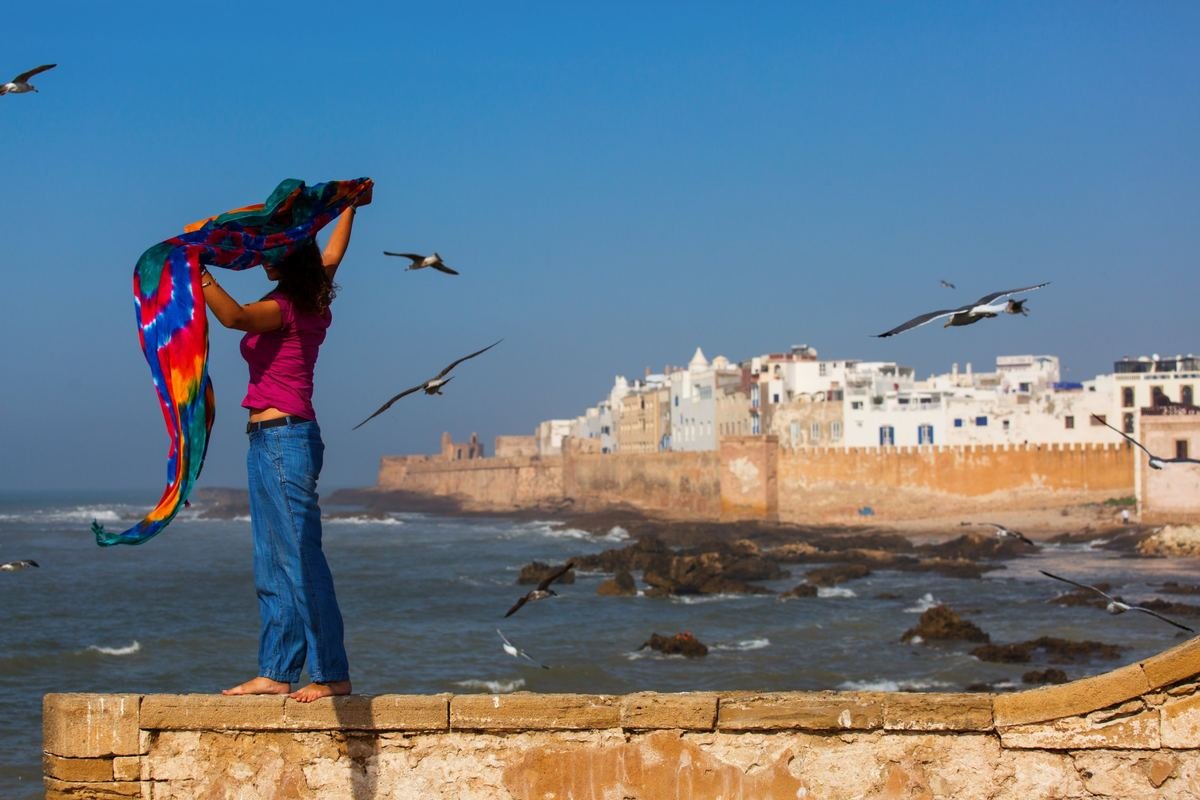
Skala de la Ville. The sea ramparts on the north side of the medina, lined with bronze cannons and overlooking crashing waves. Underneath, in the arched vaults, woodworkers carve and inlay thuya, a fragrant local wood. Go late afternoon for the light.
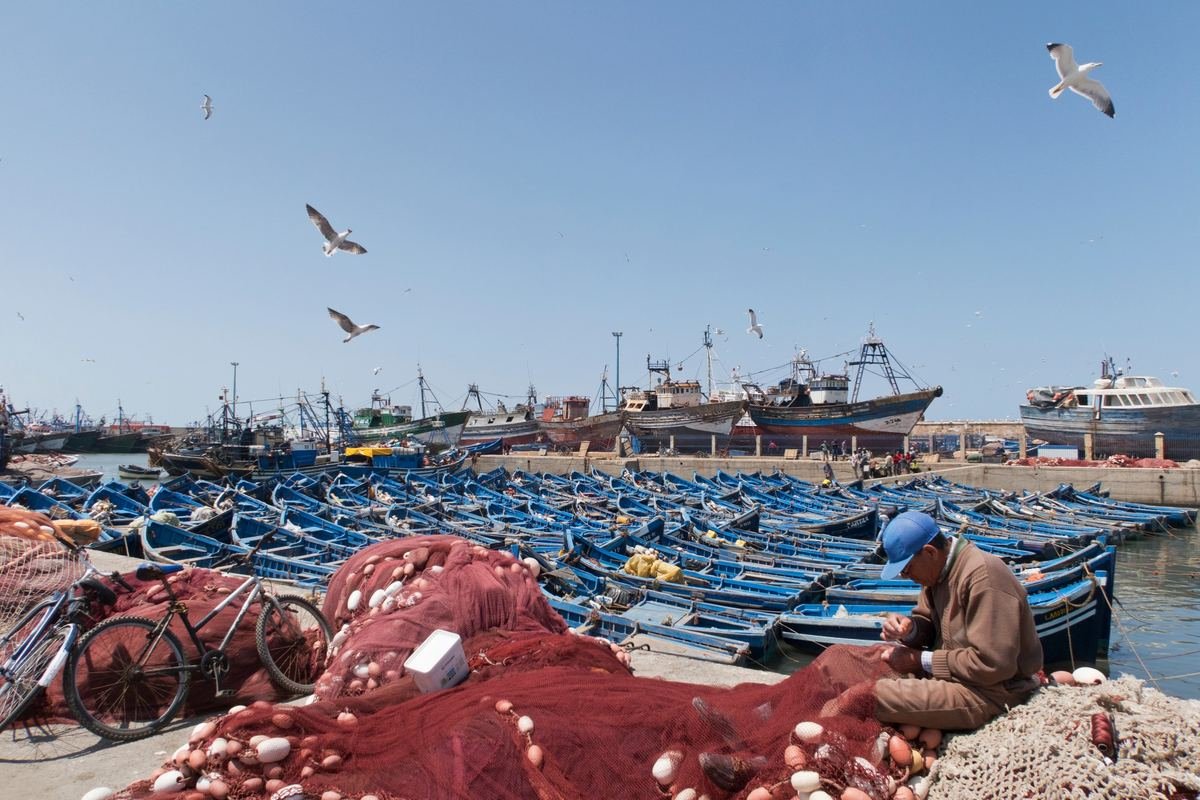
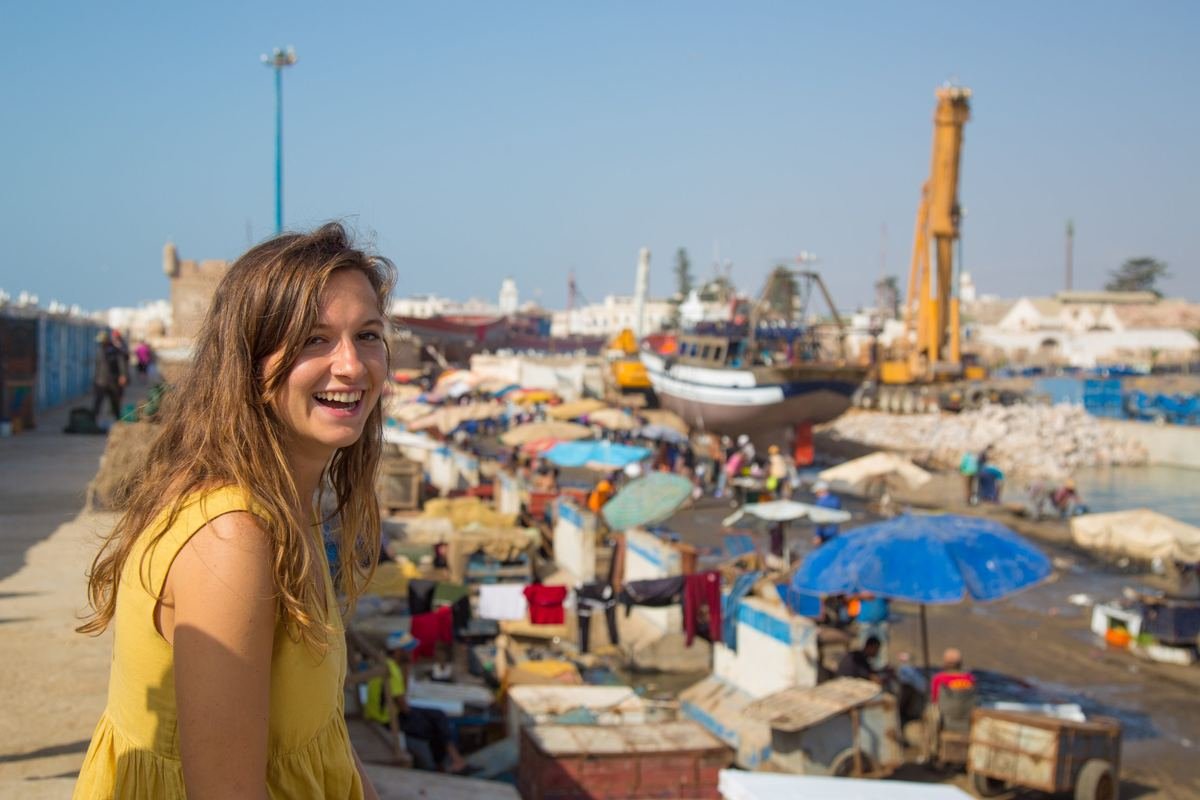
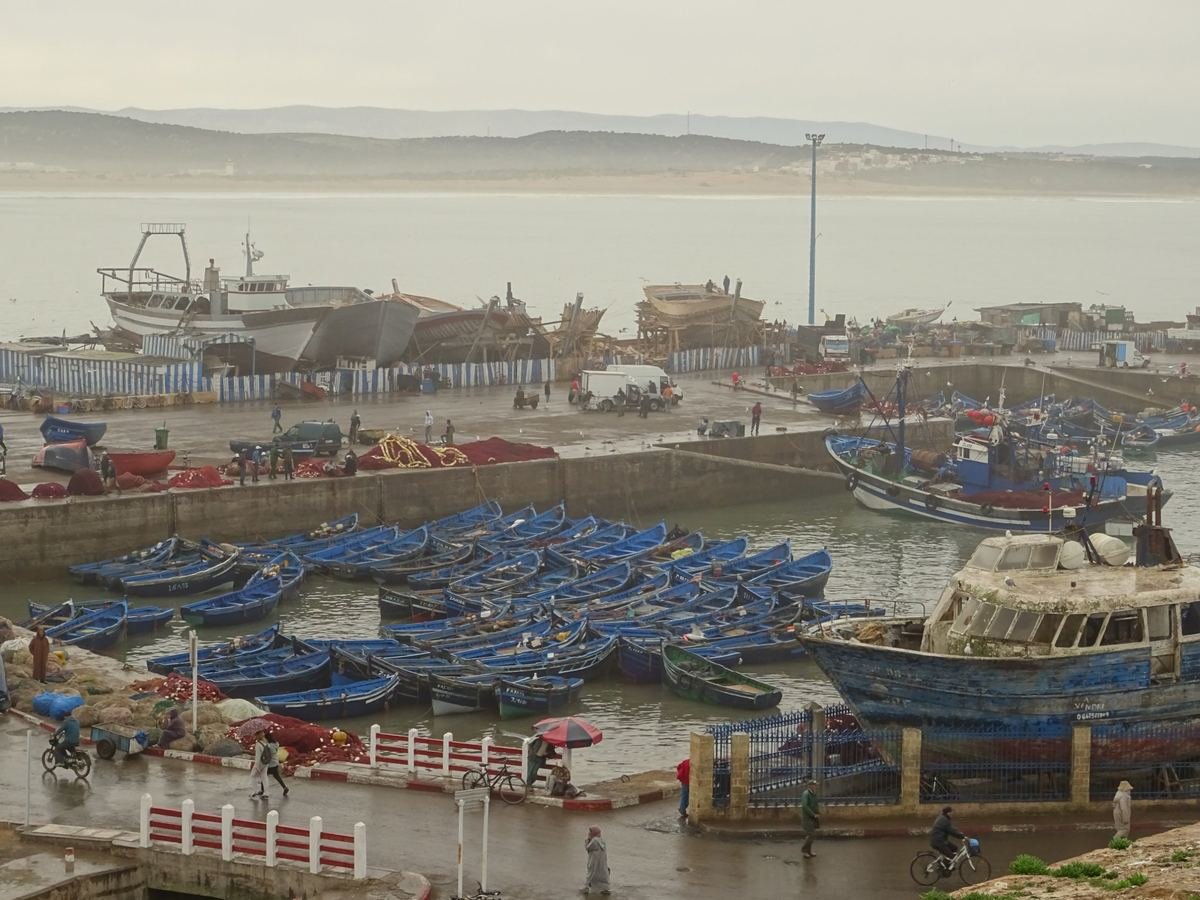
The port and the Skala du Port. The fishing harbour, at the southern edge of the medina, is one of the most photogenic places in Morocco: blue wooden boats, nets, gulls and morning fish auctions. Climb the Skala du Port tower (small entry fee) for a view of the ramparts and the Île de Mogador.
The fish grills. Next to the harbour, stalls display the day's catch — sardines, sea bream, prawns, calamari. You choose, the fish is weighed and grilled. Confirm the price per kilo before anything is cooked and check the bill.
The Mellah. The former Jewish quarter in the north of the medina. Essaouira once had a large Jewish community; Bayt Dakira, a restored house and synagogue, now hosts a museum on the town's Jewish heritage.
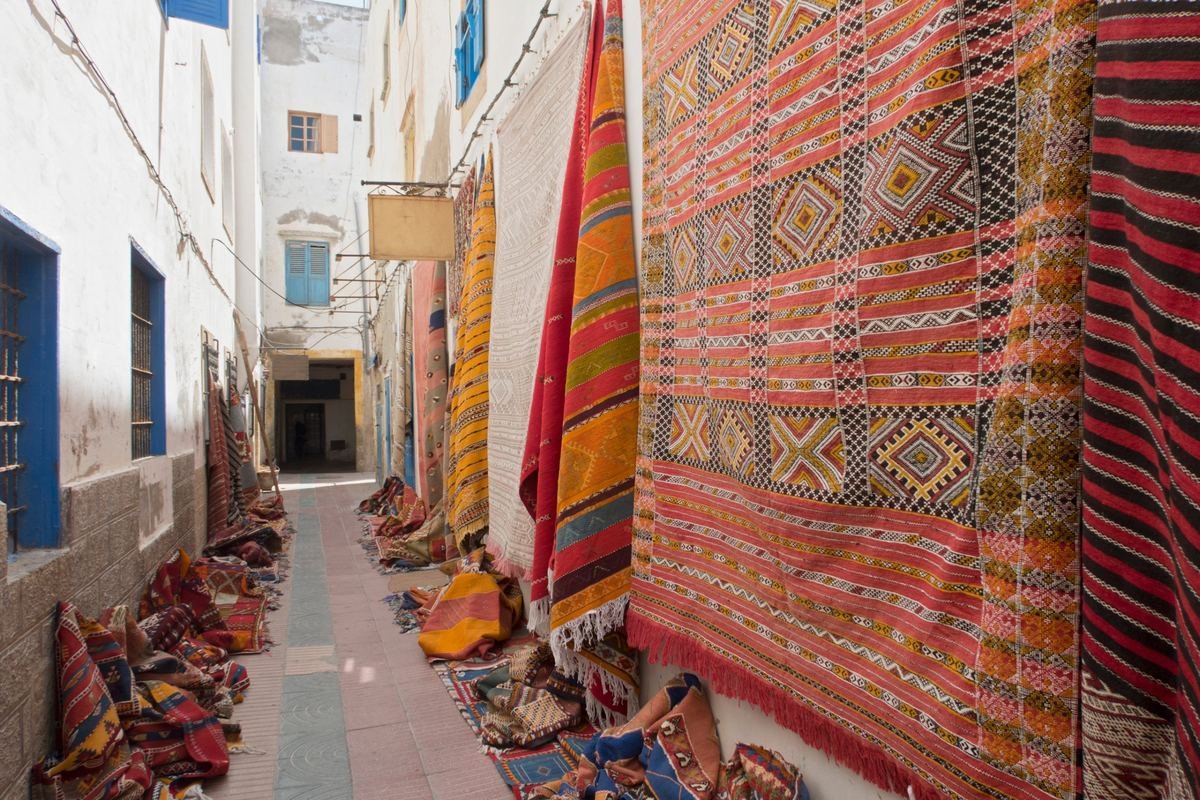
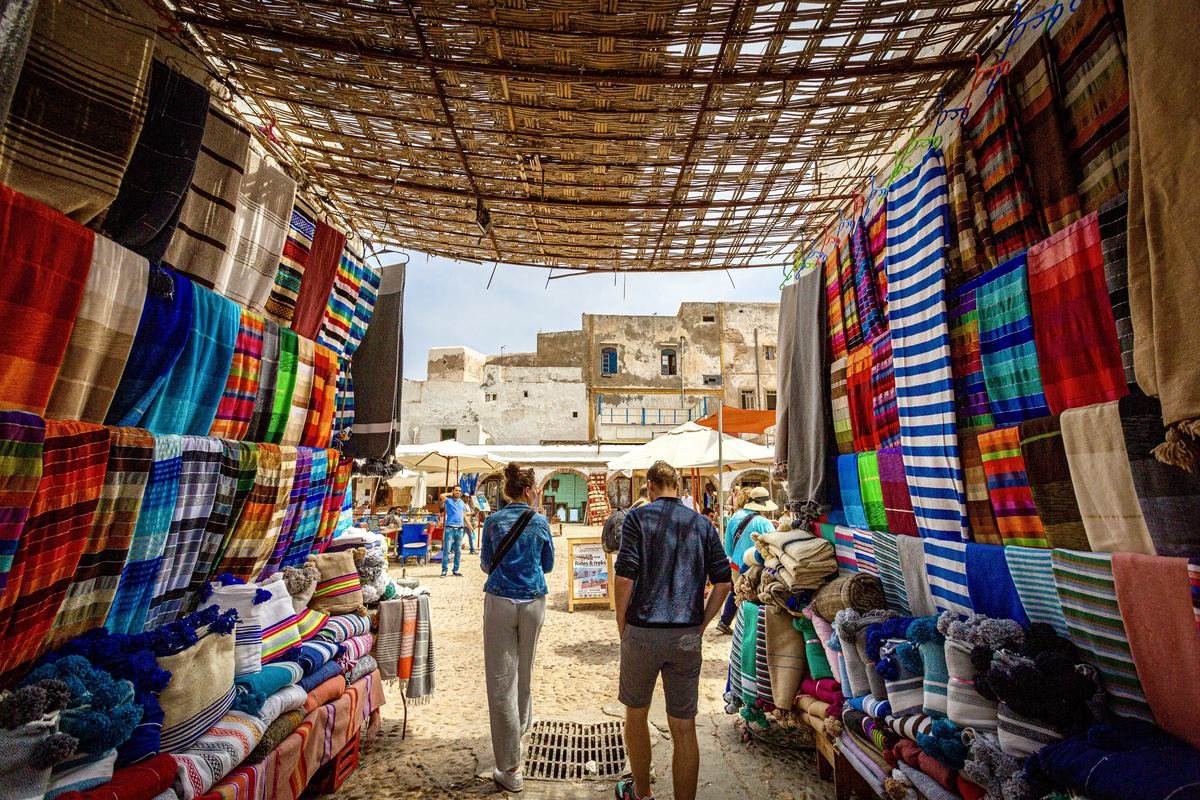
The souks. Smaller and more relaxed than Marrakech. Good buys include thuya woodwork, argan products, raffia bags and paintings by local artists — the town has a lively gallery scene.
Sidi Mohammed Ben Abdallah Museum. A modest museum of local history, music and crafts in a 19th-century mansion. A redesign of its spaces and collections was agreed in 2026, so check whether it is open before visiting.
Beaches and wind sports
The town beach runs south from the medina in a wide 10 km (6 mi) arc. It is lovely for walks, horse rides and camel rides at sunset, but the wind and currents make swimming less comfortable than on the Mediterranean — check flags and stay where others are swimming.
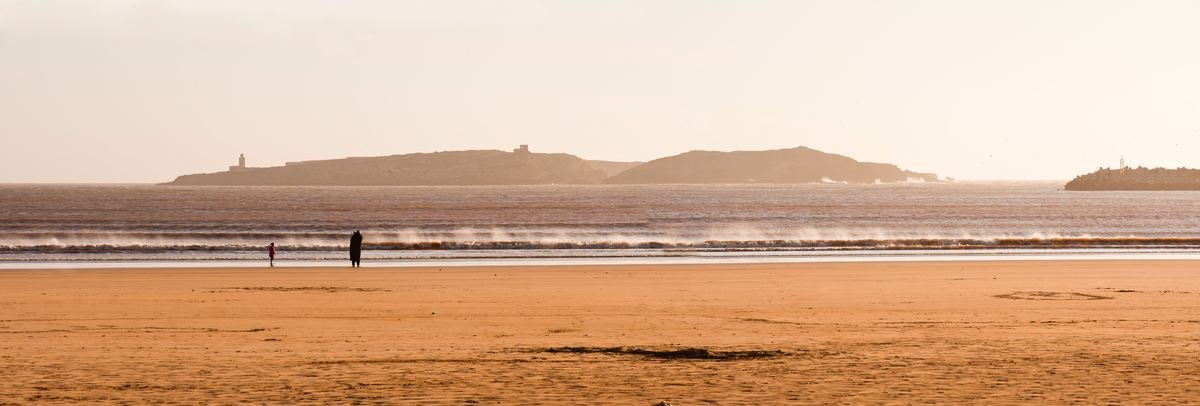
The constant wind makes Essaouira one of Morocco's main centres for kitesurfing and windsurfing. Schools along the beach offer lessons for beginners. Experienced riders head south to Sidi Kaouki (about 25 km (16 mi)) or north to Moulay Bouzerktoun, a renowned wave spot.
Surfing is also possible, but the best surf towns on this coast are further south, around Imsouane and Taghazout.
Argan and the countryside
Essaouira sits at the heart of the argan region — the argan tree grows only in south-western Morocco, and the area is a UNESCO Biosphere Reserve. You will see goats climbing trees along the road from Marrakech; many of those roadside stops are staged for tips. For the real thing, visit a women's argan cooperative, where you can see oil being extracted by hand and buy directly from producers.
Music: the Gnaoua festival
Essaouira is closely associated with Gnawa music, a spiritual musical tradition with roots in sub-Saharan Africa, played with the guembri (a three-string bass lute) and metal castanets (qraqeb). Gnawa was added to UNESCO's Intangible Cultural Heritage list in 2019. The Gnaoua and World Music Festival, usually held in June, fills the town with free concerts and is one of Morocco's best-known festivals — book accommodation months ahead.
Where to stay
Most visitors stay in a riad inside the medina, which is compact and flat, so you can walk everywhere. Cars cannot enter; porters with handcarts wait at Bab Sbaa and the car park near the port to carry luggage for a small tip. For beach access and quiet, the hotels along the seafront avenue south of the medina are an alternative. Kite surfers often stay in Sidi Kaouki.
Getting there and around
- Bus: Supratours and CTM run several times daily from Marrakech (about 3 hours). Supratours also has connections linked to the train network.
- Car or private transfer: about 2.5 hours from Marrakech; also accessible from Agadir (about 3 hours) along a scenic coast road.
- In town: walk. Blue petits taxis cover longer distances.
When to go
Essaouira is mild all year — rarely very hot, rarely cold — which makes it a refuge from the summer heat of Marrakech. The wind is strongest from April to September (great for kitesurfing, less so for lying on the beach). Winter is calmer, sunny and quieter, though evenings are cool and occasional storms roll in from the Atlantic.
A two-day plan
Day 1. Morning at the port for the fishing boats and the auction; walk the Skala de la Ville; lunch at the fish grills; afternoon in the souks and the Mellah; sunset walk on the beach.
Day 2. A kitesurf or surf lesson, a horse ride on the beach, or a half-day trip to an argan cooperative and Sidi Kaouki; dinner in the medina and live music if you can find it.
Practical tips
- Pack a windproof jacket even in summer.
- Many small restaurants and guesthouses accept cash only; ATMs are available near Bab Sbaa and the clock tower.
- Seagulls are bold — do not leave food on rooftop tables.
See also our Marrakech guide, the Atlantic coast road trip and the Morocco weather guide.
Frequently asked questions
How far is Essaouira from Marrakech?
About 190 km (118 mi), roughly 2.5–3 hours by bus or car. Supratours and CTM run several buses a day.
Can you swim in Essaouira?
Yes, but the strong trade winds and Atlantic currents make it less comfortable than a Mediterranean beach. Check the flags and swim where others are swimming.
When is the Gnaoua festival in Essaouira?
The Gnaoua and World Music Festival usually takes place in June. Dates change each year, so check the official festival website and book accommodation early.
This guide was last reviewed in October 2026. Entry rules, opening hours, transport timetables and prices change; check official sources shortly before you travel. Spotted something out of date? Tell us.