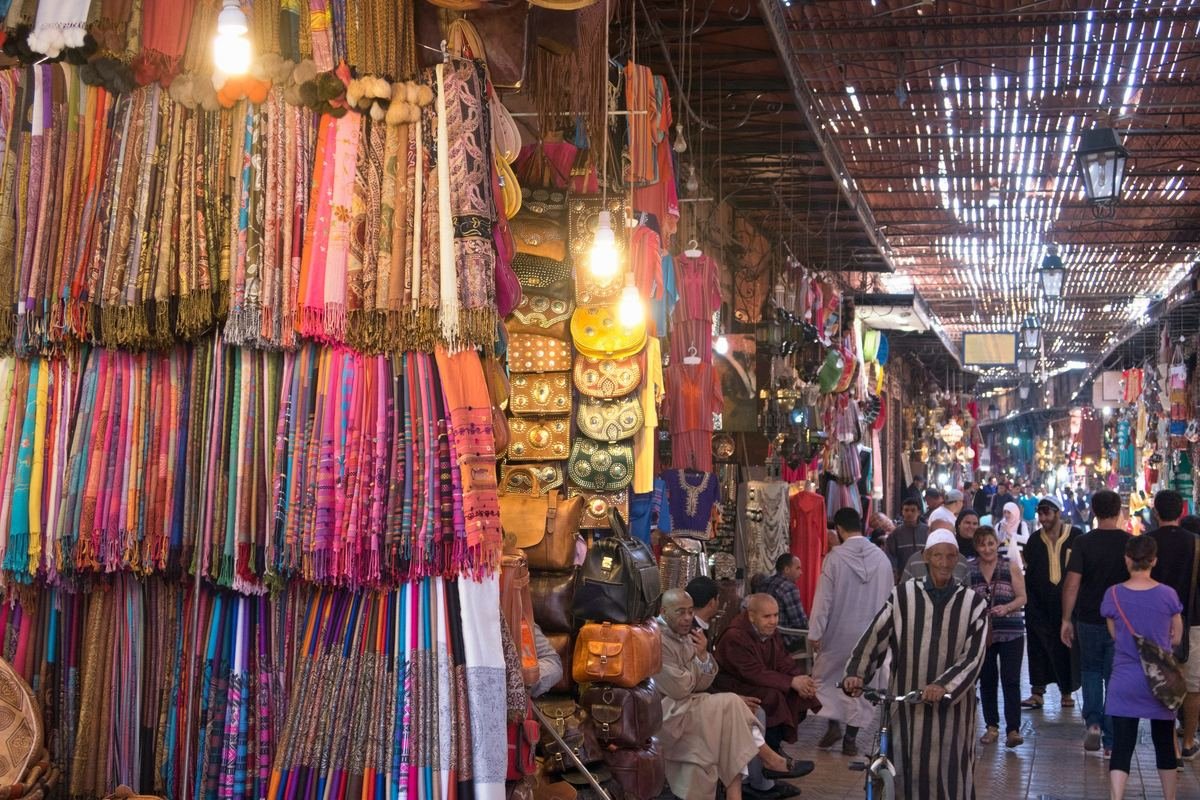
How a souk is organised
Medinas grew around the main mosque, with trades in rings around it: books, perfume, spices and textiles closest; noisy or smelly trades such as metalwork, dyeing and tanning pushed out towards the walls and the river. The logic still holds in Fez and Marrakech.
Each trade has its own lane or guild quarter, named after the craft: attarine (spice and perfume sellers), haddadine (blacksmiths), sebbaghine (dyers), debbagh (tanners), nejjarine (carpenters), seffarine (coppersmiths). Historically each guild had an elected master, the amin, who settled disputes and checked quality.
Fondouks are old caravanserais: courtyards where merchants stabled animals below and slept above. Many are now workshops or museums; walking in politely to look is generally fine.
The big souks, city by city
Marrakech. The souks spread north from Jemaa el-Fna. Souk Semmarine is the main covered artery, leading to Rahba Kedima (the old spice square, good for baskets and hats) and the former slave-auction yard now used for rugs, the Criée Berbère. Off to the sides are Souk el Attarine, Souk Cherratine (leather), Souk Smata (babouches), Souk Haddadine (ironwork) and the dyers' lane, Souk Sebbaghine, where skeins of wool hang to dry. Prices are the highest in Morocco and selling is the most persistent. See our Marrakech guide.
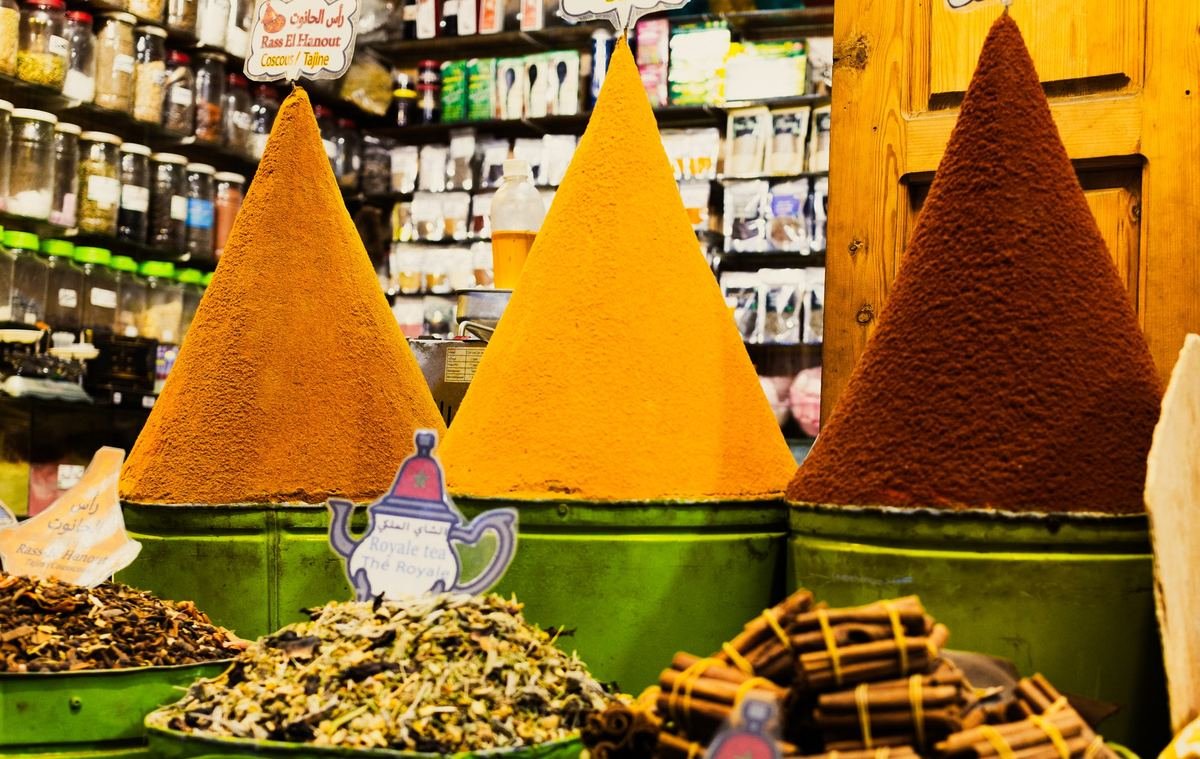
Fez. Fes el-Bali is the most authentic working souk in the country, because it still serves local households. Follow Talaa Kebira downhill past butchers, bakers and slipper makers to the Attarine souk, the Henna souk (a small square of potters and herbalists), the Seffarine square of coppersmiths and the Chouara tannery. The Nejjarine fondouk houses a museum of woodwork. See our Fez guide.
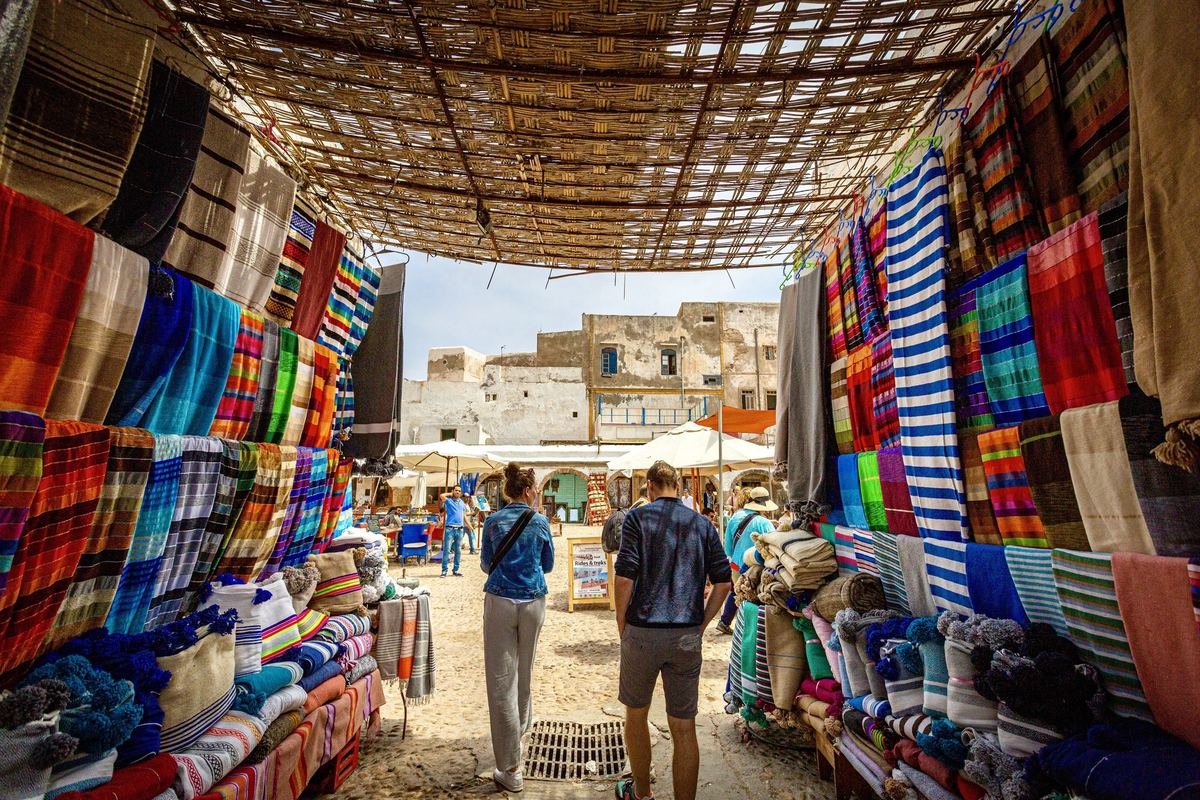
Essaouira. Compact and relaxed, with a grid layout inside its ramparts. The main lanes around Avenue de l'Istiqlal and the Souk Jdid cross-streets sell spices, fish and jewellery; thuya woodworkers have workshops by the Skala ramparts. Sellers are rarely pushy. See our Essaouira guide.
Tangier. The Grand Socco square leads into the medina and the Petit Socco. Around the Grand Socco and on the streets leading to the market, women from the Rif mountains sell cheese, vegetables and woven straw hats, especially on Thursdays and Sundays. See our Tangier guide.
Chefchaouen has a small, easy souk of woollen blankets, woven goods and goat's cheese; see our Chefchaouen guide.
Weekly rural souks
Outside the cities, markets are weekly and often named after the day they are held: Had (Sunday), Tnine (Monday), Tlata (Tuesday), Larbaa (Wednesday), Khemis (Thursday), Jemaa (Friday), Sebt (Saturday). A town called Tnine Ourika therefore holds its souk on a Monday.
- Tnine Ourika (Monday), about 35 km south of Marrakech at the mouth of the Ourika Valley: livestock, produce, tools, a "barber's row" and donkey parking.
- Asni (Saturday), on the road to Imlil in the High Atlas.
- Rissani, near Merzouga, holds large markets several times a week, including a famous donkey market. See the Merzouga guide.
These are farmers' markets: arrive by 9 am, ask before photographing people or animals, and do not expect souvenirs. They are a highlight of our Atlas Mountains guide.
How to bargain: a method that works
Bargaining is a conversation, not a fight. It is expected for crafts, clothes and souvenirs, but not for food, groceries, bread, transport tickets or anything with a printed price.
- Know the price before you ask. Look at the same item in three shops, or visit a fixed-price Ensemble Artisanal first (see crafts).
- Let the seller name a price first. Ask "bshhal?" (how much?) in Darija or "c'est combien ?" in French. A few words go a long way; see our language guide.
- Counter low but not insultingly. In tourist souks, opening prices are commonly two to three times the final price. A reasonable first counter is about 30–40% of the asking price.
- Move slowly. Each round, you go up a little and the seller comes down. Stay friendly; a smile and a joke work better than toughness.
- Expect to settle at around 50–60% of the opening price in Marrakech and Fez tourist streets. In Essaouira, Chefchaouen and local markets the gap is smaller, often 70–85%.
- Bundle. Buying several items from the same shop is the easiest way to win a discount.
- Walk away politely if the price does not suit you. If the seller calls you back, you have found the real floor.
- Never name a price you are not willing to pay. Once a seller accepts your offer, it is considered rude to back out.
| Asking price | Your first offer | Fair outcome (Marrakech/Fez) | Fair outcome (smaller towns) |
|---|---|---|---|
| 600 MAD | 200 MAD | 300–350 MAD | 420–500 MAD |
| 1,500 MAD | 500 MAD | 750–900 MAD | 1,050–1,250 MAD |
| 5,000 MAD | 1,700 MAD | 2,500–3,000 MAD | 3,500–4,200 MAD |
What things cost in 2026
Approximate prices after friendly negotiation in the main tourist souks (indicative estimates, autumn 2026).
| Item | Typical price |
|---|---|
| Glass of mint tea in a café | 10–20 MAD |
| Fresh orange juice in Jemaa el-Fna | 10–15 MAD |
| Spices (cumin, paprika, ras el hanout) per 100 g | 15–50 MAD |
| Saffron (Taliouine), per gram | 30–60 MAD |
| Leather babouches | 80–250 MAD |
| Cotton scarf | 40–120 MAD |
| Cooking tagine (plain clay) | 30–100 MAD |
| Painted decorative bowl | 50–200 MAD |
| Small thuya wood box | 60–250 MAD |
| Unstuffed leather pouf | 250–600 MAD |
| Small brass lantern | 150–400 MAD |
| Argan oil, cosmetic, 100 ml | 100–250 MAD |
| Men's or women's djellaba | 300–1,200 MAD |
| Flatweave kilim, about 1.5 × 2.5 m | 1,500–5,000 MAD |
Small shops rarely take cards; see money and payments.
Fixed prices
Bargaining is not universal. Expect fixed prices at the Ensemble Artisanal state craft centres, at supermarkets, pharmacies, concept stores in the Gueliz and Ville Nouvelle districts, and at food stalls and bakeries. Women's cooperatives usually price their goods at a fixed rate too.
Scams and fake guides
- "That road is closed." Someone claims your route is shut or the tannery is "only open today", then leads you to a shop. Keep walking.
- Unofficial guides. Young men attach themselves to visitors and later demand payment. Licensed guides carry an official badge; book through your riad. Say "la, shukran" (no, thank you) firmly and keep walking.
- The "Berber market only today." A mythical one-day market that is always a cousin's shop.
- Commissions. Taxi drivers and some guides earn 20–40% on what you buy in the shops they bring you to. It is legal but raises your price.
- Weight tricks. For spices and dried fruit, watch the scale and agree the price per 100 g or per kilo before it is weighed.
- Henna ambush. Women in Jemaa el-Fna start a henna design on your hand and then ask for a large fee. Keep your hands in your pockets unless you want one; see our henna page.
More advice in our safety guide.
Opening hours and Friday
- Typical hours: around 9:30–10 am until 7–8 pm. Food stalls open earlier; workshops may start at 8 am.
- Friday: the weekly congregational prayer is at midday. Many shops close from about 12:30 to 3 pm, and in Fez a large part of the medina is quieter all day, with some shops not opening at all. Marrakech's tourist souks stay mostly open.
- Sunday: busy in the medinas; many Ville Nouvelle shops close.
- Ramadan: shops open later, often close in the late afternoon for the iftar meal, then reopen in the evening until late. See our Ramadan guide.
- Best time to shop: mid-morning on a weekday, when sellers have time and you are not jostled by tour groups.
Frequently asked questions
How much should you bargain in Moroccan souks?
In Marrakech and Fez tourist areas, start at about a third of the asking price and expect to settle at about half. In smaller towns, sellers usually start closer to their final price.
Are the souks open on Friday?
Most are, but many shops close for a few hours around midday prayer. In Fez the medina is noticeably quieter on Fridays.
Is it rude not to bargain in Morocco?
No. You can pay the asking price, but you will usually pay too much. Polite bargaining is expected and often enjoyed by sellers.
How do I avoid fake guides in the medina?
Decline politely and keep walking, ignore claims that a road is closed, and book a licensed guide through your riad or hotel.
Which is better for shopping, Marrakech or Fez?
Marrakech has more choice and more varied design; Fez has more workshops, lower pressure in the back lanes and better prices for leather, ceramics and brass.
Related: Moroccan crafts · Marrakech guide · Fez guide · Safety in Morocco
This guide was last reviewed in November 2026. Entry rules, opening hours, transport timetables and prices change; check official sources shortly before you travel. Spotted something out of date? Tell us.