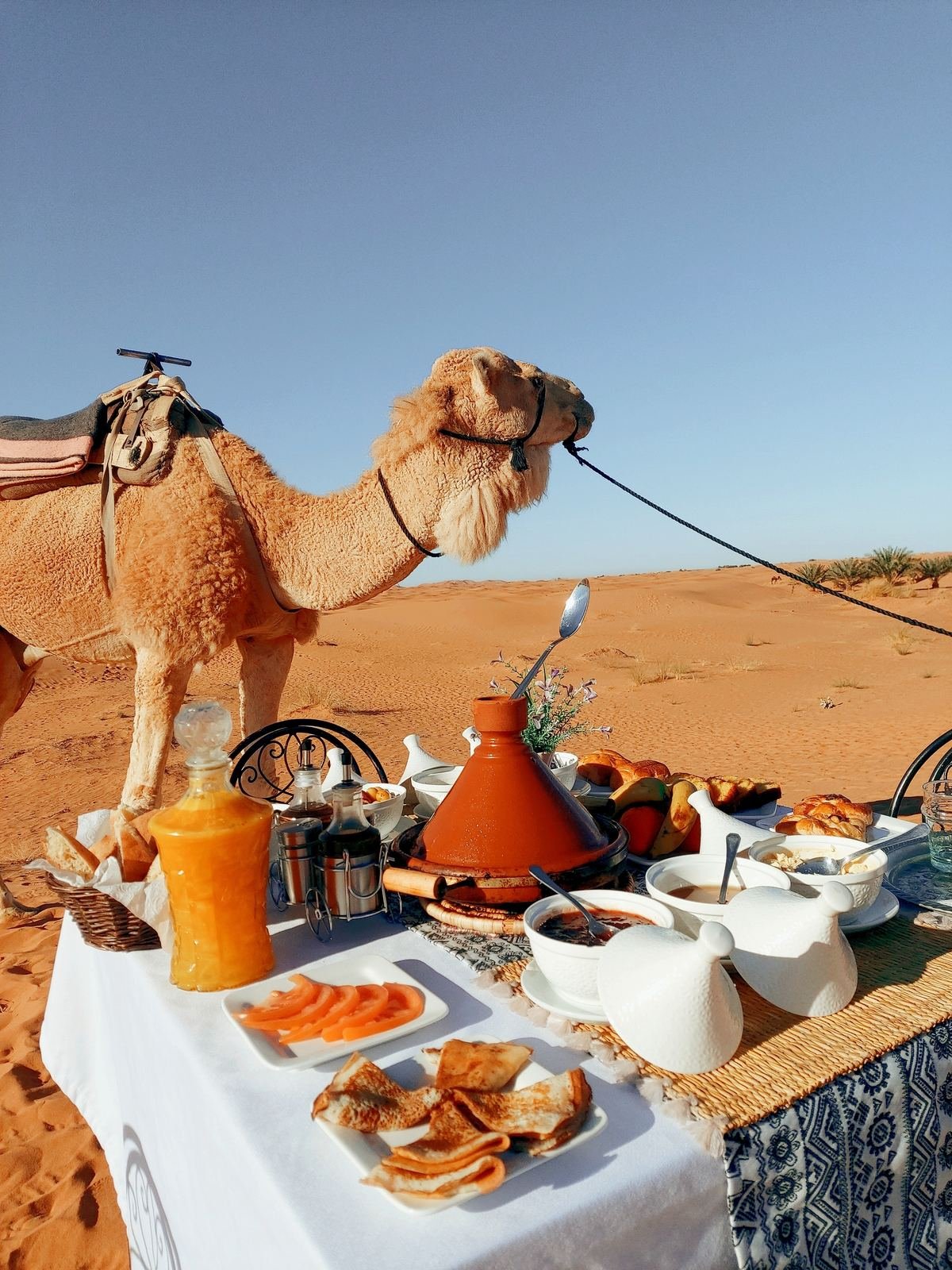
What msemen is
Msemen (also spelled msemmen or m'smen) is a laminated flatbread cooked on a flat griddle. A soft dough of flour, fine semolina, salt, water and a little yeast is divided into balls, then each ball is stretched paper-thin on an oiled surface, sprinkled with semolina and dabs of butter, and folded into a square of many layers. Cooked on a hot griddle, the layers separate slightly, giving a crisp, chewy outside and a soft, buttery inside.
The word rghaif is used in many regions as the general name for these folded breads, and in some homes "rghaif" and "msemen" mean the same thing. You will hear both in markets.
Msemen is eaten at breakfast and, just as often, in the late afternoon with tea, a meal many Moroccans call goûter or quatre heures. In Ramadan it is a fixture of the ftour, the meal that breaks the fast at sunset, next to harira, dates and chebakia.
The family of griddle breads
Visitors often see a stack of different breads at the same stall. Here is how to tell them apart.
| Bread | Shape and texture | Made from | How it is eaten |
|---|---|---|---|
| Msemen | Square, flat, flaky layers | Flour, fine semolina, butter or oil | Torn, with honey, butter, cheese or amlou |
| Meloui | Round, coiled like a snail shell, more layers | Same dough as msemen, rolled into a rope then coiled | Pulled apart in spirals, with honey and butter |
| Harcha | Thick, round, crumbly, like a semolina muffin | Coarse or medium semolina, butter, milk, baking powder | Split and filled with cheese, jam or honey |
| Baghrir | Spongy pancake with a holed surface | Fine semolina batter, yeast | Soaked in honey-butter (see our baghrir guide) |
Harcha is the quick one: there is no folding, just a semolina dough patted into discs and cooked slowly on a griddle until golden. Its texture is closer to cornbread than to a pancake.
Stuffed msemen: khlii, onions and more
Plain msemen is the everyday version, but stuffed versions (msemen mehchi, "stuffed msemen") are where it gets interesting.
- Onion and herb msemen. The most common savoury filling: finely chopped onion, parsley and sometimes tomato, cooked with paprika, cumin and a little chilli, spread inside before folding. Ask for "msemen b'lbsla" (with onion).
- Khlii msemen. Khlii is beef or lamb that is salted, spiced, dried in the sun and preserved in its own fat, a speciality associated with Fez. Shredded into msemen, it gives a rich, salty, slightly gamey flavour. It is usually a little dearer.
- Cheese msemen. Spreadable processed cheese is a café favourite; fresh jben (soft white cheese) appears in more traditional settings.
Stuffed versions are less flaky but more filling; one makes a cheap lunch.
Where to find it
Msemen is not restaurant food. The best is made by women at small street stalls and in mahlaba dairy shops, and by home cooks.
- Street stalls. Look for a woman working at a large round griddle, with a tray of dough balls and a stack of finished squares beside her. These stalls set up early, from about 7 am, near markets, bus stations, schools and the gates of medinas, and again in the late afternoon.
- Mahlabas and cafés. Small dairy shops sell msemen with fresh juice, yoghurt or raib (set milk). Neighbourhood cafés will often bring msemen with honey and a mint tea for a fixed breakfast price.
- Riads. Almost every riad breakfast in Marrakech, Fez and Chefchaouen includes msemen or harcha, often made fresh by the cook.
In Marrakech, griddle stalls cluster on the lanes around Bab Doukkala, in Riad Zitoun and around the Mellah market. In Fez, look along Talaa Kebira and Talaa Seghira and near Bab Bou Jeloud early in the morning. In Rabat and Casablanca, try the medina gates and the streets around the central markets.
Typical prices (2026)
Prices are indicative estimates for autumn 2026; they vary by city and by how touristy the street is.
| Item | Typical price |
|---|---|
| Plain msemen or harcha, street stall | approx. 2–4 MAD |
| Meloui, street stall | approx. 3–5 MAD |
| Stuffed msemen (onion, cheese) | approx. 5–10 MAD |
| Khlii msemen | approx. 8–15 MAD |
| Café breakfast: msemen, honey, tea or coffee, juice | approx. 20–40 MAD |
| Tourist-street café, same breakfast | approx. 40–70 MAD |
Carry coins and small notes: a vendor may struggle to change a 200-dirham note for a 3-dirham pancake. Our money and payments guide has more on cash.
How to order and eat it
- Point and say how many. "Wahed msemen" means one msemen; "juj" is two. Add "b'l3sel" (with honey) or "b'zbda" (with butter). See our language guide for more phrases.
- Ask for it hot. Vendors will often reheat a stacked piece on the griddle and brush it with butter and honey; it is worth waiting for.
- Tear, do not cut. Msemen is eaten with the right hand, torn into strips and dipped.
- Classic pairings: honey and butter; olive oil; amlou (argan oil, roasted almonds and honey, from the south-west); soft cheese; or apricot jam. Always with sweet mint tea, covered in our mint tea guide.
How to recognise a good msemen
- Visible layers. Tear the edge; a good msemen shows thin sheets rather than a single doughy slab.
- Golden, not pale or greasy. It should be blistered gold on both sides and leave only a light sheen of oil on the paper.
- Freshly made. The best stalls cook continuously. A stack that has sat under plastic since dawn will be chewy and tough.
- Busy with locals. A queue of schoolchildren and workers is the best sign.
Seasonal notes
Msemen is eaten all year, but during Ramadan (expected to begin around 8 February 2027, depending on the moon sighting) production increases sharply in the afternoon, as families buy stacks for ftour. Stalls that are quiet in the morning may only open after midday. Our Ramadan travel guide explains how daily rhythms change.
Frequently asked questions
What is the difference between msemen and meloui?
They use the same dough. Msemen is folded into a flat square; meloui is rolled into a long rope and coiled into a round, giving more spiral layers when pulled apart.
Is msemen sweet or savoury?
The bread itself is neutral and slightly salty. It becomes sweet with honey and butter, or savoury when stuffed with onions, khlii or kefta.
How much does msemen cost in Morocco?
Around 2–4 MAD for a plain piece from a street stall in 2026, and 5–15 MAD for stuffed versions. Café breakfasts with msemen usually cost 20–40 MAD.
Is msemen vegetarian?
Plain msemen is vegetarian, made with flour, semolina, butter or oil. Stuffed versions may contain meat or khlii, so ask before ordering.
Related: Baghrir · Mint tea · Harira · Moroccan food guide
This guide was last reviewed in November 2026. Entry rules, opening hours, transport timetables and prices change; check official sources shortly before you travel. Spotted something out of date? Tell us.