Tafraout in brief
Tafraout sits at about 1,000 m (3,300 ft) in a basin surrounded by granite hills that turn pink and orange at sunset. Above it rises Jbel Lekst, a rocky massif of more than 2,300 m. The region is the home of the Ammeln, an Amazigh community whose villages climb the slopes of the valley. Many families have relatives who left to run grocery shops in Moroccan cities and in France, and the stone houses you see were often built with that money.
| From Agadir | About 3 hours by road (R105) |
| From Tiznit | About 2.5–3 hours on a winding mountain road |
| Public transport | Buses from Agadir and Tiznit; shared taxis from Tiznit |
| Ideal stay | 2–3 nights |
| Best months | October–April; almond blossom usually late January–February |
| Best for | Hiking, mountain biking, climbing, photography, quiet |
What to see
The Ammeln valley. A string of Amazigh villages at the foot of Jbel Lekst, north of the town, linked by footpaths and a quiet road. Walk between villages such as Oumesnat, where a traditional house is sometimes open to visitors, and look for the rock formation known locally as the Lion's Head on the mountainside.
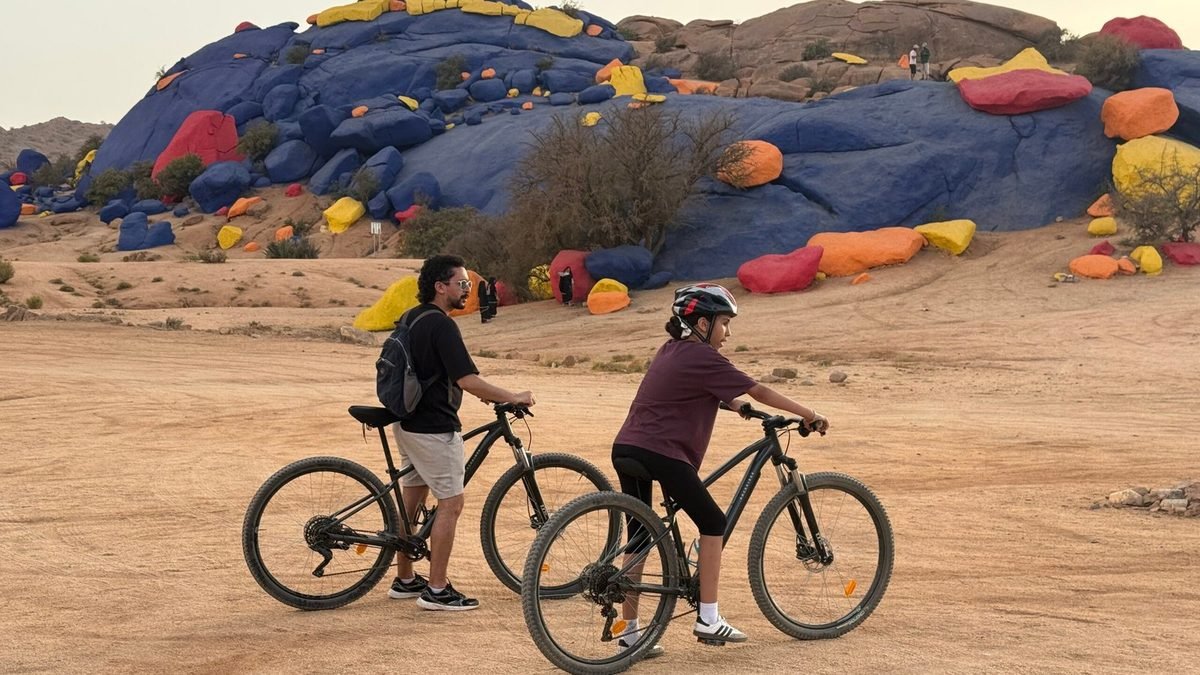
The painted rocks. In the 1980s the Belgian artist Jean Vérame painted a group of granite boulders blue, pink and purple in the desert a few kilometres south of the town. The paint has been renewed since. Some visitors find them striking, others a little odd, but the setting is beautiful, especially in late-afternoon light. They are reached by a dirt track: on foot, by bicycle or by car with care.
Napoleon's Hat. A granite formation at the village of Agard Oudad, just south of Tafraout, named for its shape. A short walk around the village gives good views back over the town.
Rock engravings. Prehistoric engravings of animals can be found at several sites around Tafraout, including Tazekka near the town. A local guide will find them faster than a map.
Ait Mansour gorge. A narrow canyon about 25 km (16 mi) south, filled with palm trees, gardens and small villages. The drive is spectacular; the gorge is best explored on foot along the track at the bottom.
The town itself. A central square, a weekly souk and a row of shops selling the region's yellow and embroidered leather slippers (babouches), argan oil and almonds.
Climbing, canyoning and mountain biking
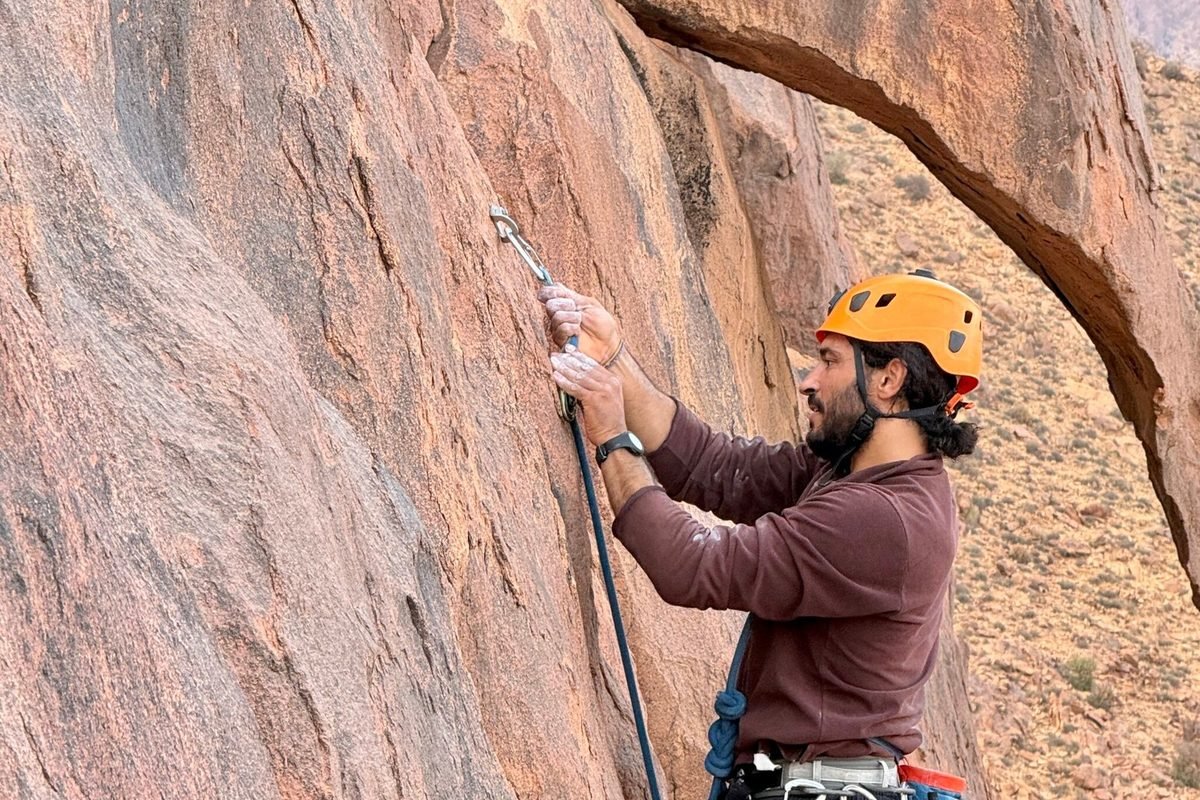
Climbing. The granite around Tafraout has become one of Morocco's best-known climbing areas, with hundreds of routes from beginner slabs to long multi-pitch climbs. Bolted routes exist, but many climbs need your own protection. If you are new to climbing, book a guided half-day: the guide brings ropes and equipment and chooses routes to suit your level.
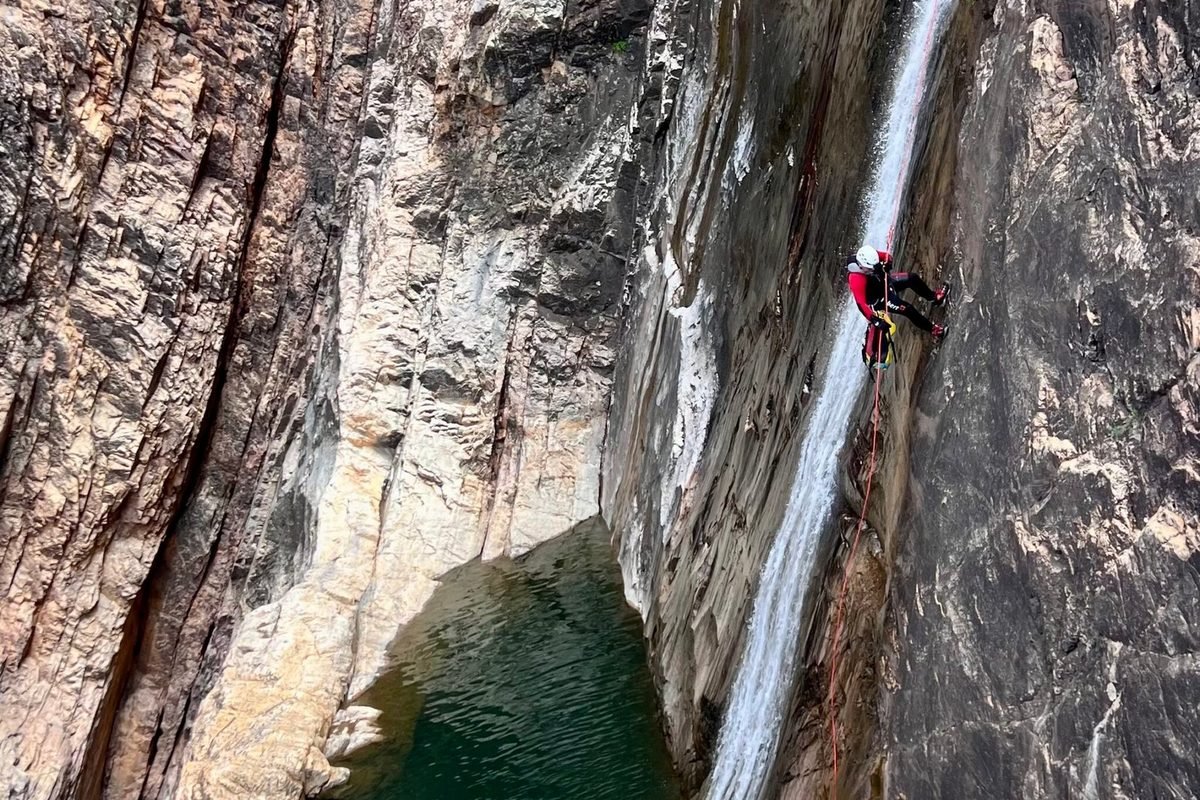
Canyoning. The canyons of the Anti-Atlas offer descents with walking, scrambling, short abseils and pools. Water levels depend on recent rain, so trips are planned with a local guide who knows the conditions. Bring shoes that can get wet.
Mountain biking. Dirt tracks link the villages, palm groves and the painted rocks, and bikes can be rented in town. A ride of 15 to 20 km around the painted rocks is a good half-day for most riders. Start early in warm months and carry plenty of water.
Hiking. Paths connect almost every village in the valley. Walks of two to four hours need no special equipment; the ascent of Jbel Lekst is a full day and is best done with a guide.
Where to stay
Tafraout has a handful of simple hotels in town and guesthouses in the surrounding villages, many run by local families. Expect modest comfort, generous breakfasts and quiet nights. Book ahead around the almond-blossom season and Moroccan school holidays. A few campsites on the edge of town are popular with motorhome travellers in winter.
Getting there and around
By car is the easiest option: the roads from Agadir and Tiznit are paved, narrow and winding, with superb views; allow extra time and avoid driving after dark. By bus, there are daily services from Agadir and Tiznit; check times locally, as departures are few. Shared taxis run from Tiznit. In Tafraout you can walk to most viewpoints, rent a bicycle or hire a taxi for the painted rocks and Ait Mansour.
When to go
October to April is the best period: clear skies, comfortable days and cold nights, sometimes close to freezing in December and January. Late January and February bring the almond blossom, when the valley turns white and pink; an almond festival is sometimes held in the town. Summer is hot, and outdoor activities are best limited to early morning.
Two-day plan
Day 1. Morning walk through the Ammeln villages, lunch in town, then the painted rocks by bike or on foot in the late afternoon.
Day 2. A guided climbing or canyoning half-day, or the drive to Ait Mansour gorge with a walk among the palms. Finish at Agard Oudad for sunset over the granite.
Continue to the coast at Agadir, or see all the places of the south on our map of Morocco.
Book climbing, canyoning and biking in Tafraout
These activities are run by local operators and booked through our partner Hayya Morocco. Prices, schedules and availability are shown on their site.


Frequently asked questions
Is Tafraout worth the trip?
Yes, if you enjoy landscapes and the outdoors. The granite scenery, the Amazigh villages and the calm of the town are quite different from the rest of Morocco. Plan at least two nights: the road is long and the light is best early and late in the day.
How do you get from Agadir to Tafraout?
By car in about three hours on the R105, or by bus, with few departures a day. A rental car gives much more freedom to explore the valley and the gorges.
When do the almond trees blossom in Tafraout?
Usually from late January to February, depending on the winter temperatures.
Do you need a guide for climbing in Tafraout?
Experienced climbers with their own equipment can climb independently with a guidebook. Beginners and anyone without equipment should book a guided session.
This guide was last reviewed in November 2026. Entry rules, opening hours, transport timetables and prices change; check official sources shortly before you travel. Spotted something out of date? Tell us.