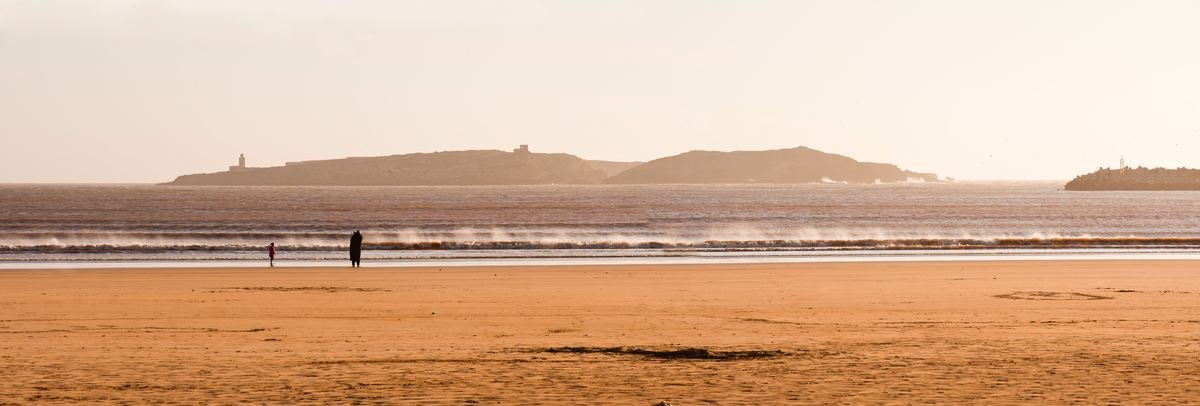
Why Morocco works for surfers
The coast between Agadir and Essaouira faces north-west into the Atlantic, catching long-period swells generated by winter storms in the North Atlantic. Several headlands create right-hand point breaks that peel for a long way, which is why the area became a surf destination in the 1960s and 1970s.
The second advantage is reliability of weather: winter days in the Souss region are usually sunny and mild, so a December surf trip rarely means rain and cold air. The trade-off is that the best waves and the busiest line-ups coincide.
Seasons: swell, crowds and beginners
- October to April is the main swell season. Point breaks such as Anchor Point need a solid north-west swell and only really work in these months. This is the time for intermediate and advanced surfers.
- May to September brings smaller, cleaner days on beach breaks, warmer water and more wind in the afternoon. It is the easiest period for first-timers, families and longboarders, and surf camps are often slightly cheaper.
- Mornings are usually glassier all year; the wind tends to pick up after midday, especially around Essaouira.
For general climate by month, see our seasons and weather guide.
Water temperature and wetsuit thickness
The Atlantic here is cooler than many visitors expect, because of a coastal upwelling. Water around Taghazout is typically about 17 °C / 63 °F in February–March and about 21–22 °C / 70–72 °F in August–September. Essaouira and Sidi Kaouki are usually a degree or two colder and windier.
| Months | Typical water (Taghazout) | Suggested wetsuit |
|---|---|---|
| December–April | 17–18 °C / 63–64 °F | 4/3 mm full suit (booties optional on rocky points) |
| May–June, November | 18–20 °C / 64–68 °F | 3/2 mm full suit |
| July–October | 20–22 °C / 68–72 °F | 3/2 mm or spring suit; some surf in boardshorts on warm days |
Surf schools include a wetsuit with lessons; if you rent separately, check the suit has no torn seams before paddling out in winter.
Where to surf: the main bases
Taghazout is the best-known village, about 20 km north of Agadir. It is close to the famous points and has the widest choice of camps, cafés and yoga studios. It has grown quickly and a large resort development now sits on its southern side, so expect a busier, more commercial feel than older descriptions suggest.
Tamraght and Aourir (Banana Village), just south of Taghazout, are slightly quieter and cheaper bases with easy access to beginner beaches such as Devil's Rock.
Anza, on the northern edge of Agadir, has a beach-and-reef setup and a more urban, local atmosphere; it can be good on bigger swells when other spots are messy.
Imsouane, about 1 h 30 north of Taghazout, is known for The Bay, one of the longest gentle right-handers in Africa, ideal for longboarders and improving beginners. The village lost many seafront buildings in the 2024 demolitions, so accommodation is more limited than it used to be; book ahead in winter.
Essaouira and Sidi Kaouki are windier. Essaouira's bay suits lessons when calm, but the town is better known for kitesurfing and windsurfing. Sidi Kaouki, about 25 km south, is a quiet stretch of beach with mixed beach breaks. See our Essaouira guide for the town itself.
Mirleft, around 2 h 30 south of Agadir, has small coves and uncrowded beach breaks. It suits surfers who want space and simplicity rather than nightlife.
Famous breaks by level
| Spot | Area | Level | Best season |
|---|---|---|---|
| Crocodile Beach | Taghazout | Beginner | All year, best smaller days |
| Devil's Rock | Tamraght | Beginner | All year |
| Banana Point | Aourir | Beginner–intermediate | October–April |
| The Bay | Imsouane | Beginner–intermediate | October–April |
| Hash Point | Taghazout | Intermediate | October–March |
| Panoramas | Taghazout | Intermediate | October–April |
| Anza | Agadir | Intermediate | October–March |
| Cathedral | Imsouane | Intermediate | October–April |
| Killer Point | North of Taghazout | Advanced | November–March |
| Boilers | North of Taghazout | Advanced | November–March |
| Anchor Point | Taghazout | Advanced | November–February, big NW swell |
Point breaks such as Anchor and Killer break over rock and have strong local line-ups. If you are not confidently turning and duck-diving, stay on the beach breaks.
Surf camps vs lessons vs board rental
Surf camps package accommodation, breakfast and often dinner, daily lessons or guiding, equipment and transport to the right spot for the day's conditions. This is the simplest option for beginners, because the school chooses the beach. Prices checked in October 2026 typically range from approximately 3,500 to 8,000 MAD per person per week (about €320–730) in a shared or double room, more for private rooms or yoga packages.
Single lessons suit travellers staying elsewhere. A group lesson of about 2 hours including board and wetsuit typically costs approximately 250–400 MAD; a private lesson is usually approximately 500–800 MAD.
Surf guiding (for intermediates) means a guide drives you to whichever spot is working, without formal tuition. Expect approximately 300–500 MAD per day, transport included.
Board rental is widely available in Taghazout and Tamraght: typically approximately 100–200 MAD per day for a soft-top or foam board and similar for a hard board, with a wetsuit adding around 50–100 MAD. Weekly rates are cheaper.
Surf and yoga
Many Taghazout and Tamraght camps now sell surf-and-yoga weeks: a morning surf session followed by an evening yoga class, sometimes with healthier menus and a hammam visit. Yoga helps with shoulder and lower-back stiffness after paddling, but check how many hours of surfing are actually included and whether the teacher is certified. Some packages are more retreat than surf trip.
Safety: rocks, urchins and currents
- Sea urchins live on rocky reefs and points. Booties are worth packing; if you are spiked, remove visible spines carefully and keep the wound clean.
- Rip currents form on beach breaks, especially at mid to low tide. If caught, paddle parallel to the shore rather than against the current.
- Rocks at point breaks: enter and exit where locals do, and never jump off the rocks without watching the sets first.
- Sun and dehydration are underestimated in winter: the air feels cool but UV is high.
- Respect the line-up: wait your turn, do not drop in, and leave the best peaks to locals when you are learning.
Check your policy covers surfing; our health and insurance guide explains what to look for, and our safety guide covers general precautions.
Getting there from Agadir airport
Agadir Al Massira airport (AGA) is the gateway, with direct flights from many European cities. Taghazout is roughly 40–50 minutes away by road. A grand taxi or pre-booked transfer typically costs approximately 250–400 MAD for the car; most camps arrange pick-ups. Imsouane is about 2 hours from the airport and Essaouira about 3 hours. Marrakech to Taghazout takes around 3 h 30 by road. See our transport guide for buses and car hire.
Practical details
- Duration: a 2-hour lesson; a week is ideal to make real progress.
- Best time: October–April for swell; May–September for beginners.
- Price range (checked October 2026): lessons approx. 250–800 MAD; camps approx. 3,500–8,000 MAD per week.
- Booking: book camps a few weeks ahead for Christmas, February and Easter; single lessons can be booked a day ahead.
- What to bring: reef booties, high-SPF sunscreen, a warm layer for evenings, cash for small cafés. See our packing list.
Book a surf lesson
These activities are run by local operators and booked through our partner Hayya Morocco. Prices, schedules and availability are shown on their site.


Frequently asked questions
Is Morocco good for beginner surfers?
Yes. Beaches such as Crocodile Beach, Devil's Rock and Imsouane's Bay offer gentle waves, and summer conditions are especially friendly for first-timers.
What is the best month to surf in Morocco?
For experienced surfers, November to February usually brings the most powerful swells to the point breaks. Beginners often find May, June and September easier, with smaller waves and warmer water.
Do I need a wetsuit to surf in Morocco?
Yes for most of the year. A 4/3 mm suit is advisable from December to April, while a 3/2 mm or spring suit is usually enough from July to October.
How much does a surf camp in Taghazout cost?
Prices checked in October 2026 typically range from approximately 3,500 to 8,000 MAD per person per week, depending on room type, meals and whether yoga is included.
Can I surf in Essaouira?
You can, but Essaouira is very windy for much of the year and is better known for kitesurfing. Surfers often head to Sidi Kaouki or further south for cleaner conditions.
This guide was last reviewed in October 2026. Entry rules, opening hours, transport timetables and prices change; check official sources shortly before you travel. Spotted something out of date? Tell us.