The essentials in brief
- Passport valid for the whole stay (check the entry rules for your nationality)
- Travel insurance details and your insurer's assistance number
- Bank card without foreign fees, plus a backup card and some euros, dollars or pounds to exchange
- Phone, charger, power bank and a type C/E plug adapter
- Comfortable walking shoes you have already worn
- Light layers plus one warm layer, whatever the season
- A scarf or light shawl
- Sunscreen, sunglasses and a hat
- Any medicines you take, with prescriptions
Clothing: respectful and practical
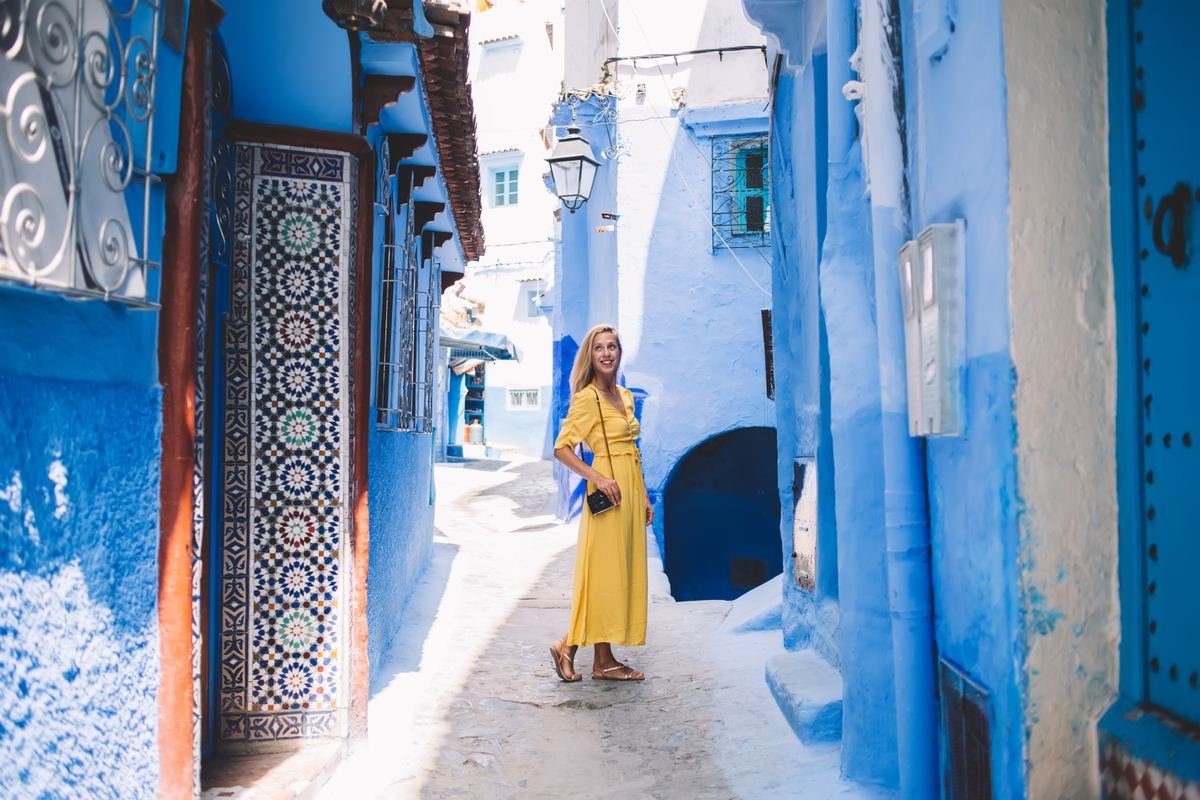
Morocco is a Muslim country with relaxed attitudes in tourist areas, but modest clothing is respected — and it is often more comfortable in the sun.
- In the medinas and villages, wear clothes that cover your shoulders and knees. Loose trousers, long skirts, midi dresses and linen shirts are ideal.
- Women do not need to cover their hair. A light scarf is useful for sun, dust, mosque courtyards that are open to visitors, and to add coverage when needed.
- Men rarely wear shorts in town outside beach resorts; light trousers are more usual.
- Swimwear is fine at hotel pools and beaches; cover up when you leave them.
- Shoes: medina lanes are uneven, sometimes slippery and full of steps. Wear supportive trainers or walking sandals rather than flip-flops.
Packing by season
| Season | Days | Nights | Pack |
|---|---|---|---|
| Spring (March–May) | Warm to hot | Cool, cold in desert and mountains | Light layers, fleece or light down jacket, rain jacket for the north |
| Summer (June–Sept) | Very hot inland, mild on the coast | Warm inland, cool in the desert | Loose linen, wide-brimmed hat, sweater for the coast and Atlas evenings |
| Autumn (Oct–Nov) | Warm | Cool to cold | Layers, a warm jacket for the desert, light rain jacket |
| Winter (Dec–Feb) | Mild and sunny in the south | Cold, near freezing in the desert and Atlas | Warm jacket, hat and gloves for the desert, thermal layer, warm sleepwear |
Riads are beautiful but many are not well heated in winter. A warm layer to wear indoors makes a real difference. Our weather by month guide has the details by region.
For the Sahara
- A warm layer for the night, even in spring and autumn; desert temperatures drop sharply after sunset.
- A headlamp or torch for walking around camp.
- A scarf or chèche (turban) to protect from sun and sand — you can buy one in Merzouga.
- A small overnight bag: you usually leave your main luggage at the hotel before the camel ride.
- Sunglasses and lip balm; the air is very dry.
- A sealable bag for your phone and camera if the wind picks up.
See our Merzouga guide for more on desert camps.
For the Atlas Mountains
- Broken-in hiking boots and two pairs of good socks
- Waterproof jacket and warm layers; snow is possible from November to April on the high passes
- A refillable water bottle with a filter
- For Toubkal in winter, crampons and an ice axe are needed; local guides can provide them.
See our Atlas Mountains guide.
Documents and money
- Passport plus a photocopy (or a photo on your phone) kept separately
- Printed or offline copies of bookings — riads in the medina can be hard to find, and their address and phone number are useful for taxi drivers
- Travel insurance certificate
- Driving licence (and an International Driving Permit if your licence is not in French or Latin script) if you plan to rent a car
- Bank cards: Morocco is still largely a cash economy; see our money and tipping guide
- A small wallet or pouch for small notes and coins for tips, taxis and markets
Electronics
- Plugs are the European type C and E, at 220 V and 50 Hz. Travellers from the UK, the US and Australia need an adapter.
- A power bank for long days and desert nights, when camps may have limited charging.
- An eSIM or local SIM for maps and messaging; see our SIM and eSIM guide.
- Offline maps of the medinas downloaded in advance.
- Do not bring a drone. Importing a drone requires prior official authorisation, which tourists in practice cannot get, and drones without it are confiscated at customs.
Health and toiletries
- Your regular medicines, in their original packaging, with copies of your prescriptions
- Hand gel, tissues and a small pack of toilet paper — public toilets often have none
- Sunscreen (high SPF), after-sun and lip balm
- Insect repellent for summer evenings
- Oral rehydration salts and an anti-diarrhoeal, just in case
- Earplugs: the call to prayer and early-morning medina life can be loud
Most of these items are also easy to find in Moroccan pharmacies and supermarkets. Read our health and insurance guide.
What to leave at home
- Drones — banned and confiscated
- Expensive jewellery — unnecessary and attracts attention
- Too many clothes — laundry services in riads are cheap and quick
- Heavy wheeled suitcases if you are staying in medinas: a backpack or soft bag is easier on stone steps and narrow lanes (porters with handcarts help, for a tip)
- Products from protected species you might be tempted to buy: they cannot be taken home legally
Leave space for shopping
Most visitors come home with more than they took: rugs, babouches, argan oil, ceramics, lanterns, spices. Leave space in your bag, or bring a foldable extra bag. Many rug sellers can ship purchases; ask for a written receipt and the shipping conditions.
Related guides: what to buy in the souks, safety and etiquette and our itineraries.
Frequently asked questions
What should women wear in Morocco?
Loose clothing that covers the shoulders and knees is comfortable and respected, especially in medinas and villages. Women do not need to cover their hair. A light scarf is useful for sun, dust and visits to religious sites that are open to non-Muslims.
Do I need a plug adapter in Morocco?
Morocco uses European type C and E sockets at 220 V. Visitors from the UK, the US, Canada and Australia need an adapter. Check that your devices support 220 V.
Can I bring a drone to Morocco?
No. Drones are not allowed for tourists and are confiscated by customs on arrival.
Is it cold in the Sahara at night?
Yes. Even after a hot day, desert nights can be cold, and in winter temperatures can fall close to freezing. Bring a warm jacket and layers.
This guide was last reviewed in October 2026. Entry rules, opening hours, transport timetables and prices change; check official sources shortly before you travel. Spotted something out of date? Tell us.