What was filmed in Morocco
Nolan's adaptation of Homer's epic was shot in several countries. According to reporting by the Moroccan news site Le360, which cites the specialist database Movie Locations, four Moroccan sites appear in the film:
| Location | Region | Role in the film (as reported) |
|---|---|---|
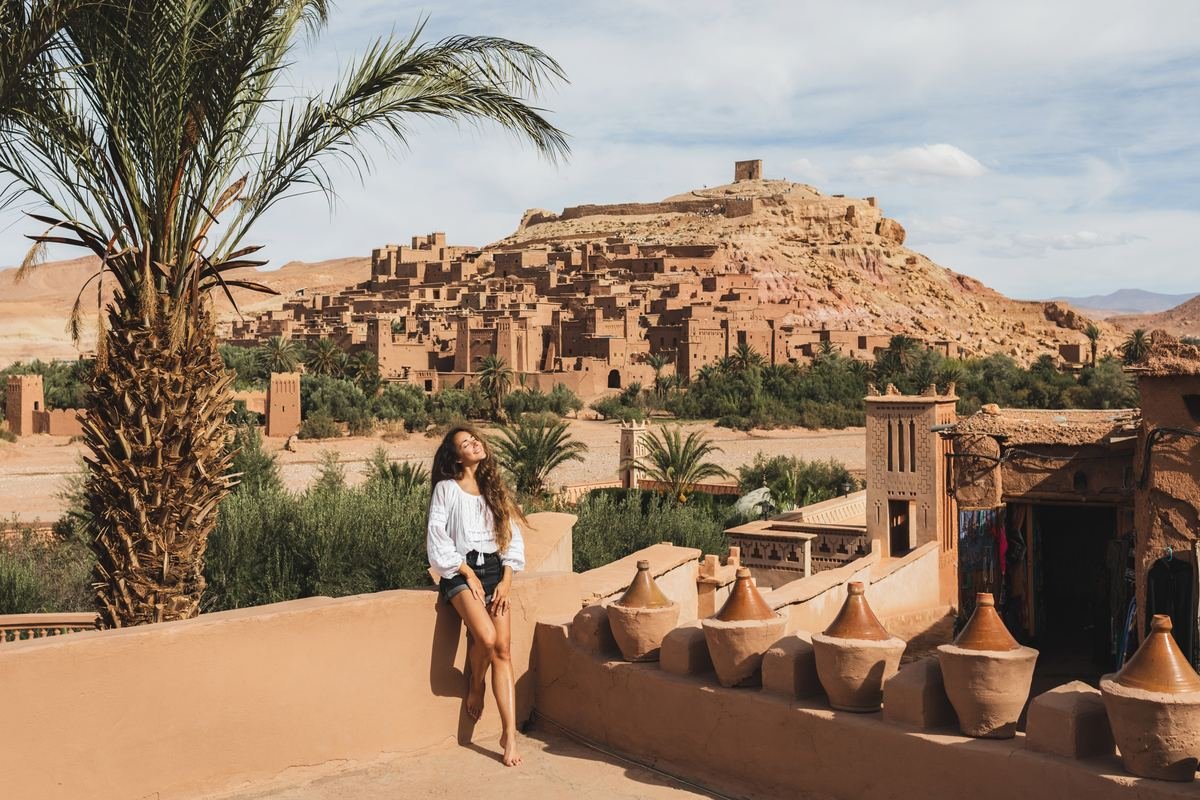
| Ksar Aït Benhaddou | Near Ouarzazate | The city of Troy |
| Tahnaout | Al Haouz province, near Marrakech | Parts of the city scenes |
| Essaouira beach | Atlantic coast | The beach where the Trojan Horse is offered to Poseidon |
| The White Dune (Dakhla) | Dakhla lagoon | The beach of Ogygia, Calypso's island |
Film productions rarely publish full location lists, so treat this as the best information available at the time of writing. We will update this page if new details are confirmed.
Aït Benhaddou: Troy at the foot of the Atlas
Aït Benhaddou is no stranger to the cinema. The fortified earthen village, a UNESCO World Heritage Site since 1987, has appeared in Lawrence of Arabia, Gladiator and Game of Thrones. For The Odyssey, Le360 reports that "no fewer than 60 additional structures" were built temporarily around the existing ramparts to create Troy. Those sets have since been removed; what you will see is the real ksar.
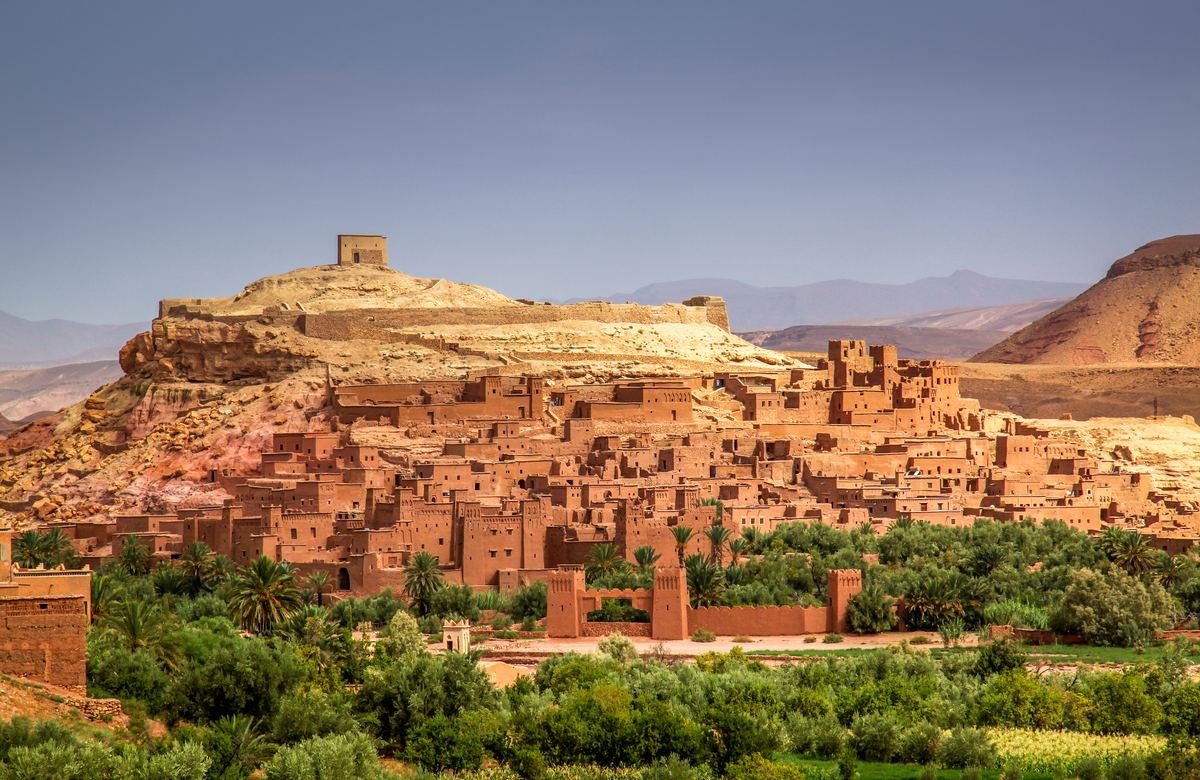
How to visit. Aït Benhaddou is about 30 km from Ouarzazate and roughly 4 hours from Marrakech over the Tizi n'Tichka pass. Most day tours from Marrakech arrive at midday, when it is crowded and the light is flat. Stay overnight in one of the guesthouses facing the ksar and walk up to the granary at the top at sunset or sunrise. Combine it with a tour of the Atlas Studios in Ouarzazate, where sets from earlier productions can be visited. Our Ouarzazate and Aït Benhaddou guide has the details.
Tahnaout: the foothills of the High Atlas
Tahnaout is a small market town about 30 km south of Marrakech, on the road towards Asni and Imlil. It is not a tourist destination in itself, but it sits at the gateway to the High Atlas valleys. The area was affected by the September 2023 earthquake, and visits that use local guides and guesthouses support the recovery.
How to visit. Tahnaout lies on the route to Imlil and the Toubkal National Park, so the simplest way to see the landscape is on a day trip from Marrakech to the mountains. See our Atlas Mountains guide.
Essaouira beach: the Trojan Horse on the Atlantic
The long sandy bay south of Essaouira's ramparts is reported to be where the Trojan Horse appears, buried in the sand. Essaouira's wind-swept beach and walled port, designed in the 18th century, have long attracted filmmakers — Orson Welles shot parts of Othello here in the 1950s.
How to visit. Essaouira is about 3 hours from Marrakech by bus. Walk south along the beach from the medina at low tide, ideally late in the afternoon; the dunes and the ruined Borj el-Berod fort at the far end of the bay make a striking backdrop. Read our Essaouira guide.
The White Dune of Dakhla: Calypso's island
In the film, the beach of Ogygia — where Calypso, played by Charlize Theron, keeps Odysseus — was reportedly shot at the White Dune (Dune Blanche), a crescent of pale sand on the Dakhla lagoon about 30 km from the town of Dakhla. It is one of the most unusual landscapes in Morocco: desert dunes meeting a turquoise lagoon famous for kitesurfing.
How to visit. Dakhla is far south, around 1,700 km by road from Marrakech, so almost everyone flies: Dakhla airport has domestic flights (often via Casablanca) and a few direct international routes. The White Dune is reached by 4x4 or by boat across the lagoon, usually with a local operator; at high tide parts of the dune become an island. Bring sun protection — there is little shade.
A 7-day "Odyssey" route through Morocco
- Marrakech (1 night) — arrival.
- Tahnaout and the Atlas foothills → Aït Benhaddou (1 night) — over the Tizi n'Tichka.
- Ouarzazate (1 night) — Atlas Studios, Taourirt Kasbah.
- Back to Marrakech, on to Essaouira (2 nights) — the beach of the Trojan Horse.
- Fly to Dakhla (2 nights) — the White Dune of Ogygia.
Flight connections to Dakhla vary by season; check schedules before fixing this order.
Responsible film tourism
Film locations attract crowds quickly. Respect the residents of Aït Benhaddou, who still live in parts of the ksar; do not fly drones (they require authorisation in Morocco and are confiscated at customs); and in Dakhla, choose operators who respect the fragile lagoon ecosystem.
Sources
- Le360, "Here's where Christopher Nolan shot The Odyssey in Morocco" (July 2026), citing Movie Locations.
- UNESCO World Heritage Centre — Ksar of Ait-Ben-Haddou.
Related: Ouarzazate, Essaouira, 7-day Morocco itinerary and our visa and entry guide.
This guide was last reviewed in October 2026. Entry rules, opening hours, transport timetables and prices change; check official sources shortly before you travel. Spotted something out of date? Tell us.