The main styles at a glance
| Style | Roots and region | Signature instruments | Where you will hear it |
|---|---|---|---|
| Gnawa | Descendants of sub-Saharan communities; Essaouira, Marrakech | guembri (three-string bass lute), qraqeb (iron castanets) | Jemaa el-Fna, Essaouira, festivals, lila ceremonies |
| Andalusian (al-Âla) | Muslim Spain, brought by refugees after the 15th century; Fez, Tetouan, Rabat | Oud, violin held upright on the knee, rebab, darbouka | Concerts, weddings, Ramadan evenings |
| Malhun | Sung poetry of urban craftsmen; Meknes, Fez, Marrakech | Oud, swisdi, taarija drum | Cultural centres, festivals |
| Chaabi | "Popular" music, urban and rural | Violin, loutar, keyboards, bendir | Weddings, cafés, radio |
| Amazigh | Berber regions: Souss, Atlas, Rif | Ribab, loutar, bendir, hand-clapping | Villages, Timitar festival, Agadir |
| Raï | Oranie (Algeria) and eastern Morocco; Oujda | Synthesisers, gasba flute, darbouka | Oujda, eastern cafés, radio |
Gnawa: trance, healing and the guembri
Gnawa music was inscribed on UNESCO's Representative List of the Intangible Cultural Heritage of Humanity in December 2019. Its roots lie with people brought from West Africa across the Sahara, and it blends African rhythms with Sufi Islam.
The heart of the tradition is the lila ("night"), an all-night ritual led by a master musician, the maâlem, who plays the guembri, a camel-skin bass lute. Musicians in embroidered tunics clash qraqeb, heavy iron castanets, in hypnotic cycles. Each section of the night invokes a different spirit, associated with a colour and an incense; participants may enter trance, which is believed to heal. Lilas are private religious events: you may be invited by a family or a musicians' association, but do not treat one as a show. If you attend, dress modestly, do not photograph without permission and expect it to last until dawn.
In public you will hear Gnawa in Jemaa el-Fna in Marrakech, in the lanes of Essaouira's medina, and on stage at the Gnaoua and World Music Festival, where maâlems jam with jazz, blues and world musicians.
Andalusian music (al-Âla) and Malhun
Al-Âla is Morocco's classical tradition, built on suites called nubas. Eleven nubas survive from the twenty-four said to have existed in medieval Andalusia; their sung poems were compiled in the 18th century in the Kunnash al-Haïk. A full nuba lasts hours and moves through set rhythmic movements from slow to fast. Orchestras of oud, upright violin, rebab and percussion are strongest in Fez, Tetouan and Rabat. The related gharnati style survives in Oujda and Rabat.
Malhun, sung poetry in Moroccan Arabic that grew among artisans' guilds, was inscribed by UNESCO in December 2023. Meknes is its traditional home.
You are most likely to hear both at concerts during Ramadan evenings, at the Fes festival, and at weddings in old city families. See our Ramadan guide for how evening life changes during the holy month.
Chaabi, aita and the sound of weddings
Chaabi simply means "popular". It is the music of weddings, festivals and taxi radios: driving violin and loutar lines, call-and-response vocals and fast bendir frame drums, often amplified with keyboards. Closely related is aita, the sung tradition of the Atlantic plains around Safi and Abda, traditionally performed by female singers known as chikhat. If you are invited to a Moroccan wedding, expect chaabi bands to play late into the night.
Amazigh music: ahwach, ahidous and the rwais
Amazigh (Berber) music varies by region, and much of it is collective. In the Middle Atlas, ahidous sees lines of men and women dancing shoulder to shoulder to frame drums and sung verse. In the Anti-Atlas and Souss, ahwach is a village dance and poetry performance, and the professional rwais troupes play the one-string ribab and the loutar. The western High Atlas warrior dance Taskiwin was added to UNESCO's Urgent Safeguarding List in 2017. Agadir and the Souss valley are the best region to hear Tashelhit music; read more on our Amazigh culture page.
Raï in the east
Raï originated in western Algeria and is also deeply rooted in Oujda and Morocco's eastern region. Moroccan raï singers have huge followings, and the style sounds best in eastern cafés and at summer events in Oujda and Saïdia. Expect electronic arrangements, emotive vocals and lyrics about love, exile and everyday life.
2026 festival calendar
Confirmed 2026 dates; most festivals announce dates in early spring.
| Festival | City | 2026 dates | Style |
|---|---|---|---|
| Fes Festival of World Sacred Music (29th edition) | Fez | 4–7 June | Sufi, sacred and spiritual music from around the world |
| Mawazine – Rhythms of the World (21st edition) | Rabat and Salé | 19–27 June | International pop and Arab stars; many free stages |
| Gnaoua and World Music Festival | Essaouira | 25–27 June | Gnawa and fusion; free stages in the medina and on the beach |
| National Festival of Popular Arts (55th edition) | Marrakech | 2–6 July | Folk troupes from every region |
| Jazzablanca | Casablanca | 2–11 July | Jazz, soul, world |
| Timitar (21st edition) | Agadir | 23–25 July | Amazigh and world music |
| Tanjazz | Tangier | 18–20 September | Jazz |
| Festival des Andalousies Atlantiques | Essaouira | 29–31 October | Andalusian, Judeo-Moroccan and flamenco |
| Visa For Music (13th edition) | Rabat | 18–21 November | African and Middle Eastern music showcase |
Notes for planning:
- The Fes festival was shortened to four days in 2026. Paid concerts take place in historic venues; book riads well ahead.
- Gnaoua Essaouira fills the town to capacity. Rooms sell out months in advance, and prices rise sharply; consider staying out of town.
- Mawazine draws huge crowds at its free stages; keep valuables secure (see our safety guide).
Where to hear live music outside festival season
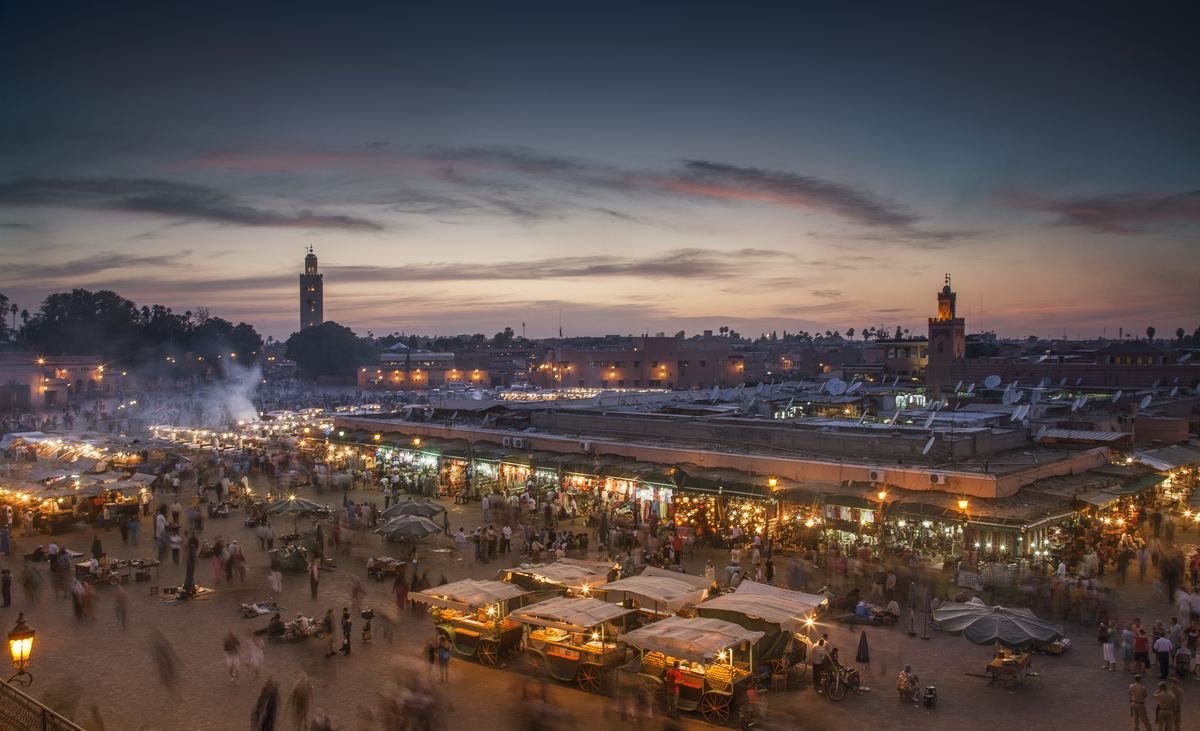
- Marrakech, Jemaa el-Fna: every evening from about sunset, circles form around Gnawa groups, Amazigh singers and storytellers. The square was proclaimed a UNESCO Masterpiece of Oral and Intangible Heritage in 2001. See our Marrakech guide.
- Essaouira: Gnawa musicians play in the medina, in cafés and on rooftops, especially at weekends. The town has several traditional zaouias (brotherhood lodges) linked to Gnawa. More in our Essaouira guide.
- Fez: Andalusian ensembles perform at cultural venues and in palace restaurants; ask your riad about concerts in the Batha area. See the Fez guide.
- Atlas villages: in summer, especially August, weddings and harvest festivals bring ahidous and ahwach performances. A local guide can tell you where. Start with our Atlas Mountains guide.
- Desert camps near Merzouga: Gnawa-influenced drumming is a fixture of evenings around the fire; the village of Khamlia is known for its Gnawa community. See the Merzouga guide.
Jemaa el-Fna musicians: etiquette and tipping
The musicians in the square earn their living from tips. A few rules make the evening easier for everyone:
- Join a circle (halqa) and listen. If you stay more than a few minutes, tip.
- Tip 10–20 MAD per group, more if you stay long or are filmed or invited to dance. Hand it to the person who comes round with a hat or tambourine.
- Photos and video: expect to pay 10–20 MAD. Ask first. Pointing a phone and walking away causes arguments.
- Carry small notes and coins. Asking for change from a 200 MAD note invites confusion.
- Snake charmers and monkey handlers are a different matter: animal welfare groups advise against encouraging them, and they often demand much higher sums once a photo is taken.
Buying instruments and recordings
Guembris, qraqeb and darboukas are sold in the Marrakech and Essaouira souks. A decorative darbouka costs approx. 100–300 MAD; a playable guembri approx. 1,000–3,000 MAD. Check the skin is tight and the neck straight. Many musicians sell their own recordings after a performance.
Frequently asked questions
When is the Gnawa festival in Essaouira?
In 2026 the Gnaoua and World Music Festival took place on 25–27 June. It is usually held in June; dates for 2027 are typically announced in spring.
Is Gnawa music on the UNESCO list?
Yes. Gnawa was inscribed on UNESCO's Representative List of the Intangible Cultural Heritage of Humanity in December 2019.
How much should I tip musicians in Jemaa el-Fna?
Around 10–20 MAD per group if you stay to listen, and the same again if you take photos or video. Ask before filming.
What is the Fes Festival of World Sacred Music?
An annual festival of sacred and spiritual music from many faiths, held in Fez since 1994. The 2026 edition, its 29th, ran from 4 to 7 June.
Is Mawazine free?
Many stages are free, including those featuring Moroccan and Arab artists. The main international concerts usually require paid tickets.
Related: Amazigh culture · Essaouira guide · Marrakech guide · Moroccan souks
This guide was last reviewed in November 2026. Entry rules, opening hours, transport timetables and prices change; check official sources shortly before you travel. Spotted something out of date? Tell us.