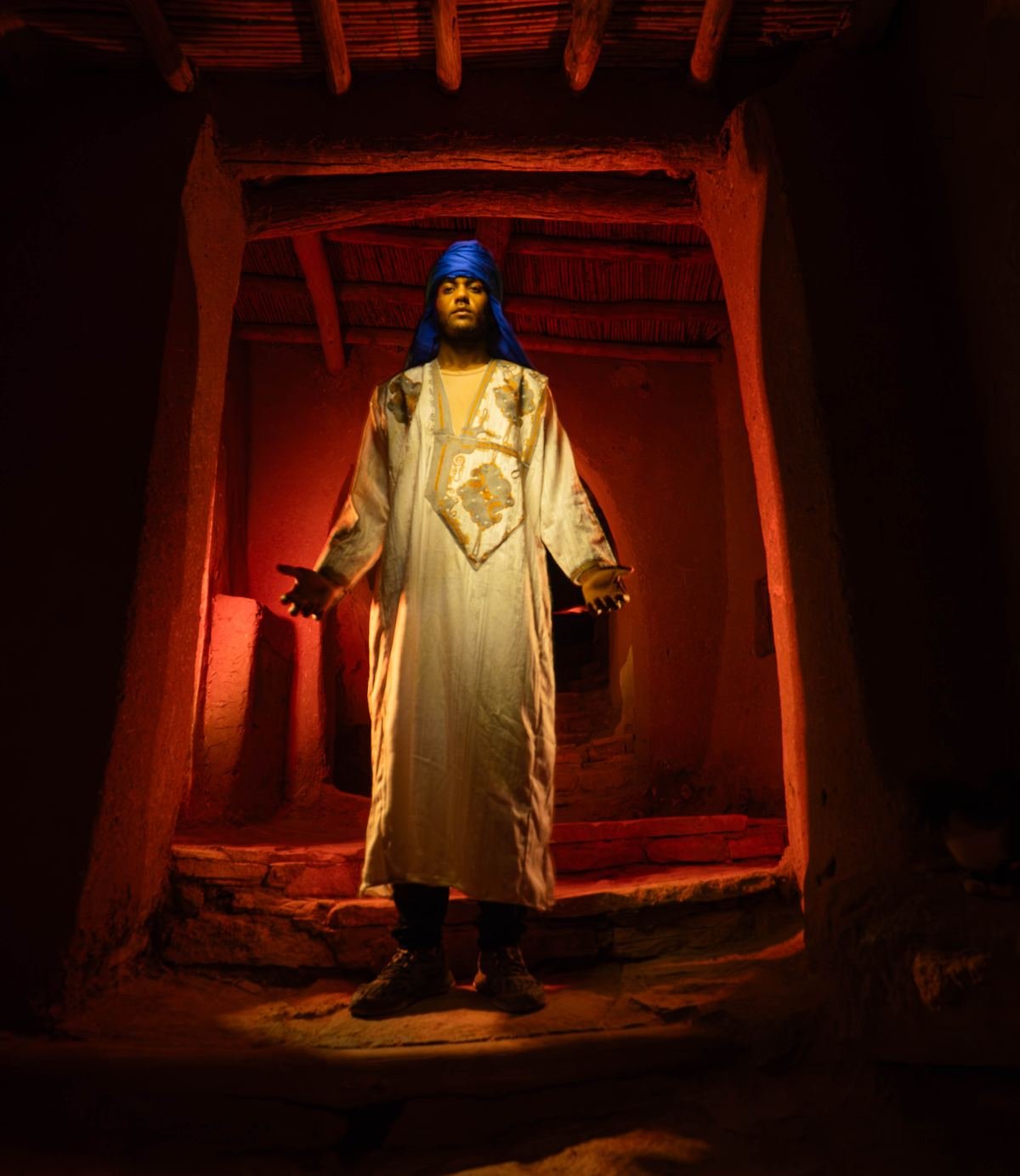
Amazigh or Berber?
"Berber" comes from the Greek and Latin word for foreigners who did not speak their language, and many people now find it outdated. The people's own name is Amazigh (plural Imazighen), usually translated as "free people". You will hear both words in Morocco, and "Berber" is still common on shop signs and in tourism, but using "Amazigh" shows you have done your homework.
Amazigh identity is not kept apart from the rest of the country: most Moroccans have some Amazigh ancestry, and many city families trace their roots to a village in the Souss or the Rif. What marks the culture most clearly today is language, followed by music, dress, crafts and attachment to the village.
The three main languages
Morocco has three major Amazigh languages, each tied to a region. They are related but different enough that speakers from the Rif and the Souss may switch to Darija to understand each other.
| Language | Where it is spoken | Useful to know |
|---|---|---|
| Tachelhit (Shilha) | Souss plain, Anti-Atlas, western High Atlas; Agadir, Taroudant, Tafraout, Tiznit, the valleys south of Marrakech | The most widely spoken; the language of the rways poet-musicians |
| Central Atlas Tamazight | Middle Atlas and eastern High Atlas; Khenifra, Azrou, Imilchil, Midelt, parts of the Dades and Todra valleys | Home of ahidous group dance |
| Tarifit (Riffian) | The Rif in the north; Al Hoceima, Nador, parts of the Chefchaouen region | Large diaspora in the Netherlands, Belgium and Spain |
The 2011 constitution made Tamazight an official language alongside Arabic, and an organic law passed in 2019 set out how it should be introduced into education, administration and public life. According to the 2024 census, about 24.8% of Moroccans use an Amazigh language in daily life. The share is far higher in the mountains, where Arabic may be a second or third language, especially among older women.
Tifinagh, the script you see on public buildings
The angular alphabet on ministries, schools and road signs is Tifinagh. Morocco adopted a standardised form, often called Neo-Tifinagh, in 2003 on the recommendation of the Royal Institute of Amazigh Culture (IRCAM). The symbol you see on flags and jewellery, a figure with arms raised, is the letter yaz (ⵣ), representing the free person.
A few words go a long way in a village: azul (hello), tanmmirt (thank you, in Tachelhit and Tamazight), mzyan (good, borrowed from Darija). See our language guide for more.
Yennayer: the Amazigh New Year
Yennayer marks the start of the agrarian Amazigh calendar, which counts from 950 BCE. In Morocco it is celebrated on 14 January, with family gatherings beginning the evening before. King Mohammed VI made it an official paid public holiday in 2023, and it was first observed nationally on 14 January 2024. January 2027 marks the year 2977.
In many homes the evening meal is couscous with seven vegetables or a dish of grains and pulses, with a date stone or almond hidden inside: whoever finds it has luck for the year. You will see "Aseggas ameggaz" (happy new year) on posters, concerts are held in Rabat, Agadir and Tiznit, and government offices and banks close for the day.
Where Amazigh culture is strongest
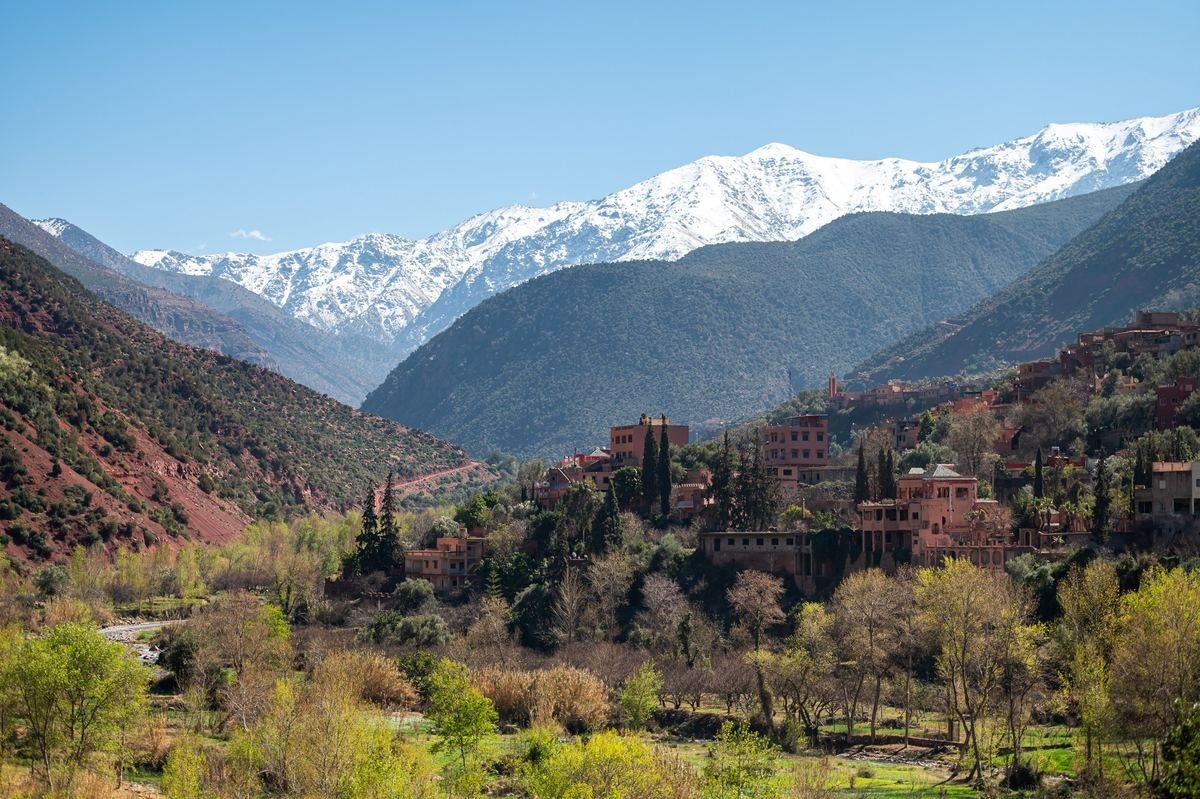
- High Atlas: Imlil and the Toubkal valleys, the Ourika valley, and the more remote Ait Bouguemez ("the Happy Valley") with its earthen granaries. Many villages in the Al Haouz province were damaged in the September 2023 earthquake; rebuilding continues, and visiting with local guides and staying in village guesthouses supports recovery.
- Souss and Anti-Atlas: Tafraout, surrounded by pink granite and almond trees (blossom in February), the walled town of Tiznit for silver, and Taroudant, a smaller and quieter alternative to Marrakech.
- Middle Atlas: Azrou, Khenifra and the cedar forests near Ifrane; Imilchil, famous for its moussem, a betrothal gathering and regional market usually held in late summer or early autumn.
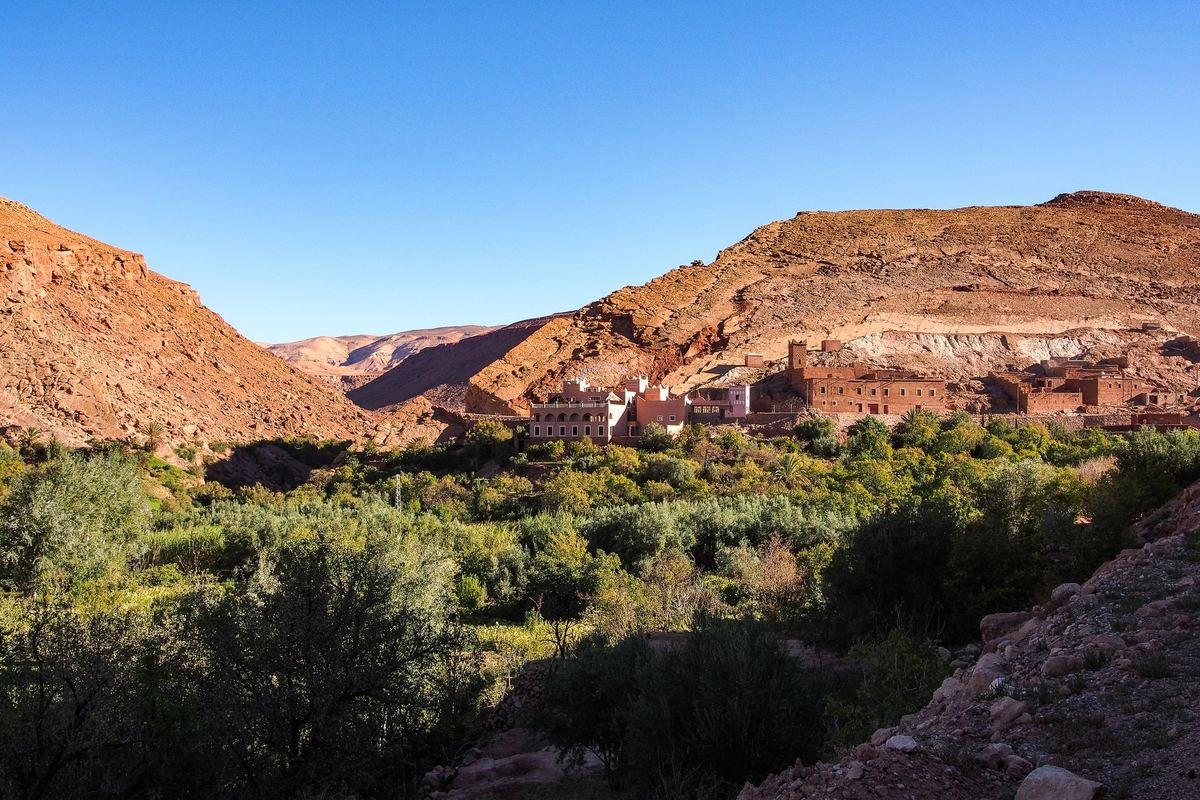
- Pre-Saharan valleys: the Dades, Todra and Draa valleys around Ouarzazate, with their earthen kasbahs and ksour (see our architecture guide).
- The Rif: the hills around Chefchaouen and towards Al Hoceima, where women's straw hats with wool pompoms and red-and-white striped mendil cloths are still worn.
In Marrakech, the Pierre Bergé Museum of Berber Arts, inside the Jardin Majorelle, is the best single introduction to Amazigh jewellery, costume and objects. Tickets are sold online only, through the garden's official site.
Carpets and jewellery
Carpets are the most famous Amazigh craft, traditionally woven by women for family use and dowries. The main types:
| Type | Origin | How to recognise it |
|---|---|---|
| Beni Ourain | Middle Atlas | Thick undyed cream wool with dark brown or black lozenges |
| Azilal | Central High Atlas | Cream background with bright, freeform motifs |
| Akhnif / Taznakht (Glaoua) | Anti-Atlas and Siroua | Dense, often red and orange, mixing pile and flat weave |
| Hanbel / kilim | Many regions | Flat-woven, lighter, easier to pack |
| Boucherouite | Everywhere | Rag rugs made from recycled textiles, colourful and inexpensive |
Typical 2026 prices are approx. 300–1,200 MAD for a small boucherouite, 1,500–5,000 MAD for a medium kilim and 6,000–20,000 MAD or more for a genuine large Beni Ourain. Check the back: hand-knotted pile shows irregular knots; machine-made rugs look perfectly uniform. Natural wool smells of lanolin and is not glossy. Souk prices are negotiable by a wide margin; women's cooperatives in the Atlas and Anti-Atlas cost less and pay weavers more directly. Our souks guide explains bargaining.
Jewellery is traditionally silver, worn as portable wealth. Look for fibulae (tizerzai), the large triangular brooches that fasten a draped garment; enamelled pieces from Tiznit, a long-standing silver centre; amber and coral necklaces; and the khamsa, the protective hand motif shared across North Africa. Old pieces are rare and costly; most souk "antique" silver is new or alloy. Real silver is often stamped and should not be magnetic. See crafts for more.
Henna and tattoos. Facial tattoos were once common among older Amazigh women, and henna remains central to weddings and festivals. Our page on henna and Amazigh traditions explains its meaning and how to avoid harmful "black henna".
Music: ahwash, ahidous and the rways
- Ahwash belongs to the High Atlas and Anti-Atlas: rows or circles of men and women, frame drums (tallunt or bendir) and call-and-response poetry, often performed at night by a fire during festivals and weddings.
- Ahidous is the collective dance of the Middle Atlas: men and women shoulder to shoulder in a line or circle, swaying and clapping to frame drums while a lead poet improvises.
- Rways are the professional poet-musicians of the Souss, playing the single-string ribab and the loutar lute.
You are most likely to hear these at weddings, moussems and the summer festivals of the south. More in our music guide.
Visiting villages respectfully
- Go with a local guide, ideally from the village or valley. In the Toubkal area, licensed mountain guides cost approx. 400–600 MAD per day, and they open doors that a stranger cannot.
- Dress modestly: shoulders and knees covered, no tight or short clothing.
- Ask before every photograph of people, homes or interiors. Many women will say no.
- Do not give sweets, pens or money to children; it encourages begging and skipping school. Donate to a school or association through your guide instead.
- Accept tea when offered, at least one glass, and remove your shoes at the door. Eat with your right hand from your side of the shared dish.
- Spend locally: sleep in a village gîte, buy directly from a cooperative, and eat what your hosts cook. A home-cooked tagine lunch typically costs approx. 80–150 MAD per person.
- During Ramadan, avoid eating or drinking in front of villagers in daylight.
Frequently asked questions
Is it offensive to say Berber in Morocco?
Not usually, but "Amazigh", the people's own name, is increasingly preferred.
What language do Berbers speak in Morocco?
There are three main Amazigh languages: Tachelhit in the south-west, Central Atlas Tamazight in the Middle Atlas and Tarifit in the Rif. Most speakers also know Darija.
When is Yennayer in Morocco?
Yennayer is on 14 January and has been an official public holiday since 2024. Celebrations start with a family dinner on the evening of 13 January.
Where can I visit a Berber village from Marrakech?
Imlil and the Toubkal valleys and the Ourika valley are about 1–1.5 hours away by road. Ait Bouguemez is further, around five hours, and better as an overnight trip.
How can I tell if a Berber carpet is handmade?
Turn it over: a handmade carpet shows each knot and slight irregularities, and the back pattern is as clear as the front. Machine-made rugs have a perfectly regular grid.
Related: Atlas Mountains · Henna and Amazigh traditions · Moroccan music · Crafts
This guide was last reviewed in November 2026. Entry rules, opening hours, transport timetables and prices change; check official sources shortly before you travel. Spotted something out of date? Tell us.